Warning: This article contains major spoilers for the Netflix limited series, “The Beast in Me.”
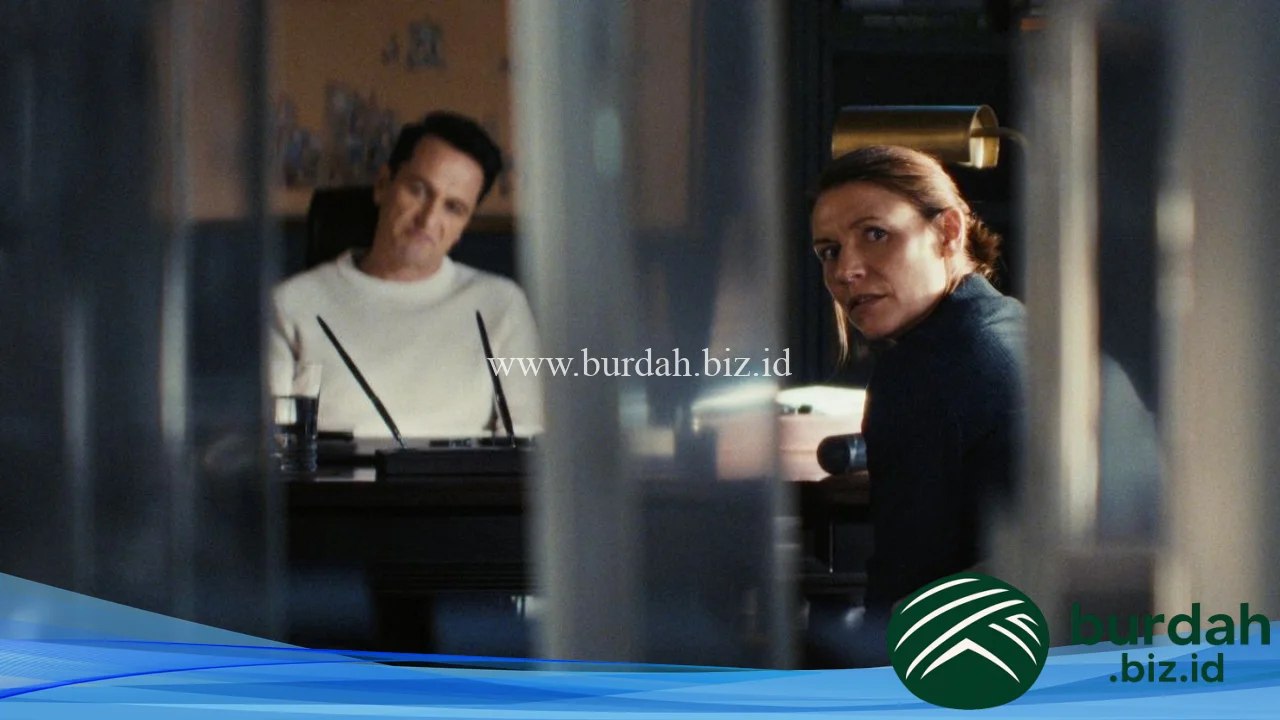
The cat-and-mouse thriller “The Beast in Me” delivered a truly shocking turn in its sixth episode, cementing a moment of television that its stars found deeply unsettling. The twist involved Nile Jarvis (Matthew Rhys) escalating his conflict with author Aggie Wiggs (Claire Danes) in a horrifying way. After realizing Aggie was closing in on him, Nile planted the body of the missing Teddy Fenig (Bubba Weiler) in the very room where the two had shared a vulnerable, drunken conversation just days earlier.
For Danes, filming the discovery of the body was a profoundly disturbing experience that confirmed Aggie’s worst fears while simultaneously framing her for murder. The moment was designed to be a gut punch for both the character and the audience.
“It was just so grotesque,” Danes told TheWrap. “It was scary to put myself in that imagined circumstance — it really was rather unpleasant.”
Rhys shared a similar reaction to the script’s dark creativity, expressing awe at the writers’ minds. Danes added that the act went beyond simple villainy.
“When I read that, I was like, ‘Oh my god, the depths of the recesses of their brains, where they pull that from’ — I’ve never seen anything like,” Rhys said. Danes agreed, noting, “It’s so hateful. It’s so cruel.”
A Shocking and Personal Betrayal
The act was more than just a clever way for a killer to cover his tracks. It was a calculated, personal attack. The placement of the body in a space of recent intimacy struck Aggie on a deeper level. She had just opened up to Nile about the death of her son in that room, reaching a level of emotional honesty she rarely afforded anyone.
“I don’t think she’d ever been as vulnerable with anyone as she had been with Nile in that bedroom,” Danes explained.
This betrayal sends Aggie on the run, desperately trying to clear her name and expose Nile. Her final hope, Nina Jarvis (Brittany Snow), thankfully comes through by secretly recording Nile’s confession. In the end, Aggie is vindicated and her book is published. She visits Nile one last time in prison, a scene that both actors feel captures the essence of their strange connection. Even after everything, a complicated bond remains.
“She’s happy to see him after all of that,” Danes said. “She’s disgusted by what he’s done, genuinely, and I don’t know. She can’t quite shake him and she’s still exploiting him … there’s a lot that’s wrong about all of it.”
Building a “Perverse Romance”
The intense, dialogue-driven relationship between Aggie and Nile was the series’s backbone. Danes was drawn to the project from its early stages, when Jodie Foster was attached to direct. She loved the Hitchcockian premise and the complex character of Aggie, a brilliant but remote woman with a “rage roiling beneath that surface.” She described the central dynamic as something unique.
“I’d never really seen a dynamic like this before between these two characters, it was like a perverse romance, in a way, and I just thought it was really psychologically rich,” Danes said.
For Rhys, the foundation of their on-screen chemistry was forged in fire during his second day of shooting, which involved a daunting 10-page lunch scene. While initially terrified, he found the experience incredibly informative.
“It informed so much and cemented a number of things,” Rhys recalled. “First of all, you realize very quickly this insane gymnastic ability to turn on a word [that] makes you go, ‘Oh God, I need to turn up here now.’ But it also informs, I felt, who those two people were very quickly.”
Danes added that the characters, both being “incredibly perceptive,” simply enjoyed the mental sport of challenging one another through conversation.
The Freedom of a Non-Physical Connection
A key decision for the show was to keep any potential romance or physical attraction completely off the table for Aggie and Nile. This choice, the actors believe, allowed their relationship to become something far more interesting and honest. It was a meeting of minds, not bodies. Danes saw Nile as an external manifestation of Aggie’s own suppressed darkness.
“It’s almost like she’s in conversation with a part of herself that she can’t admit to, and narcissists are very good for that,” Danes reflected. “He’s this outsized, wild, indulgent character who permits us to recognize the parts of ourselves that are wrapped in shame.”
Rhys agreed, stating that removing the physical component liberated the characters’ interactions. He also explained his approach to playing Nile, a character he had to believe was, in his own mind, justified.
“I felt it became a lot more honest quickly, because you remove that element,” Rhys said. “There was real conviction in that he was wronged in many aspects from the very beginning of his life… a lot of what happened wasn’t his fault, and then that makes your linear journey a little easier to play.”
Having both starred in long-running, acclaimed series, Danes (“Homeland”) and Rhys (“The Americans”) expressed an appreciation for the chance to live with a character over multiple seasons. Danes said she would “love to experience that again,” citing the “real ease” that comes from having fully established a character’s backstory in her “nervous system.” The two then joked about Aggie’s future, pitching a “Murder, She Wrote”-style series where the author solves a new crime in a new city for each book. Rhys suggested the title: “Aggie in Miami.”