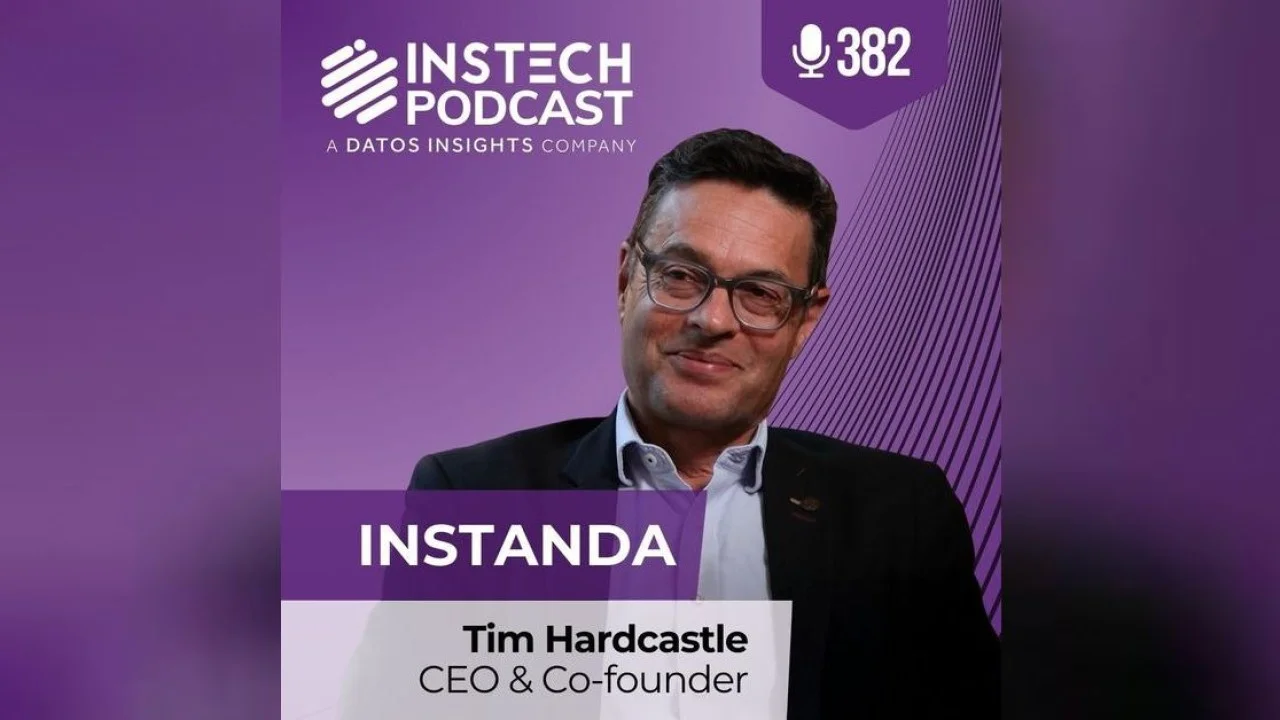
SAN FRANCISCO (WHN) – Building a no-code platform for insurance carriers seemed like a fool’s errand a decade ago. Yet, Tim Hardcastle, CEO and co-founder of INSTANDA, saw past the industry’s entrenched skepticism. His contrarian vision, born from a senior role at Hiscox, has since scaled into a global insurtech platform, and Hardcastle is now mapping out the next phase of its evolution.
The core of INSTANDA’s offering is its no-code approach. This isn’t just about drag-and-drop interfaces for marketing copy. It’s about enabling insurance carriers to design, build, and deploy complex insurance products without writing a single line of traditional code. Think of it as an abstraction layer for insurance product development, significantly reducing the pipeline for bringing new offerings to market.
Hardcastle’s journey with INSTANDA began when the insurance industry was, by and large, a closed shop. Legacy systems and deeply ingrained development processes made innovation slow. The idea of empowering underwriters and product managers with tools to directly configure policies and pricing was met with considerable resistance. “Most said it couldn’t be done,” Hardcastle reflects, according to a recent InsTech podcast episode.
This resistance highlights a fundamental challenge in insurance technology: balancing agility with the absolute necessity for regulatory compliance and rock-solid data integrity. For years, any significant change to policy wording or pricing structures required extensive IT intervention, often involving months of development cycles. INSTANDA’s platform aims to bypass this bottleneck, allowing for faster iteration and adaptation to evolving market demands.
The platform’s architecture, while not detailed in the podcast, likely involves a sophisticated rules engine and a flexible data model. This allows users to define product parameters, underwriting rules, and claims workflows visually. When a policy is bound or a claim is initiated, the system translates these configurations into executable processes, managing the flow of information and applying the correct logic. This move away from monolithic codebases to a more modular, configurable system is key to achieving the speed Hardcastle’s company promises.
What does this mean for the insurance ecosystem? For carriers, it translates to a reduced time-to-market for new products. Imagine launching a specialized cyber insurance policy tailored to a niche industry within weeks, rather than months. It also means greater autonomy for business teams, reducing their reliance on overloaded IT departments. This can lead to a more dynamic product portfolio, better able to respond to emerging risks and customer needs.
From a technical standpoint, INSTANDA’s success suggests a broader trend towards composable enterprise software. Instead of monolithic applications, businesses are increasingly looking for platforms that can be assembled from best-of-breed components, often configured through low-code or no-code interfaces. This approach fosters flexibility and reduces vendor lock-in.
The implications extend to data and analytics. With a more agile product deployment pipeline, carriers can gather richer, more granular data on policy performance and customer behavior. This data, in turn, can feed back into the product development cycle, enabling continuous improvement and more accurate risk inference. The ability to rapidly test and refine pricing models based on real-world data is a significant advantage in a competitive market.
Hardcastle’s perspective on the next decade of innovation, as discussed in the podcast, is crucial. While specific details of INSTANDA’s “next big leap” remain under wraps, his long-term view suggests a continued push towards deeper integration and potentially more advanced capabilities within the no-code framework. This could involve leveraging AI for more sophisticated underwriting assistance or automating complex claims adjudication processes, all configured by business users.
The journey from a contrarian idea discussed at the Royal Exchange to a global platform powering operations worldwide is a testament to Hardcastle’s persistence. It’s a story about challenging industry norms and building technology that directly addresses a fundamental operational bottleneck. The focus remains on empowering insurers to build and adapt their offerings with unprecedented speed and flexibility.
The InsTech podcast episode, accredited for Continuing Professional Development by the Chartered Insurance Institute (CII), offers up to 0.5 hours for listeners. The learning objectives aim to equip attendees with insights into long-term change within the insurance sector.