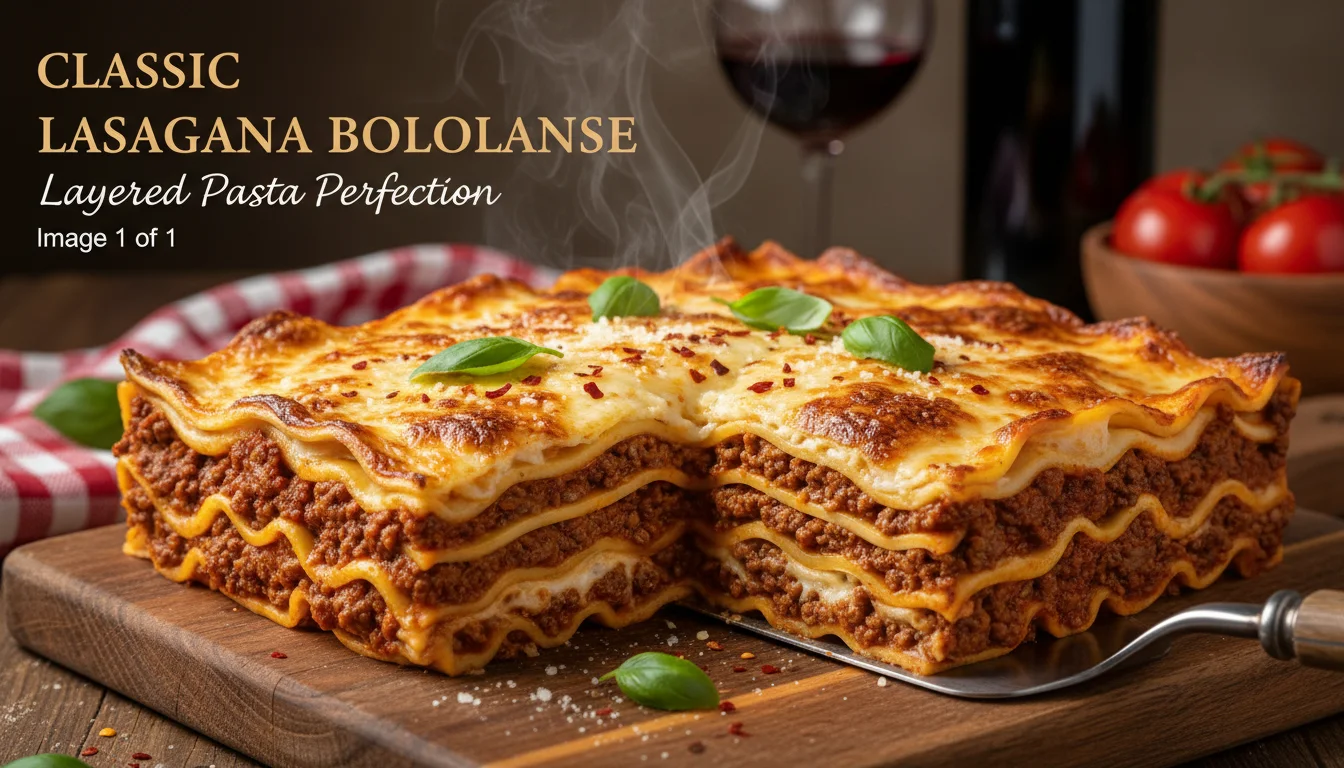
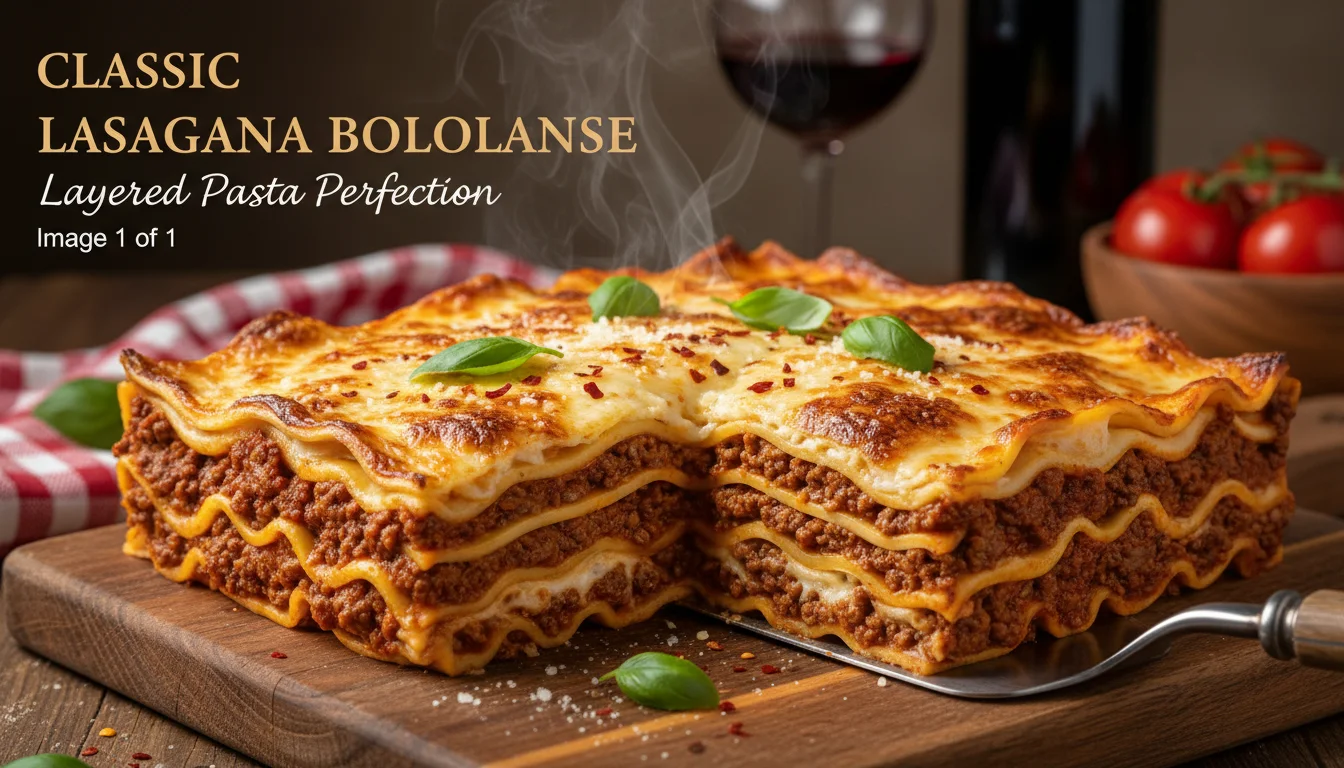
Classic Lasagna Bolognese: Layered Pasta Perfection
Imagine this: a dish so rich, so comforting, it silences every room. That’s the magic of a truly great Lasagna Bolognese. The deep, savory notes of a slow-cooked ragu, the creamy embrace of béchamel, all cradled between tender sheets of pasta. It’s not just a meal; it’s an event. We’re talking about building flavor, layer by delicious layer, until you have a bubbling masterpiece that’s utterly irresistible. This is the kind of food that brings people together, the kind that earns rave reviews at your dinner table. Forget those dry, bland versions you might have tried. We’re going for the real deal here, the kind of Bolognese pasta layers that make you close your eyes with every bite.
| Prep Time | 45 minutes |
| Cook Time | 2 hours 30 minutes (Ragu) + 45 minutes (Bake) |
| Total Time | Approximately 3 hours 45 minutes |
| Servings/Yield | 8-10 people |
| Estimated Calories | ~650 per serving |
Why You’ll Love This Lasagna Bolognese
- The Sauce is Everything: We’re talking a deeply flavorful, slow-simmered ragu that forms the soul of these Bolognese pasta layers.
- Perfectly Creamy Béchamel: No lumps, just velvety smooth sauce that complements the rich meat without overpowering it.
- Build Your Own Masterpiece: You control the thickness and the balance with every layer.
- Make-Ahead Marvel: This dish tastes even better the next day, making it ideal for entertaining.
Ingredients: Building Blocks of Flavor
Great lasagna starts with great ingredients. Don’t skimp here; your taste buds will thank you.
- For the Bolognese Ragu:
- 2 tablespoons extra virgin olive oil
- 1 pound ground beef (80/20 is ideal for richness)
- 1/2 pound ground pork
- 1 large yellow onion, finely chopped
- 2 carrots, finely chopped
- 2 celery stalks, finely chopped
- 4 cloves garlic, minced
- 1 cup dry red wine (like Chianti or Merlot)
- 28 ounces crushed San Marzano tomatoes
- 6 ounces tomato paste
- 1 cup whole milk
- 1 teaspoon dried oregano
- 1/2 teaspoon dried basil
- 2 bay leaves
- Salt and freshly ground black pepper, to taste
- For the Béchamel Sauce:
- 1/2 cup (1 stick) unsalted butter
- 1/2 cup all-purpose flour
- 4 cups whole milk, warmed
- 1/2 teaspoon freshly grated nutmeg
- Salt and white pepper, to taste
- For Assembly:
- 1 pound lasagna noodles (no-boil or regular, prepared according to package directions)
- 1.5 cups grated Parmigiano-Reggiano cheese
- 1 cup shredded mozzarella cheese (optional, for extra gooeyness)
Bolognese pasta layers 1
Ingredient Deep Dive: What Makes It Sing?
The soffritto – that finely chopped onion, carrot, and celery – is the aromatic foundation. Chop it very small; we want it to melt into the sauce, not be chunky. Using both beef and pork for the ragu adds a depth of flavor that’s hard to beat. The milk in the ragu? It sounds odd, but it tenderizes the meat and smooths out the acidity of the tomatoes. For the béchamel, using warmed milk helps prevent lumps. And Parmigiano-Reggiano? It’s non-negotiable for authentic flavor. Seriously, don’t substitute.
Crafting the Perfect Bolognese Ragu
This is where the patience pays off. A quick ragu is just not the same.
- Heat the olive oil in a large, heavy-bottomed pot or Dutch oven over medium-high heat.
- Add the ground beef and pork. Break it up with a spoon and cook until browned, about 8-10 minutes. Drain off most of the fat, leaving about 2 tablespoons for flavor.
- Add the chopped onion, carrots, and celery to the pot. Cook, stirring occasionally, until softened and the onion is translucent, about 10-12 minutes. This is your soffritto building its aromatic base.
- Stir in the minced garlic and cook for 1 minute more until fragrant. Be careful not to burn it.
- Pour in the red wine. Scrape the bottom of the pot to loosen any browned bits. Let the wine simmer and reduce by about half, about 5 minutes.
- Stir in the crushed San Marzano tomatoes and tomato paste. Mix well.
- Pour in the whole milk. Add the dried oregano, dried basil, and bay leaves. Season generously with salt and freshly ground black pepper.
- Bring the sauce to a simmer, then reduce the heat to low. Cover partially and let it cook gently for at least 2 hours, stirring occasionally. The longer it simmers, the richer the flavor. The sauce should thicken considerably.
- Remove the bay leaves before assembling. Taste and adjust seasoning.
Bolognese pasta layers 2
Whipping Up Velvety Béchamel
This creamy sauce balances the rich ragu beautifully.
- Melt the butter in a medium saucepan over medium heat.
- Whisk in the flour until a smooth paste forms (this is called a roux). Cook, whisking constantly, for about 2 minutes to cook out the raw flour taste.
- Gradually whisk in the warmed milk, a little at a time, ensuring each addition is fully incorporated before adding more. This prevents lumps.
- Continue to cook and whisk over medium heat until the sauce thickens to a consistency that coats the back of a spoon, about 5-8 minutes. Don’t let it boil vigorously.
- Stir in the freshly grated nutmeg. Season with salt and white pepper to taste. Remove from heat.
Assembling Your Bolognese Pasta Layers
This is where it all comes together. Precision makes for a perfect bake.
- Preheat your oven to 375°F (190°C).
- Lightly grease a 9×13 inch baking dish.
- Spread a thin layer of béchamel sauce on the bottom of the dish. This prevents the first pasta layer from sticking.
- Arrange a layer of lasagna noodles over the béchamel. If using regular noodles, ensure they are cooked al dente and drained.
- Spread about one-third of the Bolognese ragu evenly over the noodles.
- Spoon about one-quarter of the remaining béchamel sauce over the ragu.
- Sprinkle with about one-third of the grated Parmigiano-Reggiano cheese.
- Repeat the layers: noodles, ragu, béchamel, Parmigiano-Reggiano. You should have three layers of noodles, ragu, and béchamel.
- For the final layer, top the last layer of noodles with the remaining béchamel sauce. Ensure it covers the noodles completely.
- Sprinkle generously with the remaining Parmigiano-Reggiano and the shredded mozzarella (if using).
Baking to Golden Perfection
The final transformation happens in the oven.
- Cover the baking dish tightly with aluminum foil.
- Bake for 25 minutes.
- Remove the foil and bake for another 20-25 minutes, or until the top is golden brown and bubbly.
- Let the lasagna rest for at least 10-15 minutes before slicing and serving. This is crucial for the Bolognese pasta layers to set.
Bolognese pasta layers 3
“Don’t rush the resting period. If you cut into it immediately, it will be a delicious mess. Letting it sit allows the layers to firm up, making for cleaner slices and a better eating experience. Trust me on this one.”
Chef’s Tips for Flawless Bolognese Pasta Layers
A few secrets from the kitchen can elevate your lasagna game.
- The Squeeze Test: When making béchamel, if you get lumps, don’t despair. Strain it through a fine-mesh sieve.
- Noodle Choice: No-boil noodles are a lifesaver for busy cooks. They absorb liquid from the sauces and cook beautifully. If using regular noodles, cook them a minute or two less than the package directs, as they will continue to cook in the oven.
- Flavor Boost: A splash of milk in the ragu towards the end of cooking can add a lovely richness.
- The Browning is Key: Don’t rush browning the meat. That caramelization adds immense flavor to the ragu.
Variations & Substitutions
Make this recipe your own!
- Vegetarian Lasagna: Replace the meat with finely chopped mushrooms, zucchini, eggplant, and lentils. Sauté them thoroughly to develop flavor before adding to the sauce base.
- Spicy Kick: Add a pinch of red pepper flakes to the ragu while it simmers, or a finely diced jalapeño with the soffritto.
- Gluten-Free: Use gluten-free lasagna noodles. Ensure your béchamel flour substitute is gluten-free.
- Dairy-Free: Use a plant-based milk for the béchamel and a dairy-free cheese alternative.
Storage & Reheating
Leftovers are a gift. Store them properly!
Lasagna can be stored in an airtight container in the refrigerator for up to 3-4 days. For longer storage, wrap it tightly in plastic wrap and then foil and freeze for up to 2-3 months. To reheat, bake covered at 350°F (175°C) until heated through. Individual slices can be reheated in the microwave or a toaster oven.
Bolognese pasta layers 4
Frequently Asked Questions
Why is my lasagna watery?
This often happens if the ragu isn’t cooked down enough, or if too much liquid is added during assembly. Ensure your ragu is thick and has simmered for its full duration. Letting the lasagna rest after baking also helps the liquids redistribute.
Can I make the ragu and béchamel ahead of time?
Absolutely! The ragu can be made 2-3 days in advance and stored in the refrigerator. The béchamel is best made fresh, but can be made a day ahead and gently reheated, stirring frequently. You can also assemble the entire lasagna a day in advance and bake it when ready; it may just need an extra few minutes in the oven.
What kind of pasta is best for lasagna?
While traditionalists might argue, both regular and no-boil lasagna noodles work wonderfully. No-boil noodles are incredibly convenient and absorb moisture from the sauces, resulting in tender pasta. If using regular noodles, cook them al dente as they finish cooking in the oven.