Europe’s Military Resurgence: A New Draft?
In the wake of evolving geopolitical landscapes, several prominent European NATO members are strategically bolstering their professional armed forces. This resurgence is largely characterized by the introduction or expansion of voluntary national service schemes, a notable departure from the trend of shrinking conscript armies that followed the Cold War’s conclusion. The full-scale invasion of Ukraine by Russia in 2022, and the persistent conflict there, has undeniably heightened concerns regarding potential future aggression towards NATO territories, thereby prompting a re-evaluation of defense capabilities across the continent.
Currently, nine European NATO states maintain conscription: Denmark, Estonia, Finland, Greece, Latvia, Lithuania, Norway, Sweden, and Turkey. Within Turkey, which boasts the second-largest military in the alliance after the United States, men aged between 20 and 41 are mandated to undertake between six and twelve months of military service. In contrast, Norway extends conscription to both men and women, typically for a period of twelve months. Looking ahead, Croatia is set to reintroduce conscription next year, requiring men aged 19 to 29 to complete two months of basic military training. Consequently, the landscape of military service in Europe is undergoing significant adjustments.
Beyond those with conscription, many other NATO members rely on entirely professional militaries. The United Kingdom, a nation whose conventional military strength rivals that of France and Germany, and uniquely possesses nuclear weapons alongside France among European NATO states, operates a professional army. It distinguishes itself further by recruiting minors, with 16-year-olds eligible to join upon obtaining parental consent. Similarly, Albania, Czechia, Hungary, Italy, Luxembourg, Montenegro, North Macedonia, Portugal, Slovakia, Slovenia, and Spain also maintain professional military forces. Iceland, notably, has no standing military, with its Coast Guard fulfilling certain defense-related functions.
More recently, Belgium’s Ministry of Defence has initiated a voluntary military service program, extending invitations to 17-year-olds for a monthly stipend of approximately €2,000. This initiative, slated to commence next year, aims to significantly increase the army’s reservist numbers from an estimated 6,000 to 20,000. Belgium’s neighbor, the Netherlands, similarly launched its voluntary military service in 2023 as a means to reinforce its professional armed forces. Poland, possessing one of NATO’s largest armies, introduced a one-month voluntary basic military training program in 2024. Prime Minister Donald Tusk further announced ambitious plans this year to implement “large-scale military training for every adult male,” envisioning an army of half a million, including reservists. Bulgaria, in 2020, established voluntary military service for citizens up to the age of 40 for a six-month duration, and Romania is planning to introduce a four-month voluntary military service next year. These developments underscore a continental trend towards strengthening national defense capabilities.
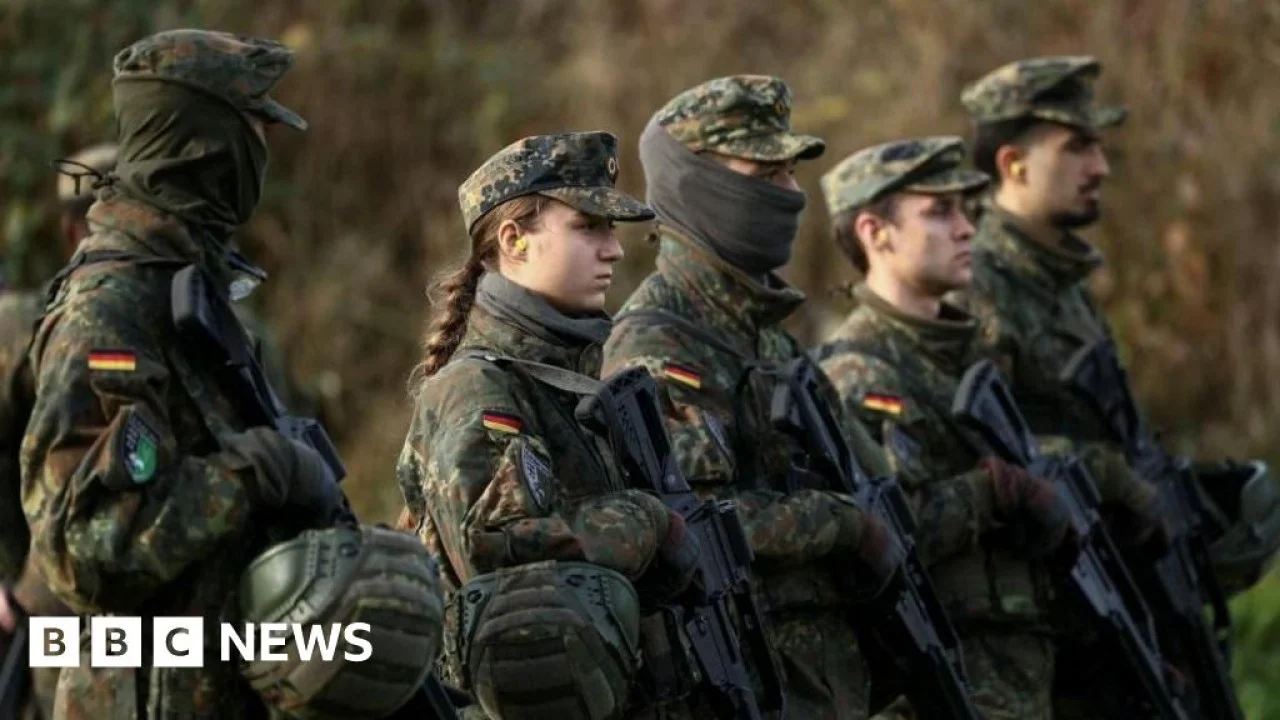
Germany, having abolished compulsory military service in 2011, has recently voted in favor of reinstating military service on a voluntary basis. Furthermore, the legislation includes provisions for a form of compulsory service should the security situation deteriorate or if volunteer numbers prove insufficient. Under this new framework, all 18-year-old men will be required to complete a questionnaire assessing their willingness and ability to join the armed forces, followed by a medical examination from July 2027 to determine suitability. In the event of war, these records would provide a valuable resource for potential recruits. Chancellor Friedrich Merz has articulated a vision of creating the “strongest conventional army in Europe,” with plans to expand the active service personnel from the current 183,000 to 260,000 by 2035, complemented by an additional 200,000 reservists. However, this proposal has met with opposition, as evidenced by student protests in approximately 90 cities on December 5th, with some participants rallying under the slogan “Don’t end up as cannon fodder.” A recent Forsa survey indicated that while just over half of respondents favored compulsory service, opposition rose to 63% among 18 to 29-year-olds.
France, which ended conscription 25 years ago, currently maintains a military force of around 200,000 personnel and an additional 47,000 reservists. A new scheme is being developed to integrate volunteers into the existing structure, offering young men and women ten months of paid military training. This new “national service,” set to be gradually implemented from next summer, will primarily target 18 and 19-year-olds, who will receive a monthly wage of at least €800 (£700). Initially, the program will be limited to 3,000 participants next year, with a projected increase to 50,000 by 2035. President Emmanuel Macron has emphasized the importance of preparedness, stating, “The only way to avoid danger is to prepare for it.” He further stressed the need to “mobilise the nation to defend itself, to be ready and remain respected.” Public opinion polls suggest strong support for voluntary military service, with an Elabe survey revealing that 73% favored the measure. Notably, younger demographics aged 25-34 showed the least support, yet still maintained a 60% majority in favor.
Beyond the NATO framework, other European nations are adopting diverse strategies for military staffing. Within the EU, but not members of NATO, countries like Switzerland, a non-EU nation, mandate male citizens aged 18 to 30 to serve in the military, civil defense, or an alternative civilian service. Last week, Swiss voters overwhelmingly rejected a proposal to extend national service—encompassing military, civil protection teams, or other forms of service—to women. This indicates a complex and varied approach to defense and national service across the European continent.