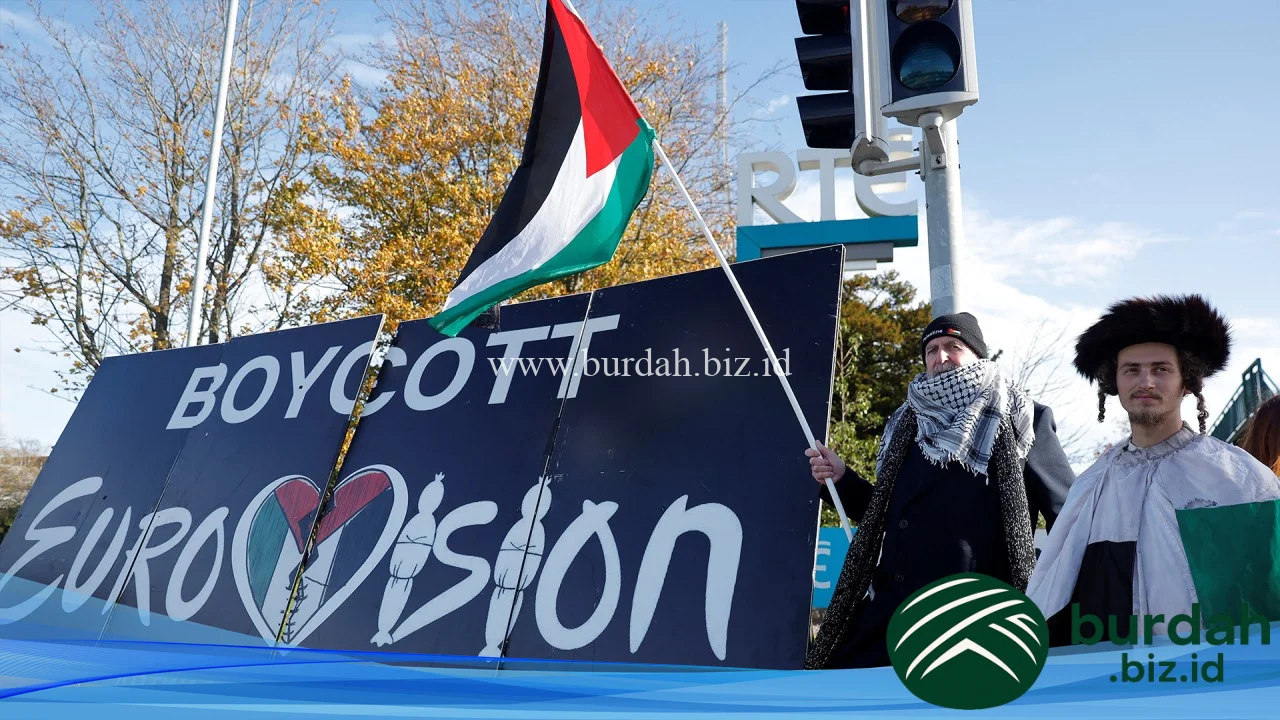
The Eurovision Song Contest, an annual celebration of music and cultural unity, is currently engulfed in a major geopolitical firestorm. Intense and widespread backlash over Israel’s participation has mounted, directly fueled by the country’s ongoing military operations in Gaza and the resulting humanitarian crisis. The debate extends far beyond the stage. It questions the very nature of cultural events during times of intense conflict.
This is not a quiet disagreement. It is a loud, sustained call for a boycott from a coalition of pro-Palestinian activists, prominent artists, and thousands of fans across Europe who are demanding the European Broadcasting Union (EBU) disqualify Israel from the competition. Protesters argue that the severity of the conflict and the civilian toll in Gaza make Israel’s inclusion in a celebratory event morally unacceptable, pointing to a stark disconnect between the contest’s festive atmosphere and the reality on the ground.
The Humanitarian Crisis as a Focal Point
The core of the backlash is tied directly to the dire situation for civilians in Gaza. Activists and critics consistently highlight the blockade and the severe restrictions on humanitarian aid. Global attention has been drawn to critical access points, where the flow of essential supplies like food, water, and medicine is controlled. The operational status of these gateways has become a symbol of the larger crisis, and the difficulties in getting aid through are a central argument for those calling for Israel’s exclusion from international cultural platforms.
One of the most significant of these gateways is the Rafah crossing. Located on the border between the Gaza Strip and Egypt, this crossing has long been a primary conduit for humanitarian relief and the main exit point for civilians. The question of who controls the Rafah crossing is critical to understanding the humanitarian situation. Following military operations in the area, the crossing fell under Israeli military control, a development that international aid organizations reported had effectively halted the flow of aid from the Egyptian side, exacerbating the already desperate conditions inside Gaza.
Scrutiny on the EBU’s Position
The European Broadcasting Union has firmly resisted the calls for disqualification. Throughout the controversy, EBU organizers have maintained their official position. They state that Eurovision is a non-political event for public broadcasters, not governments. According to the EBU, Israel’s public broadcaster, Kan, has not violated any rules of membership that would warrant exclusion.
The EBU’s stance is being heavily challenged by critics who point to a recent and powerful precedent: the decision to ban Russia from the contest in 2022 after its full-scale invasion of Ukraine.
That swift action is now the benchmark against which the EBU’s current inaction is measured. Protest groups and even some political figures have accused the organization of a double standard. The EBU has defended its differing responses, but this explanation has done little to quiet the public outcry or satisfy those who see the situations as comparable in terms of international law and human impact.
Artists and Broadcasters Under Pressure
The immense pressure has trickled down to the individual artists and national broadcasters participating in the contest. Many have been caught in the middle of a debate they did not create. The key points of contention include:
- Calls for Artist Withdrawal: Several contestants have faced public campaigns urging them to pull out of the competition in solidarity with Palestinians.
- National Petitions: In countries like Iceland, Finland, Norway, and Ireland, petitions signed by hundreds of local musicians and industry professionals demanded that their national broadcasters boycott the event entirely if Israel was allowed to participate.
- Tense Atmosphere: While most broadcasters ultimately chose to attend, the lead-up to the event in Malmö, Sweden, was marked by plans for large-scale protests, requiring a significant security presence.
The situation has transformed what is typically a week of vibrant performances and cultural exchange into a focal point for deep political division. The music has been overshadowed by a conversation about war, accountability, and the role of art in a world facing crisis.