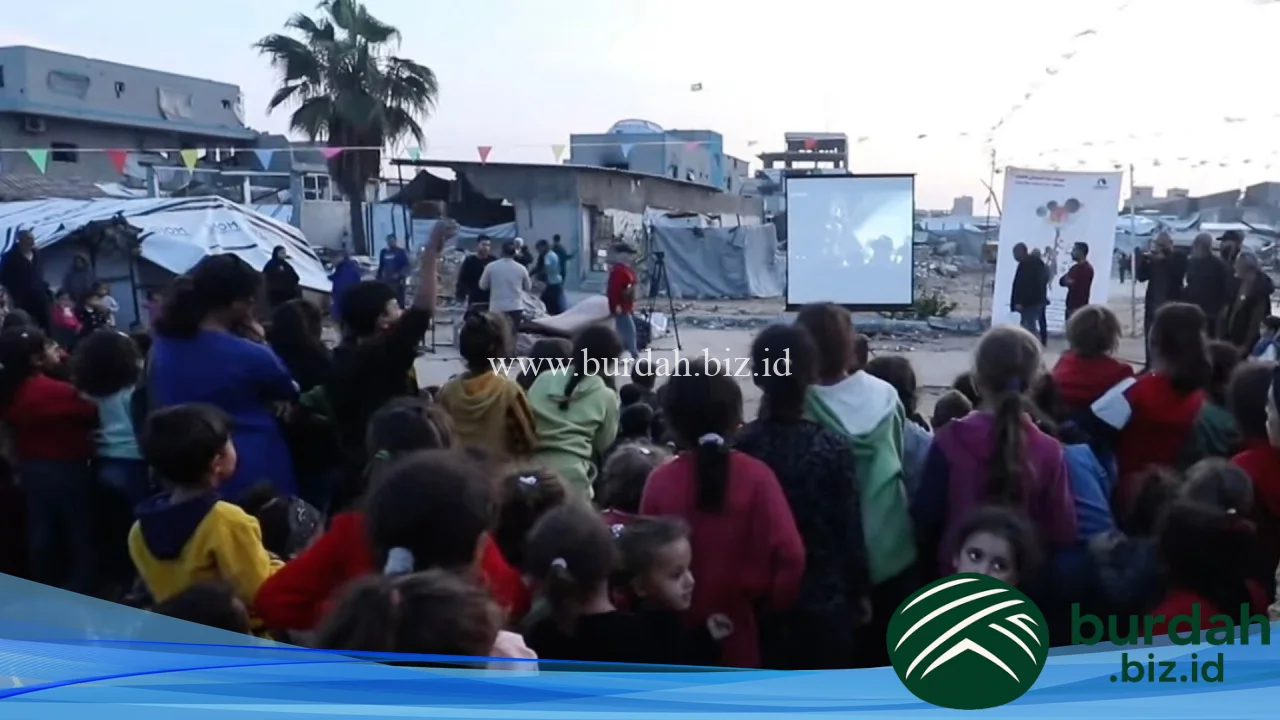
In a Gaza City displacement camp, the familiar glow of a movie screen offers a rare sight. For children who have known little but the sounds and sights of conflict, a local cinema initiative is carving out moments of peace and play. Volunteers have erected a makeshift screen among the tents and rubble, providing a brief but powerful escape for a generation profoundly affected by war.
The experience is a flicker of normalcy. It is a chance to just be a kid.
Creating a Positive Space
The project’s entire purpose is to offer solace. Organizers work to counteract the constant trauma children face from bombardment, displacement, and the loss of family and friends. They hope to replace harrowing memories, even for a short while, with the color and stories found in film. The war has been a relentless presence, and this initiative pushes back.
“We’re here trying to present so many activities for children to live in a positive vibe,” explained Minass al-Jabour, the initiative’s media coordinator. “So we are trying to make them skip the scenes, the hard scenes that they were living during the war in Gaza.”
This effort provides a space where laughter can temporarily drown out the noise of a precarious reality. It’s a deliberate attempt to protect childhood in an environment where it is constantly under threat. The simple act of watching a movie together becomes an act of communal healing and defiance.
A Childhood Interrupted by Crisis
The context for this small cinema is devastating. The psychological and physical toll on Gaza’s youngest residents is immense, and the statistics paint a grim picture of the challenges they face every single day. The need for mental and emotional relief is critical.
According to Gaza’s health authorities, the impact of the conflict since October 7, 2023, includes:
- At least 20,000 children killed and tens of thousands more have been injured.
- An estimated 55,000 children have lost one or both of their parents.
- With 92 percent of schools severely damaged or destroyed, most children have been without formal education for two years.
These figures highlight a generation growing up surrounded by loss. Their homes, schools, and sense of security have been shattered. For many, the film screenings are the first time they have experienced any form of public entertainment since the war began, offering a precious connection to a world beyond their immediate surroundings.
The Power of a Shared Story
The response from the children themselves is proof of the project’s success. Gathered before the screen, their focus shifts from the flimsy tents and rubble-strewn buildings to the world unfolding in the film. It is a welcome distraction.
Sara Abu Sharbi, a displaced girl in the camp, shared her feelings about the experience.
“This is something new for me. I came out of the war, and they are giving us many activities, including cinema … and we really enjoyed it,” she told Al Jazeera.
Her words capture the simple joy of the event. It is more than just a movie; it is an acknowledgment of their need for fun and imagination. It’s a moment where they are not defined by their trauma but by their curiosity and capacity for happiness.
Art as a Lifeline for Hope
Palestinian filmmaker Mustafa al-Nabih, who participates in the initiative, sees cinema as an essential tool for survival and hope. He believes that art can offer a perspective that transcends the immediate destruction, helping children hold on to their imagination when everything around them is broken.
“A child who has seen so much blood and loss can, through cinema, glimpse a better reality,” said al-Nabih. “Cinema transports a child into a world of imagination, love and beauty. It moves their mind, lets them reach for a distant horizon, and shows them colours, stories, and moments that take them out of the ruin around them.”
In this view, a film is not just an escape. It is a window. It shows children that other realities are possible, nurturing the hope and creativity needed to envision a different future for themselves, even from inside a refugee camp.