How a WWII Bombing Site Became a Symbol of Unity Against Russia
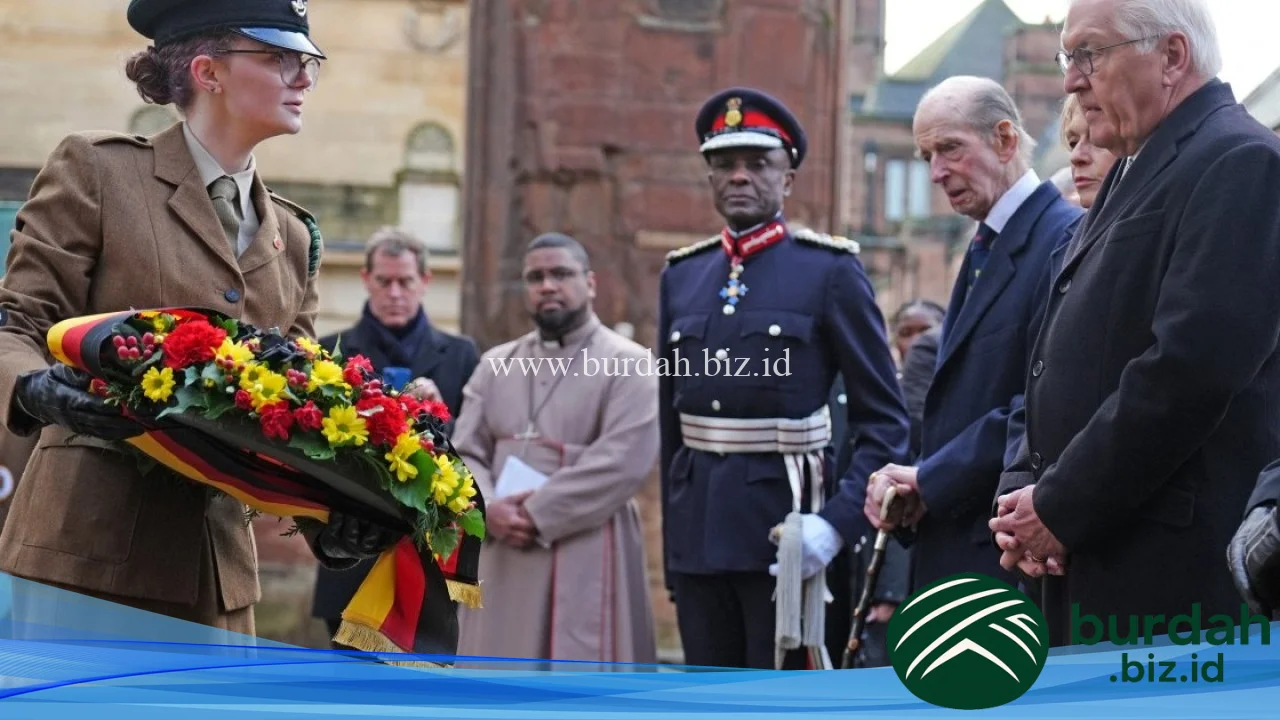
German President Frank-Walter Steinmeier stood in the ruins of Coventry Cathedral, a powerful gesture of atonement for the horrors of the Third Reich. His visit to the central England site was more than just a historical acknowledgment. It was a clear signal, cementing an alliance between Germany and the United Kingdom aimed at confronting Russia’s aggression in Ukraine, the most devastating conflict in Europe since World War II.
The visit on Friday marked a solemn anniversary. It was on the night of November 14, 1940, that a Nazi bombing raid obliterated the 14th-century Gothic cathedral. The attack left over 500 people dead. Today, the roofless ruin stands as a stark, silent reminder of the profound destruction of war.
Representing the UK at the commemoration was the Duke of Kent. He has been a long-standing advocate for British-German reconciliation in the decades following the war. Steinmeier’s appearance was the final engagement of a three-day state visit, the first by a German head of state to the UK in 27 years.
From Enemies to Friends: A Royal Affirmation
The tone for this new chapter in Anglo-German relations was set earlier in the week. During a grand banquet at Windsor Castle, Steinmeier and King Charles III presented a deliberate show of unity. They exchanged toasts celebrating deep cultural and historic ties, but the focus quickly shifted to the present-day challenge of building a common front against Russian hostility.
In his address, President Steinmeier pointed to Coventry as the ultimate symbol of the powerful bonds that can emerge from conflict. The city’s story is one of incredible resilience.
“Flourishing cities grew out of the ashes. Enemies became friends,” he said. “That is our common history – and it shows what is possible when people have the courage to pursue reconciliation.”
This message of turning historical adversity into modern strength resonated throughout the visit. It underscored a shared understanding that past lessons in unity are critically important for navigating current geopolitical storms.
A European Alliance in the Face of New Threats
The state visit is happening at a critical moment. Across Europe, nations are strengthening their connections to support Ukraine and to counter Russian efforts to destabilize Western democracies. These efforts are not just on the battlefield. They include a range of so-called hybrid attacks, such as election interference, widespread disinformation campaigns, and sabotage.
There is another factor driving this push for European cooperation. A sense of unease regarding the reliability of the United States, particularly with the potential for a return of President Donald Trump, has prompted European nations to increase their own military spending and deepen their military partnerships. They are preparing to take on a greater share of the security burden.
- Symbolic Atonement: Steinmeier’s visit to Coventry directly addressed Germany’s WWII past.
- Modern Alliance: The UK and Germany used the visit to publicly reinforce their partnership against Russian aggression.
- European Solidarity: The event reflects a broader trend of European nations increasing cooperation on defense and security.
- Transatlantic Concerns: Underlying the unity is a shared European concern about the future of US foreign policy.
Navigating a Complex Global Stage
The complexities of the Western alliance were also on display. On Friday, French President Emmanuel Macron made a point to emphasize that unity between Europe and the United States is essential for supporting Ukraine. He denied a report from the German magazine Der Spiegel that suggested he was skeptical of US peace efforts.
The magazine had cited a confidential call where Macron and German Chancellor Friedrich Merz allegedly expressed doubts about the US government’s approach to negotiating a peace between Ukraine and Russia. Macron’s response was direct.
“I deny everything,” he stated when asked about the report during a visit to China. “Unity between Americans and Europeans on the Ukrainian issue is essential. And I say it again and again, we need to work together.”
Macron’s comments highlight the delicate balance European leaders are trying to maintain. While building stronger intra-European ties, they also recognize the indispensable role of American partnership in achieving a stable and lasting peace. As he put it, the situation is one of mutual dependence: “We need the United States for peace. The United States needs us for this peace to be lasting and robust.”