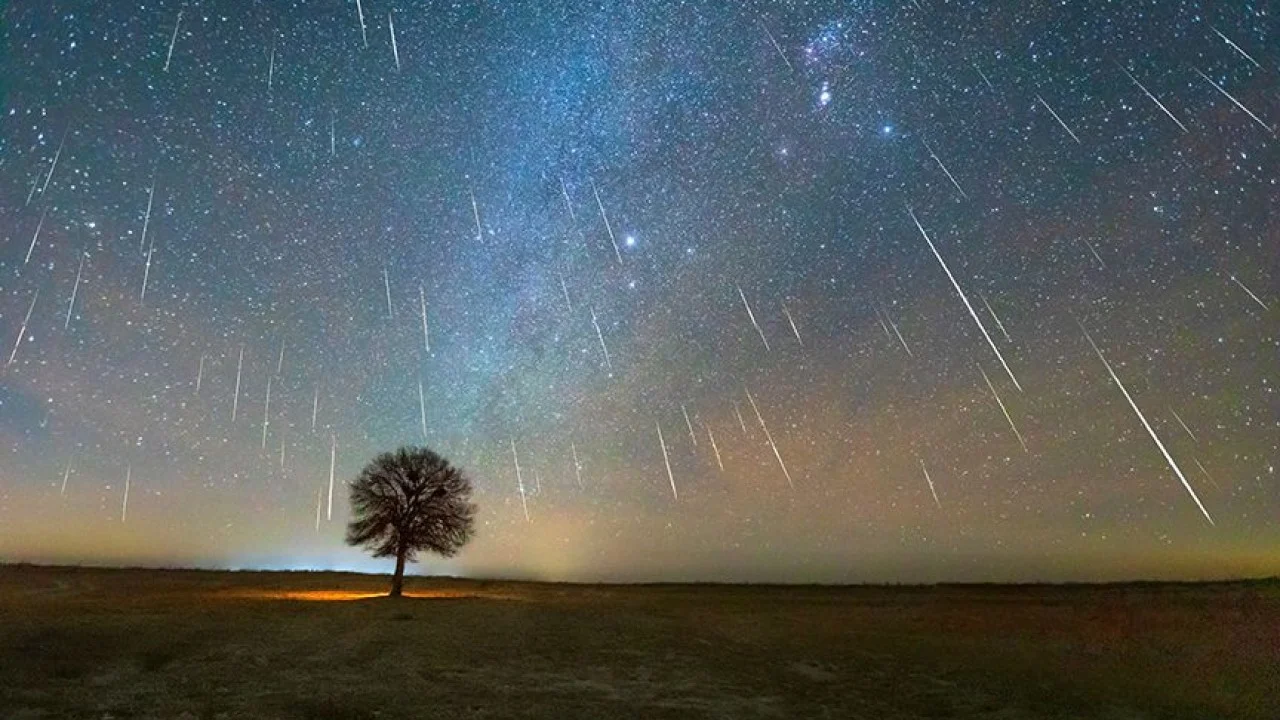
SAN FRANCISCO (WHN) – For the stargazers looking to end 2025 with a celestial spectacle, the Ursid meteor shower offers a final, accessible opportunity to connect with the cosmos. This isn’t about complex optical engineering or theoretical physics; it’s about understanding how Earth’s journey through space creates these fleeting streaks of light, and how, with a little preparation, anyone can witness them.
Meteors, commonly called shooting stars, occur when our planet’s orbit intersects with the debris trail left by a comet. As this interplanetary dust and rock, often no larger than a grain of sand, slams into Earth’s atmosphere at immense speeds, it burns up, creating the visible light show. Watching a meteor shower, according to stargazing resources, remains one of the most straightforward ways to engage with the night sky.
The Ursids, active from December 17th to December 26th, mark the ninth and final major meteor shower of 2025. For those in the Northern Hemisphere, the peak activity is slated for the early morning hours of December 22nd. While the Ursids are typically modest performers, yielding around 10 meteors per hour, the viewing conditions for 2025 are exceptionally favorable.
Crucially, the moon will have set by approximately 6 PM in the Eastern US on December 21st. This means no lunar glow will be present to wash out the fainter meteors, a common obstacle for amateur astronomers. The absence of moonlight, coupled with a location away from urban light pollution, is paramount for maximizing your viewing potential.
The Ursids’ radiant – the point in the sky from which the meteors appear to originate – is the Little Dipper, or Ursa Minor. While the shower’s activity is often strongest just before dawn when Ursa Minor is highest in the sky, meteors will be visible throughout the night during the peak as long as the radiant is above the horizon. For those at northern latitudes, this condition is met all night long.
Forget the expensive equipment. To witness a meteor shower, your own eyes are the only necessary tool. In fact, attempting to use binoculars or telescopes can be counterproductive. These instruments, designed to magnify distant objects, can’t keep up with the rapid, unpredictable trajectory of meteors, which often travel too fast to be effectively tracked through lenses.
The key to a successful meteor-watching session lies in preparation and patience. Allow your eyes at least 30 minutes to fully adjust to the darkness. If you must use a light source, opt for a red-filtered flashlight; white light can temporarily impair your night vision, undoing your adaptation period.
Understanding the concept of a radiant is helpful. Each meteor shower is named after the constellation that serves as its apparent origin point. While you don’t need to stare directly at the radiant, knowing its position can orient your viewing. Apps like Stellarium can provide real-time data on radiant positions for your specific location, helping you determine the optimal time to observe.
Should you wish to plan ahead for 2026, several other notable meteor showers punctuate the year. The Quadrantids, active in late December and early January, are known for a sharp peak and can produce up to 120 bright fireball meteors per hour. Their radiant, the now-decommissioned Quadrans Muralis, is located near Boötes.
April brings the Lyrids, active in the latter half of the month with a peak lasting about three nights. Expect 15 to 20 meteors per hour under good conditions. A quarter of these, according to Earth Sky, may exhibit persistent trains—lingering ionized gas trails. The Lyrids’ radiant is Hercules, rising before midnight and offering meteors visible all night, with peak visibility just before dawn.
May features the Eta Aquariids, active from mid-April to late May with an elevated activity lasting about a week, peaking on a single night in early May. In the Northern Hemisphere, this shower yields 10 to 30 meteors per hour. Notably, these are remnants of Halley’s Comet. The radiant, Aquarius, sits low on the horizon in the Northern Hemisphere, peaking above the eastern horizon after 2 AM local time.
July and August host both the Southern Delta Aquariids and the Perseids. The Southern Delta Aquariids, radiating from Aquarius, don’t have a sharp peak but offer a steady stream of about 25 meteors per hour in ideal conditions, though they tend to be dimmer and lack persistent trains.
The Perseids, peaking roughly two weeks after the Southern Deltas, are a powerhouse. Producing 100 to 150 meteors per hour, they are known for bright fireballs, colorful hues (green, blue, yellow, red, purple, pink), and persistent trains in about a third of their occurrences. Their radiant is Perseus.
October and November are graced by the Orionids, active from late September to late November, with a gradual peak in the latter half of October. These also stem from Halley’s Comet debris, offering 20 to 25 bright fireball meteors per hour.
The Leonids, active throughout November, peak around the middle of the month, yielding about 15 meteors per hour. While not as numerous as some other showers, they are recognized for their speed and brightness.
The Geminids, active from early to mid-December, represent the year’s most spectacular event, peaking around December 14th in 2025. Boasting up to 120 or even 150 meteors per hour, they are also the brightest and most colorful, often with yellow tones but capable of displaying a full spectrum of colors. Unlike most showers, the Geminids originate from an asteroid, not comet debris.