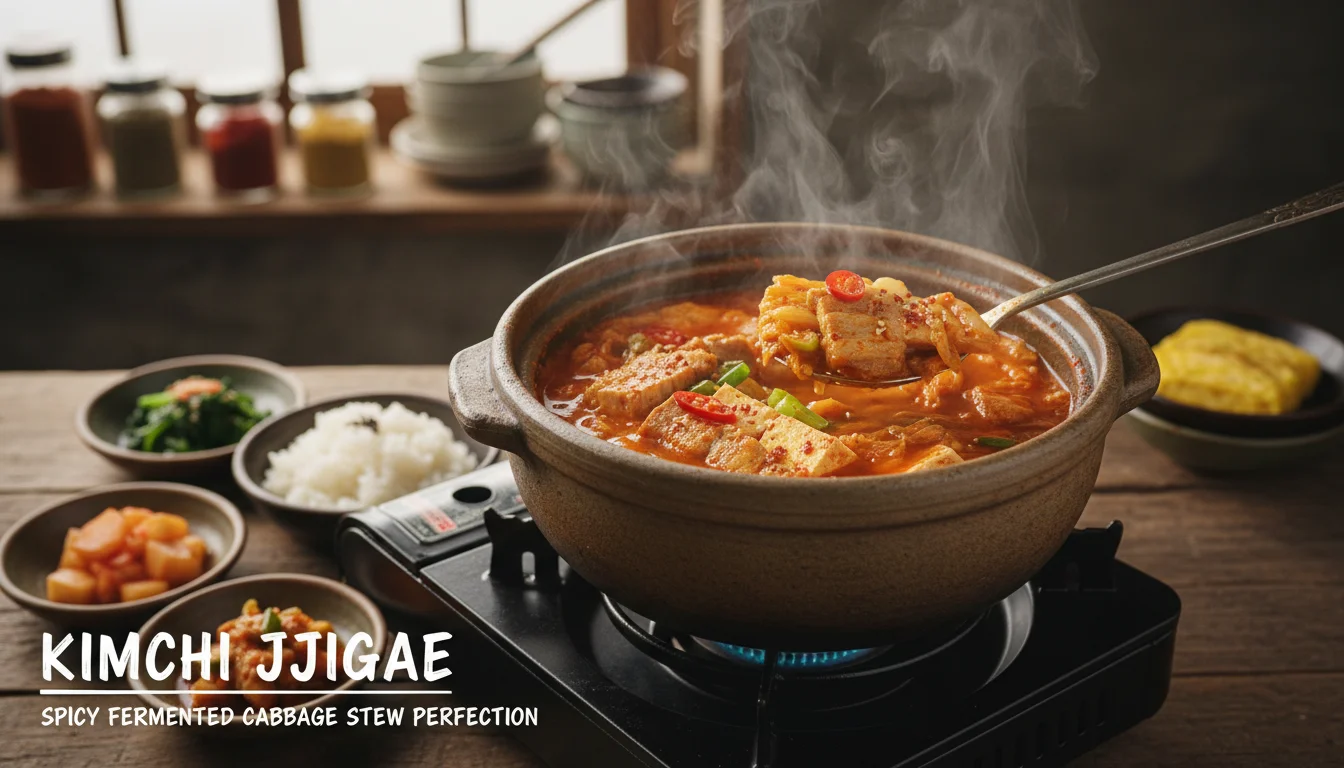
Imagine a bowl. Steam curls upwards, carrying the unmistakable, pungent aroma of fermented cabbage. That first spoonful. It’s a riot of savory, spicy, and slightly sour notes that instantly warms you from the inside out. This isn’t just any stew; this is the pinnacle of comfort food, a dish that has seen me through countless late nights and chilly evenings. Achieving true Kimchi stew perfection is simpler than you might think, and I’m here to guide you every step of the way.
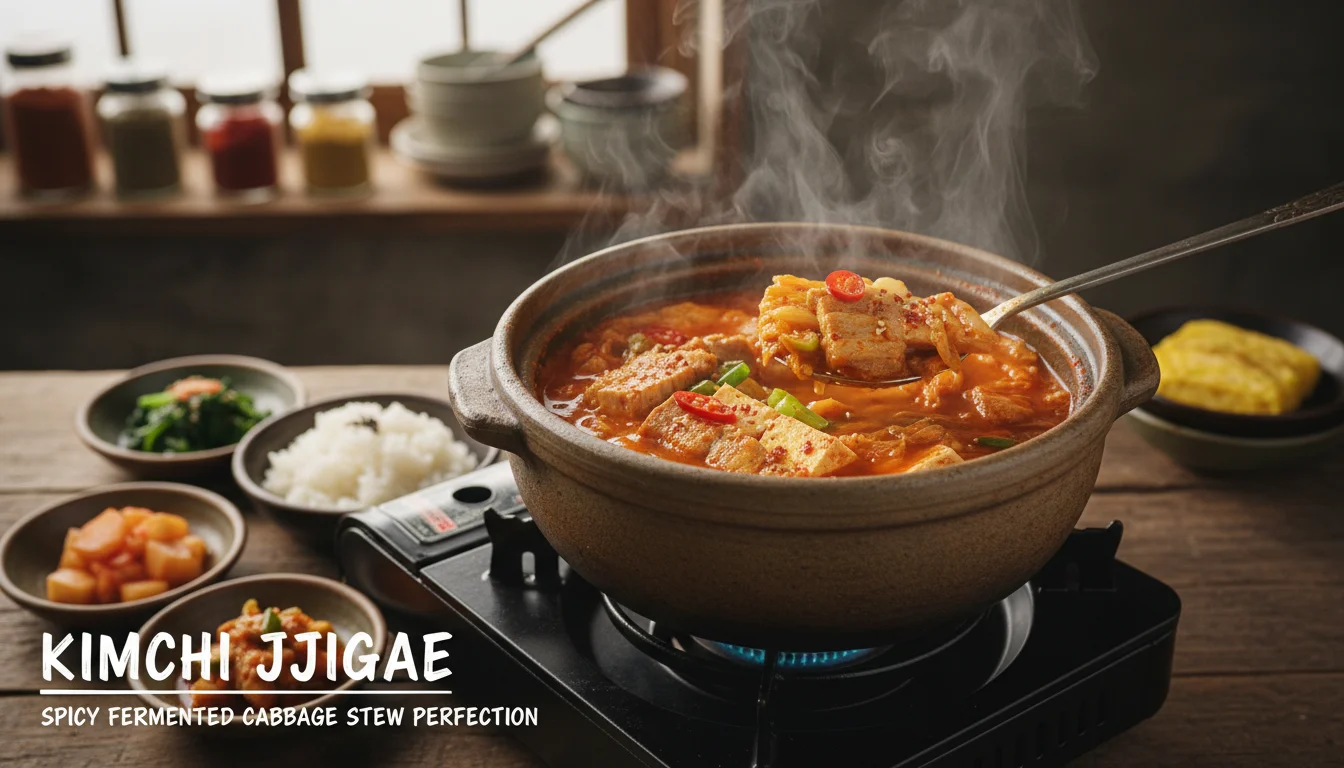
My journey with Kimchi Jjigae started not in a fancy restaurant, but in my grandmother’s tiny kitchen. She’d coax incredible depth from humble ingredients. Turns out, the secret lies in using well-aged kimchi and letting those flavors meld beautifully. Forget bland, watery versions. We’re aiming for a rich, soul-satisfying experience.
| Prep Time: | 15 Minutes |
| Cook Time: | 30 Minutes |
| Total Time: | 45 Minutes |
| Servings/Yield: | 2-3 |
| Estimated Calories: | 350-450 per serving (depending on protein) |
Why This Kimchi Stew Perfection Will Be Your New Go-To
- Deep, Complex Flavor: We use aged kimchi and a touch of gochugaru for layers of deliciousness.
- Quick & Easy: Perfect for a weeknight meal when you crave something hearty and flavorful.
- Customizable: Easily adapt the protein and spice level to your liking.
- One-Pot Wonder: Minimal cleanup means more time enjoying your perfect stew.
Ingredients: The Building Blocks of Kimchi Stew Perfection
The quality of your ingredients makes a world of difference. For this recipe, focus on sourcing the best you can find.
- Well-Aged Kimchi: This is non-negotiable. The longer it ferments, the more complex and sour it becomes, crucial for authentic flavor. Look for kimchi that’s a little soft and has a strong, tangy aroma. If yours is fresh, let it sit on your counter for a day or two.
- Kimchi Brine: Don’t discard the liquid! It’s packed with flavor and adds essential tang and depth.
- Pork Belly or Shoulder: While optional, fatty pork adds incredible richness and umami. You can substitute with tofu for a vegetarian version or skip it altogether.
- Gochugaru (Korean Chili Flakes): Use a good quality, coarse gochugaru for color and a clean, spicy kick. Fine flakes can make the stew muddy.
- Anchovy Broth or Water: A simple anchovy broth (made from dried anchovies and kelp) is traditional and adds a subtle seafood depth. Plain water works in a pinch, but the broth elevates the stew.
- Tofu: Soft or medium tofu is ideal. It soaks up the broth beautifully.
- Onion and Garlic: Essential aromatics that build the flavor base.
- Sesame Oil: For that signature nutty aroma.
- Soy Sauce or Fish Sauce: Just a splash to enhance the savory notes.
- Optional Add-ins: Green onions, mushrooms, zucchini, or a raw egg dropped in at the end for extra richness.
Kimchi stew perfection 1
Crafting Your Kimchi Jjigae: Step-by-Step to Perfection
Phase 1: Preparation is Key
Gather all your ingredients. This makes the cooking process smooth and enjoyable.
- If using pork belly, cut it into bite-sized pieces.
- Chop your aged kimchi into roughly 1-inch pieces.
- Slice your onion thinly.
- Cut your tofu into cubes.
- Mince your garlic.
- Chop your green onions for garnish.
Phase 2: Building the Flavor Foundation
This is where the magic begins. A little sautéing goes a long way.
- Heat a tablespoon of sesame oil in a medium pot or Dutch oven over medium heat.
- Add the pork belly (if using) and cook until lightly browned and some fat has rendered. This takes about 5-7 minutes.
- Add the chopped kimchi to the pot. Stir and cook with the pork for about 5 minutes, allowing the kimchi to soften and caramelize slightly. This step is crucial for developing deep flavor.
- Stir in the minced garlic and sliced onion. Cook for another 2-3 minutes until fragrant and the onions are translucent.
- Add 1-2 tablespoons of gochugaru. Stir well to coat everything and toast the chili flakes for about 30 seconds. Be careful not to burn them.
Phase 3: Simmering to Perfection
Now, we let time and heat do their work.
- Pour in the kimchi brine and the anchovy broth (or water). Stir everything together.
- Bring the stew to a boil.
- Once boiling, reduce the heat to low, cover the pot, and let it simmer for at least 20 minutes. This allows the flavors to meld and deepen. The longer it simmers, the better it gets.
- After 20 minutes, add the tofu cubes. Gently stir them in.
- Continue to simmer for another 5-10 minutes, or until the tofu is heated through and the stew has reached your desired consistency.
- Taste and adjust seasoning. Add a splash of soy sauce or fish sauce if needed for extra savoriness, or a pinch of sugar if it’s too sour.
Kimchi stew perfection 2
Phase 4: The Finishing Touches
Almost there! A few final touches elevate the dish.
- If you like, crack a raw egg into the center of the simmering stew. Let it poach gently for 2-3 minutes until the white is set but the yolk is still runny.
- Ladle the hot stew into bowls.
- Garnish generously with chopped green onions.
- Serve immediately with steamed rice. This is Kimchi stew perfection.
Chef’s Tips for Achieving Kimchi Stew Perfection
Don’t rush the simmering process. Those flavors need time to meld. And remember, the older and more sour your kimchi, the better your stew will be. It’s the soul of the dish!
If you find your stew too spicy, a little bit of sugar can help balance the heat. Conversely, if it’s not spicy enough, a pinch more gochugaru or a drizzle of chili oil will do the trick.
For an extra layer of umami, consider adding a small piece of dried kelp (kombu) to your broth while it simmers, and remove it before adding other ingredients.
Variations & Substitutions: Making it Your Own
- Vegetarian/Vegan: Omit the pork belly. Use vegetable broth instead of anchovy broth. Ensure your kimchi is vegan-friendly (some contain fish sauce). Add extra tofu or mushrooms for heartiness.
- Spicy Kick: Add a teaspoon of gochujang (Korean chili paste) along with the gochugaru for a deeper, spicier flavor.
- Protein Power: Thinly sliced beef (like sirloin) or chicken thighs can be used instead of pork belly. Add them after sautéing the kimchi and cook until browned.
- Seafood Lover’s Dream: Add clams, mussels, or shrimp in the last 5-10 minutes of simmering.
Storage & Reheating: Enjoying Leftovers
Kimchi Jjigae is often even better the next day! Store cooled leftovers in an airtight container in the refrigerator for up to 3 days. Reheat gently on the stovetop over low heat, adding a splash of water or broth if it has thickened too much. Avoid microwaving if possible, as it can make the tofu rubbery.
Kimchi stew perfection 3
Frequently Asked Questions About Kimchi Stew Perfection
Q: How do I know if my kimchi is “aged” enough?
A: Aged kimchi will have a noticeably sour and pungent aroma, and the cabbage will be softer than fresh kimchi. It will have a tangier bite. If your kimchi is fresh and crisp, it’s best to let it sit out at room temperature for a day or two before using it for stew.
Q: Can I use a different type of pot?
A: Absolutely. A heavy-bottomed pot, a Dutch oven, or even a good quality saucepan will work. The key is even heat distribution to prevent scorching.
Q: My stew tastes a bit bland. What did I miss?
A: This usually points to not using enough aged kimchi or not letting it simmer long enough. Ensure you’re using the kimchi brine, and don’t be afraid to add a touch more gochugaru or a splash of fish sauce to boost the savory notes.