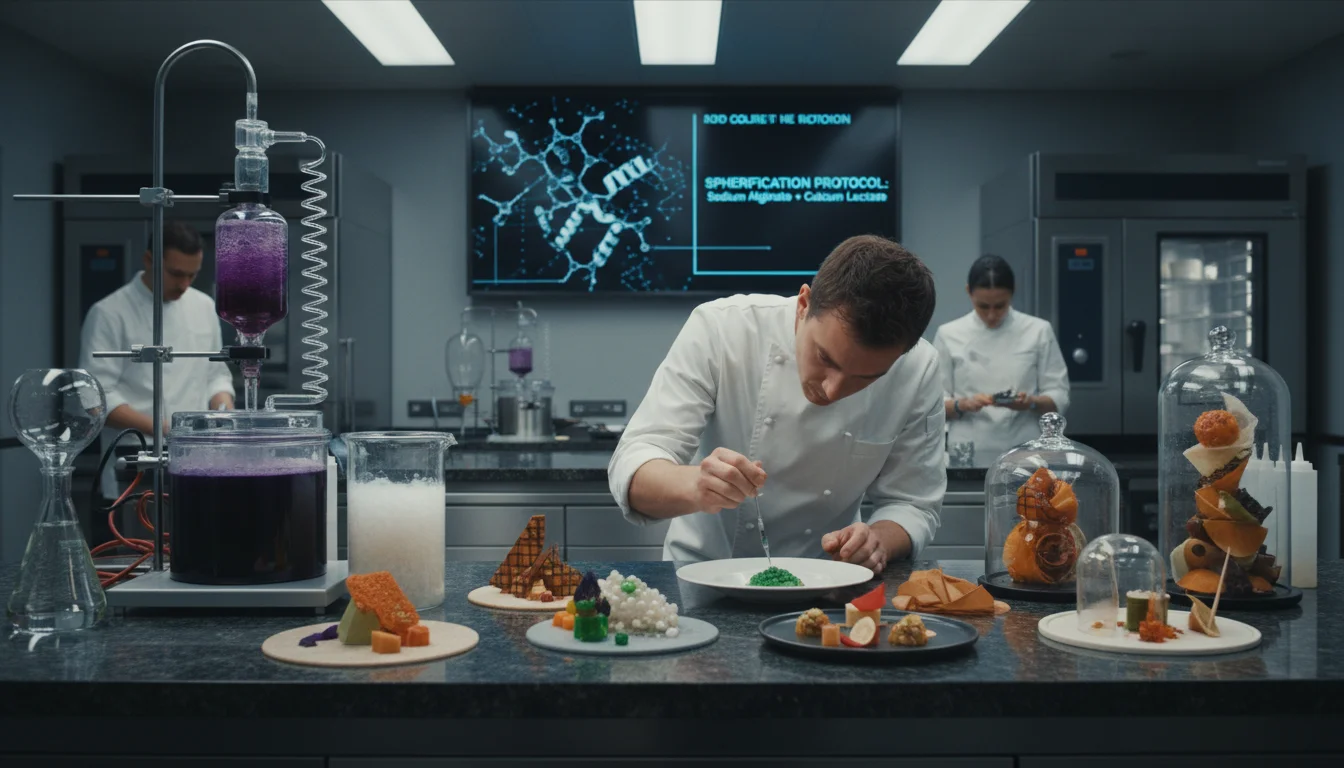
Honestly, the kitchen has always been a place of magic, hasn’t it? But what if that magic wasn’t just about skill and tradition, but also about science? Turns out, it is. Molecular gastronomy has shaken up the culinary world, transforming how we think about food. It’s not just about fancy foams and gels; it’s a deep dive into the very essence of cooking. This approach, often called culinary science innovation, investigates the physical and chemical transformations that happen to ingredients when we prepare them. It’s a fascinating sector that empowers chefs to create dishes that are not only delicious but also surprising and innovative. Let’s be real, the way we eat has changed dramatically, and this scientific lens is a huge part of that evolution.
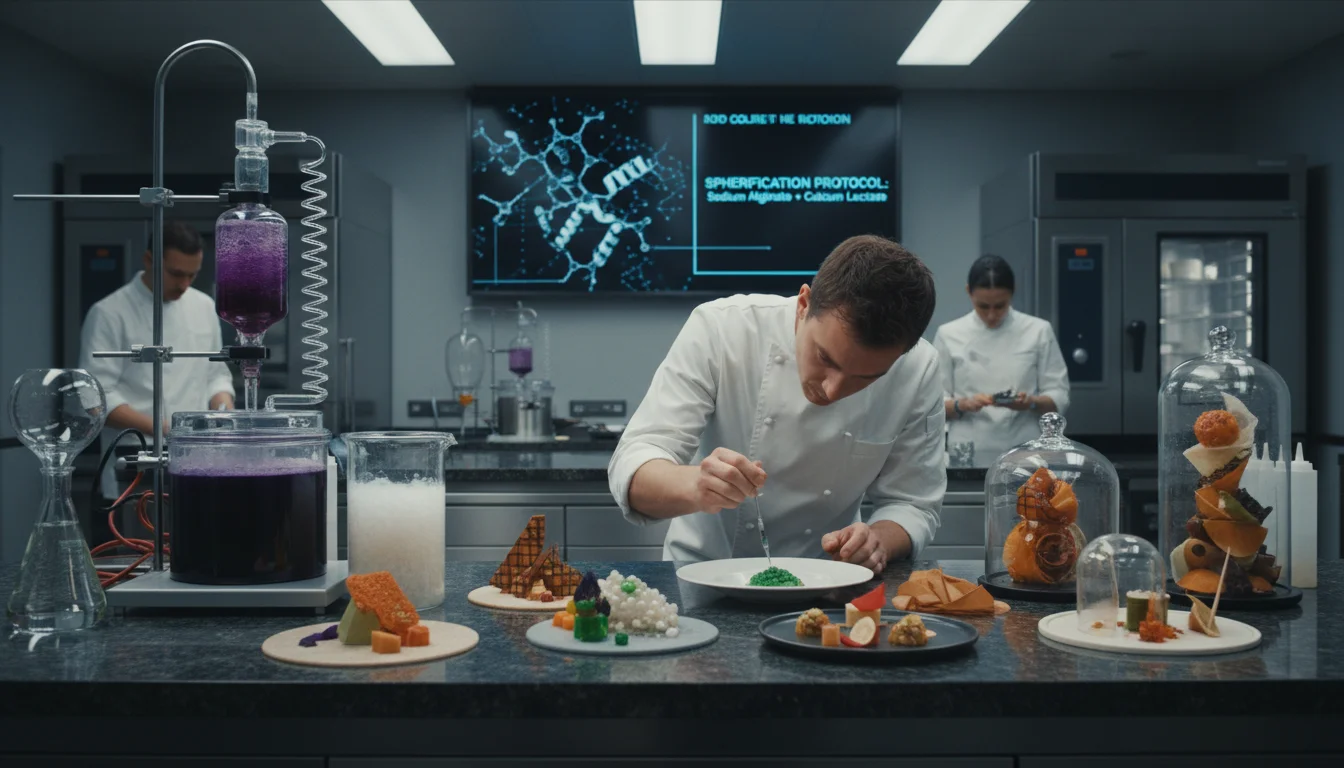
The term “molecular gastronomy” itself might sound intimidating, conjuring images of sterile laboratories rather than warm kitchens. However, its origins are far more humble. It began with scientists like Hervé This, a physical chemist, and Nicholas Kurti, a physicist, who were intensely curious about cooking phenomena. They asked simple questions: Why does mayonnaise emulsify? What makes meringue stiff? Why do we add salt to boiling water? Their work laid the foundation for understanding cooking processes at a molecular level. This fundamental curiosity is the engine driving much of today’s culinary science innovation.
Understanding the Fundamentals
At its heart, molecular gastronomy is about understanding the “why” behind cooking. It’s a scientific discipline focused on the physical and chemical processes that occur during food preparation. This isn’t about replacing traditional techniques but rather enhancing them with a deeper comprehension of the underlying principles. Chefs who embrace this philosophy gain a powerful toolkit, allowing them to manipulate textures, flavors, and appearances in ways previously unimaginable. It’s a significant shift, moving beyond intuition to informed manipulation of food matter. This scientific understanding has truly revolutionized modern kitchens, pushing the boundaries of what’s possible. The result is often a sensory experience that delights and surprises diners, making each meal an adventure.
Culinary science innovation 1
Consider the simple act of browning meat. Molecular gastronomy explains this phenomenon as the Maillard reaction, a complex series of chemical reactions between amino acids and reducing sugars that gives browned food its distinctive flavor and color. By understanding this, chefs can control variables like temperature, pH, and moisture to optimize the browning process for specific results, whether it’s a deep, savory crust on a steak or a delicate caramelization on onions. This level of control is a hallmark of culinary science innovation. It allows for consistency and predictability, but also for the creation of entirely new flavor profiles and textures. It is this precise control that differentiates modern culinary approaches.
Key Techniques and Tools
Several distinctive techniques have emerged from the study of molecular gastronomy, many of which have become staples in avant-garde kitchens worldwide. One of the most recognizable is spherification. This process involves creating liquid-filled spheres that burst in the mouth, offering a unique textural sensation. It’s achieved by reacting calcium chloride with a sodium alginate solution, forming a gel membrane around a liquid core. This technique can be used for anything from fruit juice pearls to balsamic vinegar caviar, adding a playful and sophisticated element to dishes. It’s a perfect example of how science can elevate a simple ingredient into something extraordinary.
Another widely adopted technique is the use of hydrocolloids, such as agar-agar, carrageenan, and xanthan gum. These are natural gums and gelling agents derived from seaweed or bacteria, which can alter the viscosity and texture of liquids. They allow chefs to create gels, foams, and stable emulsions that wouldn’t naturally occur. For instance, xanthan gum is often used to stabilize sauces and dressings, preventing separation and providing a smooth, consistent texture. Agar-agar, derived from red algae, can create firm gels at room temperature, making it ideal for delicate panna cottas or savory terrines. These ingredients, while sounding technical, are simply tools that enable greater control and creativity in the kitchen, underpinning much of the culinary science innovation we see today.
Culinary science innovation 2
Sous vide cooking is another technique that owes much to the scientific understanding of heat transfer and protein denaturation. Food is vacuum-sealed in a plastic pouch and then cooked in a precisely temperature-controlled water bath. This method allows for incredibly even cooking and moisture retention, ensuring that proteins are cooked perfectly from edge to edge without drying out. It’s particularly effective for meats, fish, and even vegetables, producing tender and succulent results that are difficult to achieve with conventional methods. The precision of sous vide is a direct benefit of applying scientific principles to cooking. This method has become a cornerstone for many professional kitchens seeking consistent, high-quality results, demonstrating the practical application of culinary science innovation.
The Science Behind Flavor and Texture
Flavor is an incredibly complex interplay of taste, smell, and mouthfeel. Molecular gastronomy delves into the chemical compounds responsible for these sensations. For example, volatile aromatic compounds are what we perceive as smell, and understanding their release and interaction with other molecules allows chefs to build more nuanced flavor profiles. The science of aroma is a rich area, with research identifying specific compounds that contribute to the characteristic scents of ingredients like vanilla, coffee, or roasted nuts. By understanding these compounds, chefs can strategically combine ingredients or apply specific cooking methods to enhance or even create new aromatic experiences. This deep understanding is crucial for advancing culinary science innovation.
Texture plays an equally significant role in our perception of food. The way a food feels in the mouth—whether it’s creamy, crunchy, chewy, or smooth—profoundly impacts our enjoyment. Molecular gastronomy provides the tools to manipulate these textures with remarkable precision. Think about the difference between a watery soup and a velvety purée. The latter is often achieved through techniques like emulsification or the addition of thickening agents, all explained by scientific principles. The exploration of different textures, from the airy lightness of a foam to the satisfying crunch of a dehydrated crisp, is a key aspect of culinary science innovation. It’s about engaging all the senses. The mouthfeel of a dish can be as important as its taste.
3
Emulsification, the process of combining two liquids that normally don’t mix (like oil and vinegar), is a perfect illustration. Traditional methods like whisking create temporary emulsions, but molecular gastronomy offers ways to create stable emulsions using agents like lecithin (found in egg yolks) or synthetic emulsifiers. This allows for sauces and dressings that remain perfectly blended, enhancing both flavor and presentation. It’s this detailed understanding of molecular interactions that allows chefs to achieve such remarkable feats of . The stability and consistency these techniques provide are invaluable in a professional setting.
Innovation and the Future of Food
The impact of molecular gastronomy extends far beyond the fine dining scene. It has influenced home cooking, food product development, and even our understanding of nutrition. As chefs continue to experiment, new ingredients and techniques are constantly emerging, pushing the boundaries of what we consider food. The ongoing research into flavor pairings based on shared volatile compounds, for instance, is leading to unexpected yet harmonious combinations. This scientific approach to flavor pairing is a testament to the evolving nature of , moving beyond tradition to data-driven creativity.
Moreover, the principles of molecular gastronomy are being applied to address global food challenges. Researchers are exploring how to create more sustainable and nutritious food sources, such as lab-grown meat or plant-based alternatives that mimic the texture and taste of traditional animal products. Understanding the molecular structure of food is crucial for developing these novel solutions. This scientific exploration holds immense promise for the future of food security and sustainability. The field of is not just about creating exciting dishes; it’s also about finding practical solutions for a growing world population. It’s a fascinating intersection of science and sustenance.
The democratization of these techniques is also a significant development. With readily available information and specialized ingredients, home cooks can now explore molecular gastronomy in their own kitchens. This allows for a more engaged and experimental approach to cooking, transforming everyday meals into opportunities for discovery. The accessibility of these scientific methods makes a more inclusive pursuit. It empowers individuals to understand and manipulate their food in new ways, fostering a deeper connection with what they eat. This widespread adoption signifies a paradigm shift in how we approach food preparation.
4
Challenges and Misconceptions
Despite its advancements, molecular gastronomy sometimes faces criticism. Some argue that it over-intellectualizes food, stripping away the soul and emotion from the cooking process. There’s a perception that it prioritizes technique over taste, leading to dishes that are visually impressive but ultimately unsatisfying. However, proponents argue that these techniques are tools, meant to enhance, not replace, the fundamental elements of good cooking. When applied thoughtfully, they can amplify flavors, create delightful textures, and offer novel dining experiences. The goal is often to surprise and delight, not to alienate. This nuanced perspective is vital when discussing .
Another common misconception is that molecular gastronomy is inherently unhealthy or uses artificial ingredients. While some techniques employ specialized ingredients like hydrocolloids or emulsifiers, these are often derived from natural sources and are used in small quantities. Many of these substances are already present in everyday foods. The focus on scientific understanding often leads to more precise control over ingredients and cooking processes, which can actually contribute to healthier outcomes. For example, precise temperature control in sous vide can reduce the need for added fats or salts to achieve desired textures. This scientific rigor can be a positive force for health-conscious cooking. It’s about understanding what we’re eating and how it’s prepared.
The complexity of the terminology can also be a barrier. Phrases like “spherification” or “reverse spherification” might sound daunting. However, the underlying principles are often straightforward chemical reactions. As more chefs and educators embrace these concepts, the language is becoming more accessible. The aim is to demystify the science, making it a practical and enjoyable aspect of cooking for a wider audience. This ongoing effort to simplify and share knowledge is crucial for the continued growth of . It’s about making these powerful tools available to everyone who loves to cook and eat.
5
The Human Element Remains Key
Ultimately, even with all the scientific advancements, the human element remains paramount. The creativity, passion, and artistry of the chef are what transform scientific principles into memorable culinary experiences. Molecular gastronomy provides a deeper understanding and a broader palette of tools, but it is the chef’s vision that guides their application. It’s the chef who decides how to use spherification to evoke a burst of citrus or how to employ a stable foam to add an ethereal lightness to a rich sauce. The science serves the art. This synergy between scientific knowledge and artistic expression is the true essence of modern culinary innovation. It’s a beautiful fusion that continues to evolve.
The journey from a curious scientist’s question to a Michelin-starred dish is a long and fascinating one. It highlights the power of observation, experimentation, and a willingness to challenge conventional wisdom. Molecular gastronomy has proven that the kitchen is indeed a laboratory, and the ingredients are our elements. By embracing this scientific perspective, we gain a richer appreciation for the food we eat and the incredible transformations it undergoes. The future of food is bright, and it’s increasingly informed by the principles of . This ongoing exploration promises a world of exciting new flavors and textures for us all to enjoy. The possibilities are truly endless.