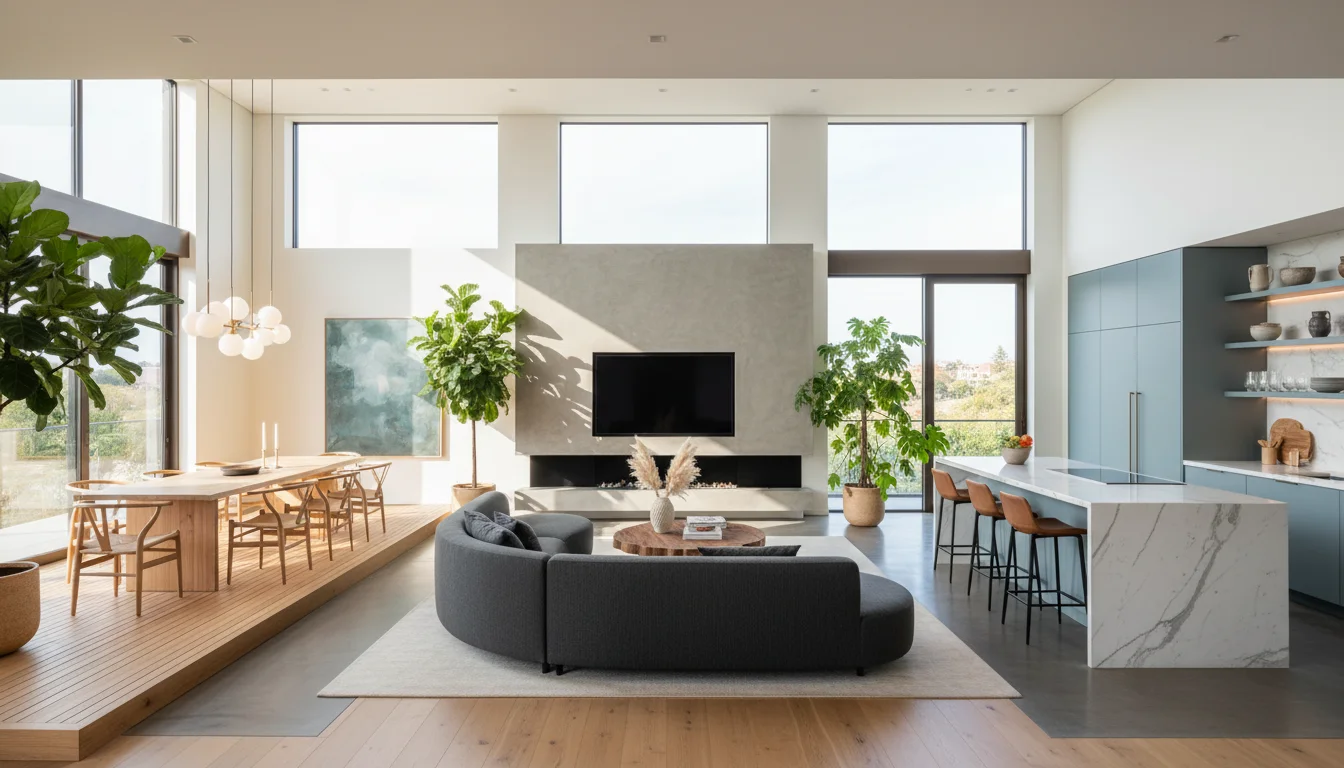
The allure of an open-plan haven is undeniable, promising a sense of spaciousness and seamless flow that many homeowners crave. It’s a design philosophy that breaks down traditional walls, fostering a connected and airy atmosphere. However, achieving this feeling of integrated living without sacrificing the distinctiveness of different functional zones presents a fascinating architectural challenge. This is where the concept of “defined spaces” within an open-plan layout truly shines, offering a nuanced approach to modern living.
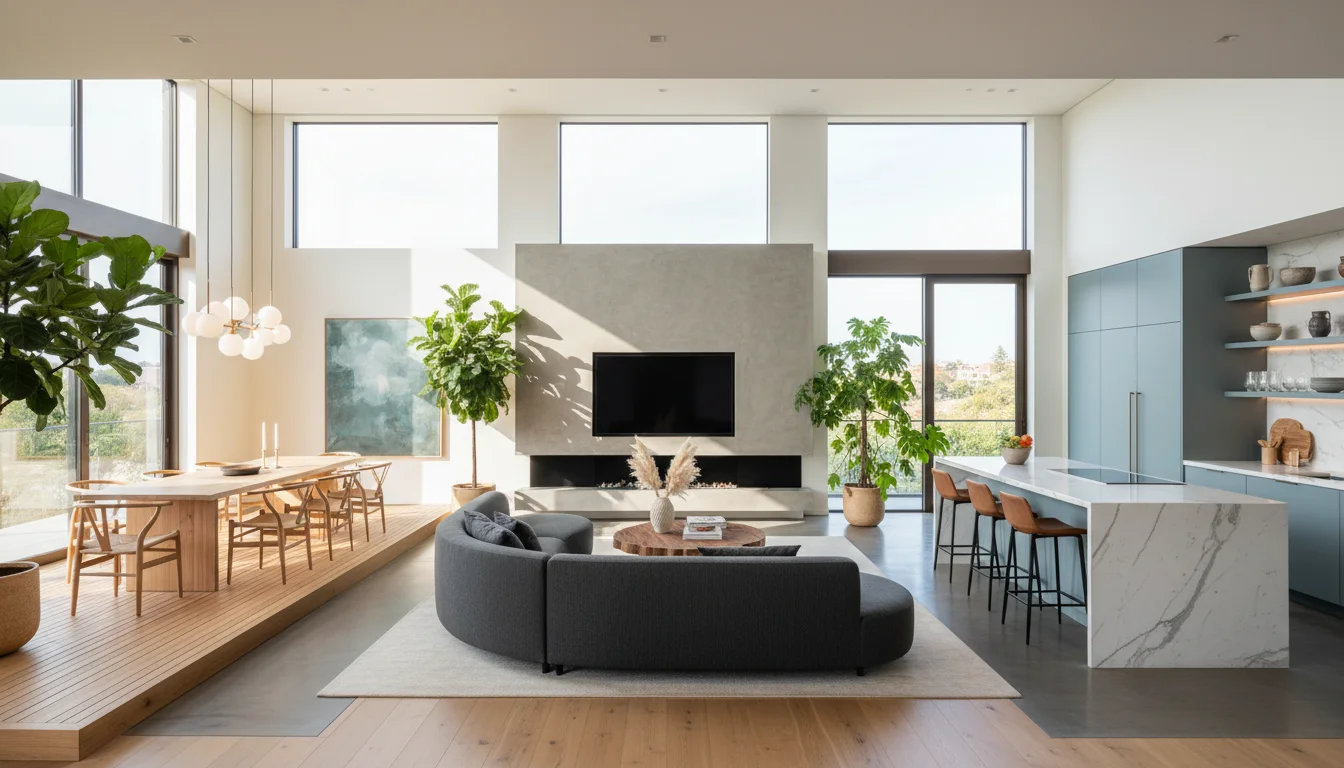
Creating Flow, Not Chaos
The primary goal of an open-plan layout is to eliminate the feeling of being boxed in. Walls that once separated the kitchen, dining, and living areas are removed, creating a unified and expansive feel. This architectural shift can dramatically alter the perception of a home, making it feel larger and more conducive to social interaction. It’s about breaking down barriers, both physical and metaphorical, to encourage a more communal way of living. Suddenly, preparing a meal doesn’t mean being isolated from family conversations; it becomes an integrated part of the shared experience. This interconnectedness is a cornerstone of the modern open-plan haven.
However, without careful consideration, this openness can devolve into a formless expanse. The challenge then becomes how to maintain this sense of freedom while also providing clear delineations for distinct activities. An open-plan haven needs structure, not just empty space. This is where the intelligent application of design principles comes into play, transforming a potentially overwhelming void into a thoughtfully organized and functional environment. It’s a delicate balance, and achieving it requires a deeper understanding of how different zones can coexist harmoniously.
The Power of Defined Zones
Defining spaces within an open-plan layout isn’t about rebuilding walls; it’s about using clever design strategies to subtly demarcate different functional areas. This approach acknowledges that while we desire openness, we also need distinct zones for specific activities like cooking, dining, relaxing, and working. The key is to achieve this definition without compromising the overall sense of flow and spaciousness that makes an open-plan haven so appealing. It’s about creating visual cues that guide the eye and the mind through the space, indicating where one activity concludes and another begins.
Think of it like a well-choreographed dance. Each dancer has their own space and movement, yet they all work together to create a cohesive performance. Similarly, in an open-plan haven, each zone maintains its identity while contributing to the overall harmony of the home. This strategic segmentation prevents the space from feeling monotonous or undefined, offering a sense of order and purpose to each area. It’s a sophisticated solution for modern living, allowing for both connection and individuality within a single, unified structure.
Open-plan haven 1
Flooring as a Subtle Divider
One of the most effective and visually appealing methods for defining spaces in an open-plan haven is through the judicious use of flooring. Different materials, colors, or patterns can create distinct boundaries without the visual interruption of a physical barrier. For instance, in the kitchen, you might opt for durable and easy-to-clean tiles, such as large-format porcelain or natural stone. This immediately signals a work zone, distinct from the living area. Then, transitioning into the dining area, a warm and inviting hardwood or engineered wood floor can create a sense of comfort and cohesion.
Moving further into the living room, a plush carpet or a different wood finish can further enhance the feeling of a dedicated relaxation space. This not only provides a visual cue but also offers functional benefits; carpets absorb sound, making the living area feel cozier and more acoustically separated from the potentially noisier kitchen. The contrast in textures and materials can be quite striking, guiding inhabitants through the home with a gentle, intuitive flow. It’s a sophisticated way to introduce order into an expansive environment, making the most of the open-plan haven’s potential.
Even within a single material type, variations can be employed. For example, using the same wood species but in a different plank width or orientation can subtly shift the perception of space. A herringbone pattern in the dining area, for instance, could lead into a straight-lay pattern in the living room. This nuanced approach ensures that the definition feels organic rather than imposed, contributing to the overall aesthetic appeal of the open-plan haven. It demonstrates that subtle changes can have a profound impact on how a space is perceived and utilized.
Furniture Arrangement: The Art of Placement
Beyond flooring, furniture arrangement plays a pivotal role in establishing defined zones within an . The strategic placement of sofas, chairs, dining tables, and kitchen islands can act as natural dividers, creating visual and functional separation. A large sectional sofa, for example, can effectively anchor the living area, its back serving as a subtle boundary between the lounge and a walkway. Similarly, the orientation of seating can direct focus and encourage specific activities.
In the dining area, a well-placed dining table and chairs clearly delineate this space for meals. Its position can often orient inhabitants towards the kitchen for convenience. The kitchen island itself is a powerful tool for defining the cooking zone, often acting as a transition point between the preparation area and a more social seating space. It provides a surface for casual meals or conversation while keeping the cook connected to the rest of the . This functional piece of furniture becomes a hub for activity and interaction.
Consider also the use of area rugs. A well-chosen rug can visually define the seating arrangement in the living room, grounding the furniture and creating a cozy, intimate atmosphere. It signals the “living room zone” without any physical construction. Likewise, a runner rug in a hallway or leading towards a specific area can subtly guide movement and highlight a particular pathway. These elements, when thoughtfully arranged, contribute significantly to the perceived structure and order within an , making it feel both expansive and organized.
2
Architectural Elements for Separation
While the goal is to avoid solid walls, certain architectural elements can be cleverly incorporated to create a sense of separation within an without fully enclosing spaces. Partial walls, for instance, can provide a degree of visual screening and acoustic buffering while still allowing light and a sense of connection to flow through. These can be designed in various forms, from low-profile dividers to more significant structures that incorporate shelving or built-in features.
Another effective strategy involves the use of different ceiling treatments. A drop ceiling over the kitchen area, for example, can visually lower the ceiling height, making it feel like a more contained and functional workspace. Conversely, the living area might feature a higher, more dramatic ceiling, enhancing its sense of spaciousness. Lighting can also be employed architecturally; distinct pendant lights above a dining table or island can draw attention and define that specific zone. Recessed lighting can illuminate general areas, while accent lighting can highlight features within defined zones.
Screening elements, such as decorative panels, slatted wood features, or even large-scale planters, can also act as subtle dividers. These elements offer a degree of visual porosity, allowing light and glimpses of adjacent areas to pass through, thereby maintaining the open feel. Yet, they clearly demarcate the transition between different zones, providing a sense of privacy and focus where needed. These architectural interventions are crucial for optimizing the functionality of an .
The Role of Lighting
Lighting is a silent orchestrator in the symphony of an , capable of defining zones and setting moods with remarkable efficacy. Layered lighting strategies are essential, moving beyond a single overhead fixture to create distinct atmospheres for each area. In the kitchen, task lighting is paramount—under-cabinet lights, bright overhead fixtures, and perhaps spotlights over the island ensure ample illumination for food preparation. This focused lighting signals the active, working nature of this zone.
For the dining area, a statement pendant light suspended over the table creates a focal point and casts a warm, inviting glow, perfect for shared meals. This fixture draws attention to the dining space and sets a more intimate tone. In the living room, a combination of ambient, task, and accent lighting is ideal. Dimmable overhead lights provide general illumination, floor and table lamps offer softer pools of light for reading or relaxing, and perhaps accent lights highlight artwork or architectural features. This layered approach allows for flexibility, enabling the space to adapt to different times of day and activities.
The color temperature of the light also plays a significant role. Cooler, brighter lights in the kitchen can enhance visibility and a sense of cleanliness, while warmer, softer tones in the living area promote relaxation and coziness. By strategically employing different types and temperatures of light, one can subtly yet effectively delineate zones within an , enhancing both its aesthetic appeal and its functional performance. It’s a powerful tool for shaping perception and experience within the unified space.
3
Color Palette and Materiality
The choice of color palette and materials is another powerful tool for defining spaces within an . While a cohesive overall color scheme is desirable to maintain harmony, subtle shifts in hue or texture can create distinct zones. For example, using a slightly warmer or bolder accent color on one wall in the living area can draw attention to that space and give it a unique character, differentiating it from the more neutral tones of the kitchen or dining areas.
Materiality offers similar opportunities. Imagine a kitchen clad in sleek, modern cabinetry and a polished stone backsplash, conveying a sense of efficiency and cleanliness. Adjacent to this, the dining area might feature a more natural wood table and chairs, introducing warmth and a softer aesthetic. The living space could then incorporate softer textures like upholstered furniture, textured throws, and perhaps a feature wall with a different material, like wood paneling or a textured wallpaper, to enhance its comfort and inviting nature. These variations in material and finish create tactile and visual cues that delineate each zone.
The key is to ensure these variations complement rather than clash. A thoughtful selection of materials and colors that share a common thread—perhaps a shared undertone or a similar sheen—will ensure that the transitions between zones feel seamless and intentional. This approach allows each area to have its own distinct personality while remaining an integral part of the larger . It’s about creating a dynamic yet unified environment that caters to diverse needs and preferences.
The : A Dynamic Living Solution
Ultimately, the successful implementation of an with defined spaces hinges on a thoughtful and integrated design approach. It’s not simply about removing walls; it’s about understanding how to create functional clarity within expansiveness. By employing strategies such as varied flooring, strategic furniture placement, subtle architectural elements, nuanced lighting, and considered use of color and materials, one can achieve a home that is both connected and organized. This approach respects the desire for openness while acknowledging the need for distinct areas to support the varied activities of modern life.
The result is a living environment that feels simultaneously spacious and intimate, adaptable and purposeful. An , when executed with these principles in mind, becomes more than just a trendy architectural choice; it becomes a dynamic and responsive living solution, perfectly tailored to the rhythm of its inhabitants. It’s a testament to the fact that true integration doesn’t mean uniformity, but rather a harmonious coexistence of distinct elements within a unified whole.