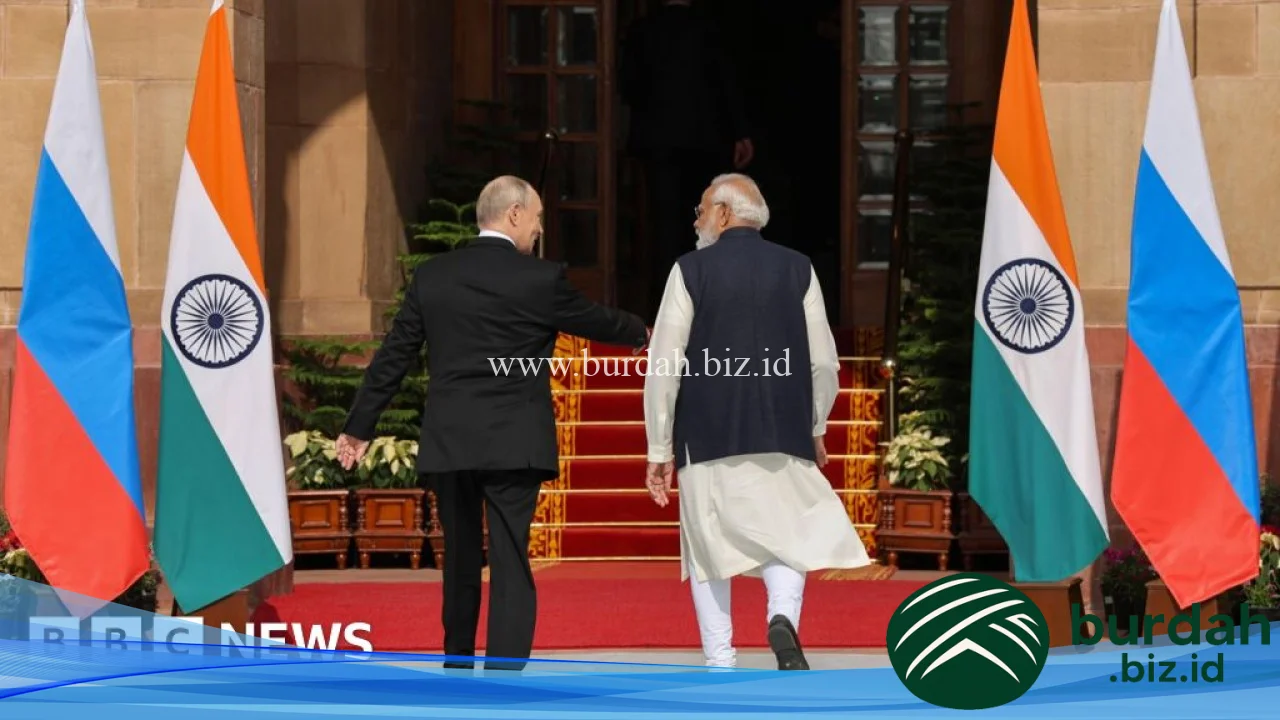
Putin and Modi met in Delhi, and here’s who came out on top
Russian President Vladimir Putin’s visit to New Delhi was a masterclass in diplomatic messaging. He held critical talks with Indian Prime Minister Narendra Modi, receiving a lavish welcome that directly challenged Western efforts to isolate him. But beneath the pomp and ceremony, the visit was less about blockbuster announcements and more about reinforcing a strategic partnership under intense global pressure. The real question is, what did each leader actually take home?
The optics were powerful. They were designed to be. Prime Minister Modi broke from usual protocol to personally receive Putin at the airport with a now-famous hug, a gesture signaling the deep value he places on India’s long-standing relationship with Russia. From there, the ceremony only grew grander, with a guard of honour and a banquet at the presidential palace.
Moscow noticed. The Russian state media celebrated the reception as a major victory. The pro-Kremlin news site Komsomolskaya Pravda wrote glowingly of the event.
“A cavalcade, volleys of cannons and a marble throne room. How Vladimir Putin was greeted in an Indian palace with 340 rooms.”
For Russia, this was an undeniable win. The red carpet rolled out by India sent a clear signal to Washington and its allies that efforts to turn President Putin into a global pariah over the war in Ukraine have not succeeded everywhere. It was a public display of a continuing and strong “special and privileged strategic partnership.”
The Real Focus Was Business, Not Bombshells
While the welcome was grand, the number of major deals announced was surprisingly small. There was no landmark defense agreement or a concrete new pact on discounted Russian oil. Instead, the core of the public discussions centered squarely on trade, a pressing need for both nations. Russia is navigating crippling Western sanctions, while India faces significant tariffs from the United States.
Both countries see each other as vital alternative markets to boost their economies. Their bilateral trade has already surged to $68.72 billion from just $8.1 billion in 2020, a jump largely fueled by India’s purchase of Russian crude. The leaders spoke of an ambitious five-year economic framework to push this figure toward a target of $100 billion.
To get there, the focus was on diversification. A series of smaller, yet important, agreements and memorandums were signed. These included:
- A broad Russia-India economic cooperation program.
- An agreement on critical minerals and securing supply chains.
- A deal to build a Russian-Indian pharmaceutical factory in Russia’s Kaluga region.
- Cooperation in shipbuilding and civil nuclear energy.
- Training for Indian seafarers to operate in polar waters.
- Progress on a free trade agreement with the Eurasian Economic Union (EAEU).
Navigating the Sensitive Issues of Oil and Arms
The two most talked-about topics ahead of the visit were energy and defense. India’s continued purchase of large volumes of Russian oil has been a financial lifeline for Moscow’s sanctioned economy, much to the frustration of the United States. Washington has exerted pressure on New Delhi to curb these imports.
During the visit, Putin emphasized that Moscow is ready to ensure “uninterrupted shipments” of oil to India. This statement was less a new deal and more a gentle nudge, placing the decision squarely in India’s court. Prime Minister Modi now faces the difficult balancing act of maintaining this energy relationship while also pursuing a trade deal with Washington.
On defense, speculation was high that India might purchase advanced Russian Su-57 fighter jets or additional S-400 air defense systems. Yet, no new defense deal was announced. This silence may reflect India’s careful diplomatic maneuvering between Moscow and Washington. It might also point to practical challenges, such as delays in Russia’s delivery of existing S-400 orders due to its own military’s heavy resource consumption in Ukraine.
What Really Happened Behind Closed Doors?
The most crucial discussions may have occurred away from the cameras. A private, “informal dinner” between Putin and Modi was described by a top Russian official as a centerpiece of the entire visit. These are the moments where true diplomacy happens.
Putin’s foreign policy aide, Yuri Ushakov, highlighted the importance of such meetings to the Russian government paper Rossiyskaya Gazeta.
“During such confidential face-to-face contacts, the most urgent, most sensitive and most important issues of both bilateral relations and the international situation are discussed. Politics is made at these kind of meetings.”
So, who came out on top? The answer seems to be both leaders. President Putin secured a huge diplomatic and public relations victory, demonstrating that Russia still has powerful friends on the world stage. For its part, India, under Prime Minister Modi, powerfully asserted its strategic autonomy. New Delhi reinforced a critical partnership for its energy and defense needs while simultaneously advancing a broader economic agenda to find new markets. It was less a competition and more a convergence of mutual interests in a world full of economic and geopolitical pressures.