Putin Pledges Uninterrupted Fuel Supply to India Amid US Pressure
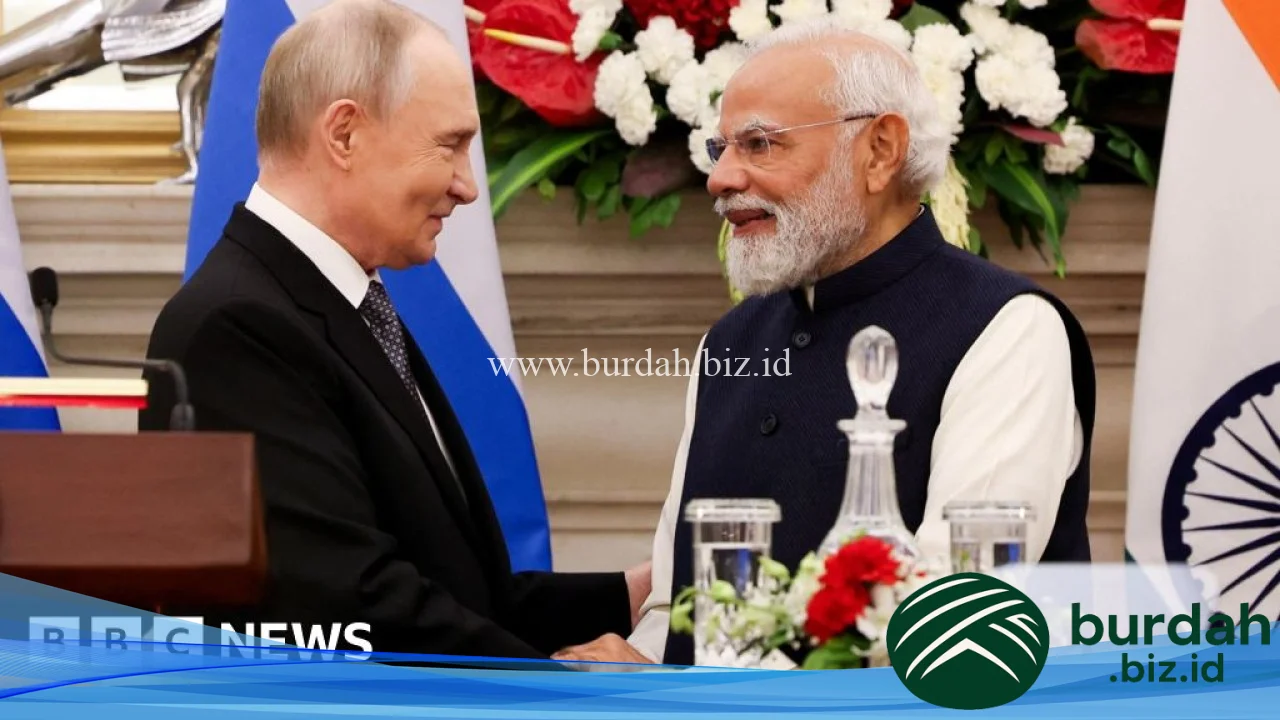
Russian President Vladimir Putin has assured India of “uninterrupted shipments” of fuel, a significant promise as New Delhi navigates intense pressure from the United States to curtail its purchase of Russian oil. The commitment was made during a high-profile meeting in Delhi alongside Indian Prime Minister Narendra Modi.
Putin directly challenged the basis of the US sanctions. He questioned why India should face penalties for its energy trade with Moscow. The question was sharp.
“The United States itself still buys nuclear fuel from us for its own nuclear power plants. If the US has the right to buy our fuel, why shouldn’t India have the same privilege?”
This statement highlights a complex trade reality. Data reported by Bloomberg confirmed that Russia was a top supplier of nuclear reactor fuel to the US last year. A US law banning imports of enriched uranium from Russia was, however, signed in May, altering the future of that specific trade relationship.
A Deepening Economic and Strategic Alliance
The discussions between Putin and Modi went far beyond energy, cementing a broad and long-term partnership. The two leaders announced a comprehensive economic program designed to guide their nations’ cooperation until 2030. It’s an ambitious plan. The program covers key sectors like jobs, shipping, and the health industry.
Putin expressed confidence in their ability to significantly boost bilateral trade. He set a target to increase the current $60 billion volume to $100 billion in the coming years. While no major new defence deals were announced, their joint statement pointed toward a new direction in military cooperation, focusing on “joint research and development, as well as the production of advanced defence platforms.” Other key agreements from the meeting include:
- Investments in civil nuclear energy and critical minerals.
- New agreements on shipbuilding.
- Two new 30-day visa schemes to encourage Russian tourism in India.
- The launch of Russia Today, a Kremlin-funded TV network, in India.
Prime Minister Modi noted that “energy security has been a strong and important pillar of the India-Russia partnership,” though he made no specific reference to oil purchases.
Navigating Global Tensions and US Tariffs
The backdrop to this meeting is a period of strained relations between India and the United States. Tensions escalated under the Trump administration, which imposed tariffs reaching 50% on most Indian products. The administration argued that Delhi’s continued purchase of Russian oil helped fund the war in Ukraine. India has consistently denied this accusation, labeling the tariffs “unfair, unjustified and unreasonable.”
This tariff deadlock has pushed India-US ties to a difficult point. India, the world’s third-largest consumer of crude oil, has become a major buyer of Russian crude since the 2022 invasion of Ukraine. Yet, the pressure is having an effect. Some Indian companies have already begun reducing their oil imports from Russia to comply with US sanctions.
During the visit, Putin also commented on the war in Ukraine, stating Russia was working on a “peaceful solution.” He issued a stark warning that Ukraine must withdraw from the Donbas region. Modi reiterated India’s official stance, stating the country was not neutral and stood on “the side of peace,” welcoming efforts for a lasting end to the conflict.
Building a “Multi-Polar” World
Both leaders emphasized their cooperation on the international stage, particularly through the BRICS coalition. This informal alliance, which includes Brazil, Russia, India, China, and South Africa, aims to promote what Putin called a “more just” and “multi-polar” world, offering a counterweight to the political and economic influence of Western nations.
The commitment to mutual projects underscores this shared vision. Putin referenced a “flagship project” where Moscow would assist in building India’s largest nuclear power plant. This, along with other long-term economic and strategic agreements, signals that the historic partnership between Moscow and Delhi is not just continuing—it is being actively reoriented for the future.