Robodebt Scandals and Unanswered Questions
Despite a Royal Commission detailing its systemic failures and the election of a new Federal Labor Government, the lingering impact of Robodebt raises critical questions about institutional accountability and transparency. Regrettably, the appetite to support the most vulnerable members of our community and foster genuine governmental openness appears to have waned significantly, often reduced to mere rhetoric.
The Robodebt scheme adversely affected over 400,000 individuals. Of those who were unlawfully charged and subsequently overpaid their debts to Centrelink, a mere 338 out of 44,000 have received refunds. These erroneous debts, some dating back to 2007, have tragically resulted in the deaths of at least 2,700 victims who never saw their money returned. Furthermore, no individuals have been convicted or even formally charged in relation to this illegal scheme.
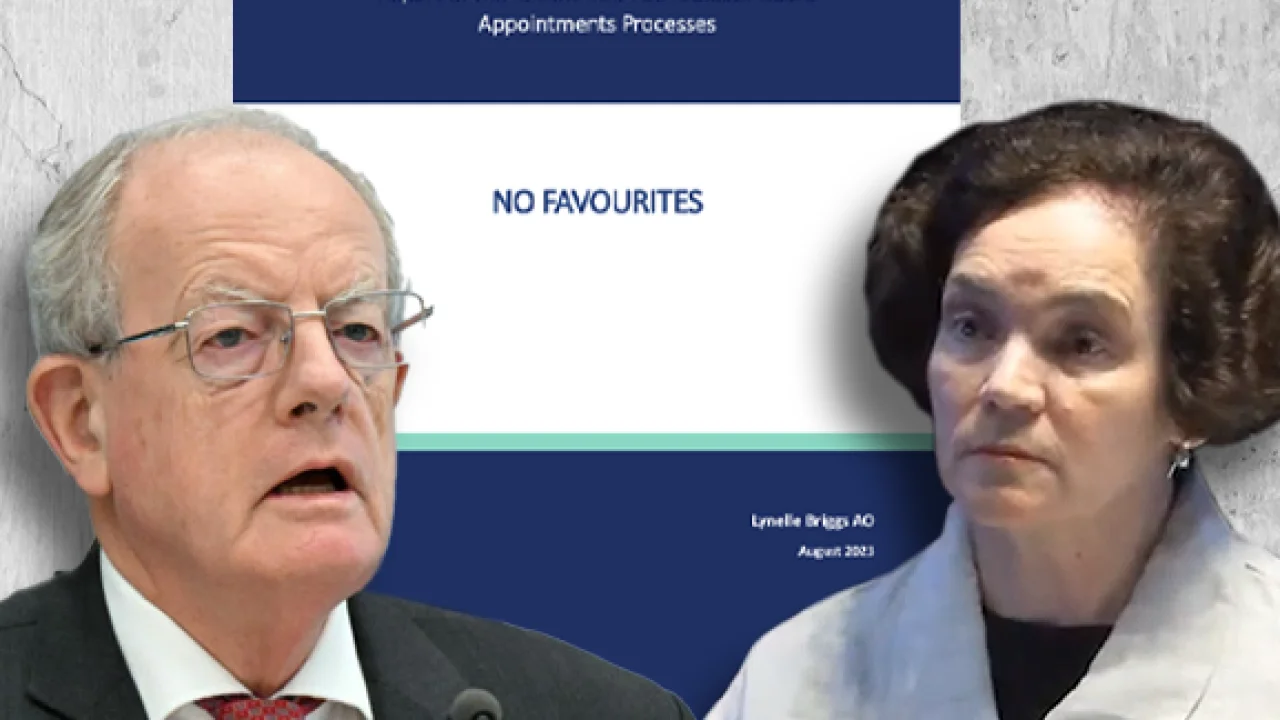
Adding to the concern, the ‘Jobs for Mates’ report, commissioned by the Labor Government, starkly highlights the pervasive nature of nepotism within government appointments. This report found that:
- The appointments system is widely perceived as favouring the well-connected, lacking fairness both in appearance and in practice.
- Recent years have seen a trend of appointing government allies to boards, either as a reward for past loyalty or to ensure alignment with ministerial priorities. Consequently, these appointments frequently resemble patronage and nepotism, practices ill-suited to contemporary Australian society.
The report’s author, Lynelle Briggs, cautioned that most citizens believe direct ministerial appointments are politically motivated, and she indicated a significant deficit in accountability mechanisms. Briggs proposed several crucial recommendations, including:
- A six-month prohibition for ex-politicians and their staff from government board appointments after leaving office.
- An extended 18-month restriction for former ministers and their staff.
- Most importantly, the urgent need to legislate these changes to ensure lasting reform.
However, the government’s response has been to introduce new guidelines rather than legislate the recommendations. Public Service Minister Senator Katy Gallagher announced that ministers ‘should be transparent’ about appointments, which should be based on ‘merit’ and in the ‘interests of good government’. This approach has drawn criticism from Independent Senator David Pocock, who expressed profound disappointment that the Albanese Government has not fully embraced the Briggs Review’s recommendations aimed at eradicating the rampant ‘jobs for mates’ culture in federal politics.
Moreover, the government has also undertaken a review of Freedom of Information laws, potentially making it more challenging to access information regarding government decision-making processes. This move suggests a reluctance to enhance public access to crucial information.
Consequently, while a Labor Government is now in power and speaks of reform, the practical implementation appears to fall short of establishing an equitable framework for all citizens. It seems the consistent capability of governments, regardless of political persuasion, lies in revenue collection, the dismissal of lower-level public servants, and the swift introduction of opaque or inhumane regulations. True justice and progress, however, remain elusive.
The fallout from Robodebt, particularly concerning the lack of accountability for those responsible, is deeply concerning. Kathryn Campbell, who shifted blame to victims and was found to have breached the Public Service Code of Conduct 97 times, was eventually suspended. Despite this, she had already secured another prominent role before resigning, having received over $900,000 annually, significantly more than the Prime Minister’s salary, along with a substantial government pension. Similarly, politicians who devised and executed the scheme, including Scott Morrison, Stuart Robert, Christian Porter, and Alan Tudge, have yet to face repercussions. The National Anti-Corruption Commission (NACC) is ostensibly investigating, yet its own Commissioner, Paul Brereton, faces scrutiny for potential misconduct and conflicts of interest related to Robodebt, raising questions about the NACC’s effectiveness and its very name, which some suggest should be the ‘No Accountability Commission’.
The Royal Commission into Robodebt should have served as a pivotal moment for profound change. For public trust to be truly restored, those who orchestrated this illegal scheme must face the full force of the legal system. As it stands, the current trajectory suggests that without greater public awareness and a steadfast demand for accountability, we risk witnessing similar failures in the future, necessitating yet another commission to uncover the truth.