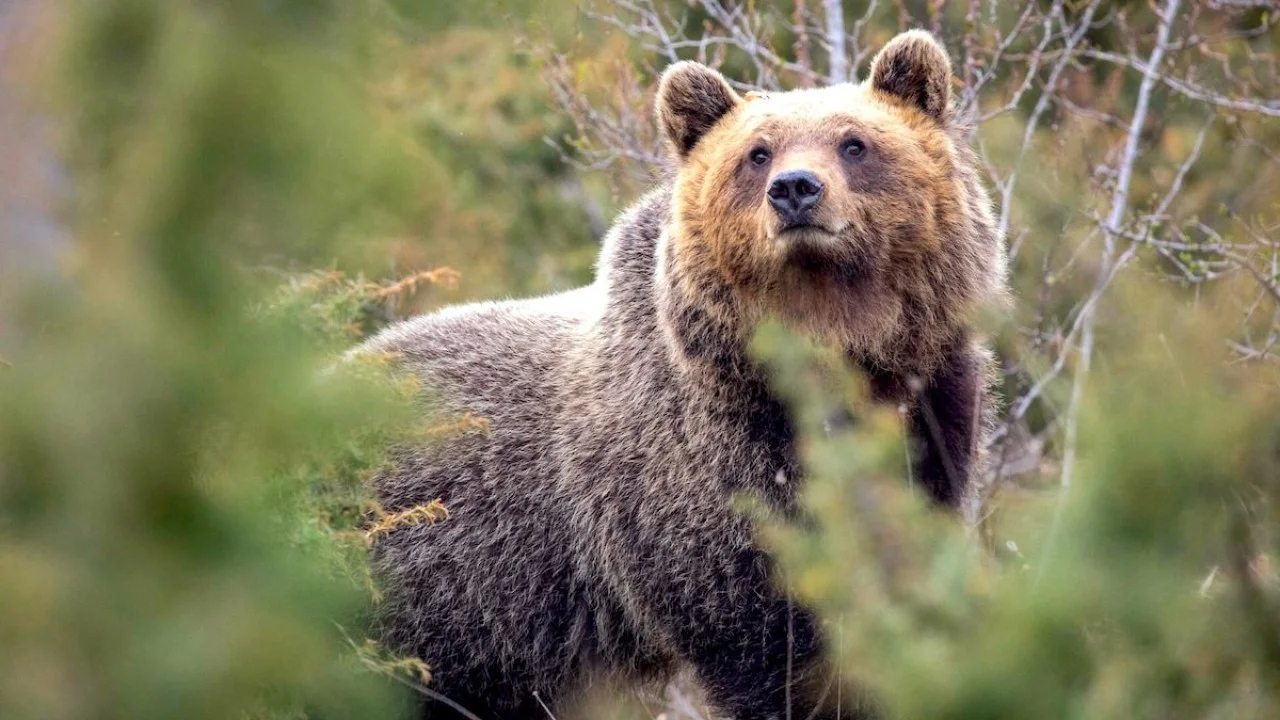
BOSTON (WHN) – Brown bears inhabiting central Italian villages appear to exhibit reduced aggression, a trait researchers suggest may be an evolved response to centuries of human presence. This finding, published in Molecular Biology and Evolution, contributes to a growing body of evidence indicating that human activities are actively influencing the evolutionary trajectory of wildlife.
The study focused on Marsican brown bears, a population genetically isolated from other European brown bears since the Roman era. This isolation, driven by expanding human settlements and agriculture, has coincided with observable physical and behavioral changes in the Marsican bears, including a decrease in size and a less aggressive temperament compared to their continental counterparts.
Italian researchers investigated these changes by mapping the genetic makeup of Marsican bears. They then compared these genetic profiles with those of brown bears from Slovakia and the United States. The comparative analysis revealed statistically significant evidence pointing to selection for lower aggression levels within the Marsican bear population. Coauthor Andrea Benazzo, affiliated with the University of Ferrara, posited that historical human hunting practices likely eliminated more aggressive individuals, thus favoring the propagation of genes associated with a more docile disposition.
The implications of this research extend to conservation strategies for the critically endangered Marsican brown bear. With an estimated wild population of only around 60 individuals, a less aggressive temperament has been a crucial factor in minimizing lethal human-bear conflicts. Coauthor Giorgio Bertorelle emphasized the potential risks of introducing more aggressive brown bears from other regions to boost the Marsican population numbers. He cautioned that such an action could dilute their unique gene pool and undermine the very adaptations that have allowed them to coexist, albeit precariously, with humans.
This new study follows recent findings concerning polar bears in southern Greenland. An analysis of their genetic material indicated adaptations related to heat stress, aging, and metabolism, changes that scientists believe may enhance their survival prospects in a warming climate and a potentially leaner diet.
The research on brown bears and polar bears underscores a broader scientific consensus: humans are a potent force in shaping animal evolution. An earlier, influential study published in June, examining codfish in the Baltic Sea, demonstrated how intense overfishing of larger individuals led to a gene pool dominated by smaller fish. Consequently, cod in that region now exhibit slower growth rates and reach a fraction of the size observed just a few decades prior.
The study on Marsican brown bears, while offering valuable insights, operates within the inherent limitations of observational genetic research. The precise mechanisms and timeframes for these evolutionary shifts are complex and subject to ongoing scientific inquiry. The researchers did not specify the exact genetic markers identified as correlating with lower aggression, nor did they quantify the degree of aggression reduction with specific metrics beyond comparative analysis.
Conservationists will likely monitor the findings closely. The emphasis on maintaining the genetic integrity of the Marsican bear population, as highlighted by Giorgio Bertorelle, suggests a preference for habitat protection and conflict mitigation strategies over genetic augmentation. This approach aligns with principles of preserving unique subspecies adapted to specific environmental pressures, including human interaction.
The University of Ferrara and the publication in Molecular Biology and Evolution represent the primary academic affiliations and outlets for this research. Further studies may be needed to explore the behavioral nuances and ecological interactions of these bears in greater detail.