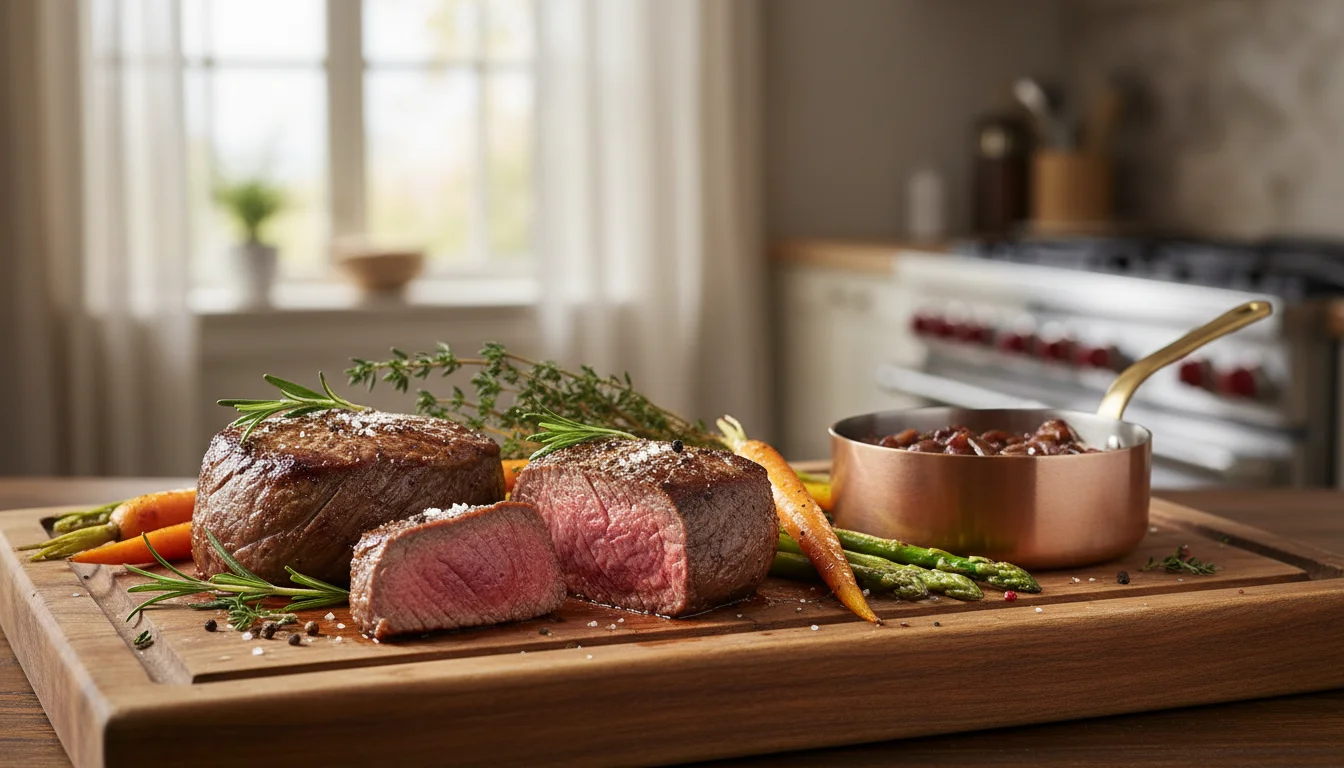
Beef tenderloin pan-seared.
Succulent Beef Tenderloin Elegance: Pan-Seared Perfection
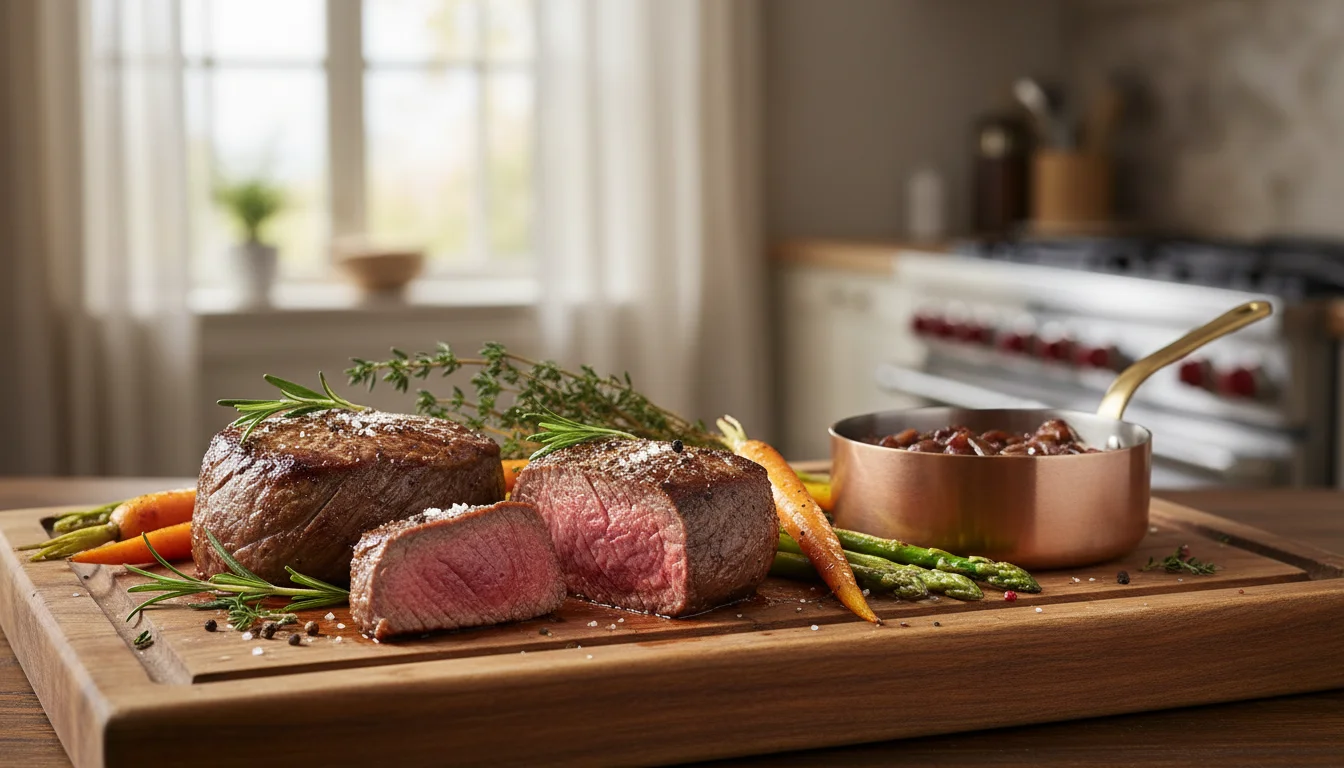
Imagine this: a gorgeously browned crust, giving way to a whisper-soft, ruby-red interior. That first bite. Pure bliss. Pan-seared beef tenderloin isn’t just a meal; it’s an experience, a moment of pure culinary indulgence that feels utterly luxurious yet surprisingly achievable. I remember the first time I truly mastered this cut. It wasn’t about fancy techniques, but about respecting the meat and understanding the heat. This is how you achieve that restaurant-quality tenderness and flavor right in your own kitchen. Let’s make some magic happen.
| Prep Time: | 10 minutes |
| Cook Time: | 8-15 minutes (depending on desired doneness) |
| Total Time: | 18-25 minutes |
| Servings: | 2-4 |
| Estimated Calories: | Approx. 350-450 per serving (without sides) |
Why You’ll Love This Pan-Seared Beef Tenderloin Recipe
- Effortless Elegance: Seriously, it’s the quickest way to impress anyone.
- Perfect Crust, Tender Inside: We’re talking a beautiful sear every single time.
- Minimal Ingredients, Maximum Flavor: The quality of the beef shines through.
- Adaptable to Any Occasion: Dress it up or down, it’s always a winner.
Ingredients Notes: The Foundation of Flavor
The beauty of a perfectly pan-seared beef tenderloin lies in its simplicity. You don’t need much, but what you use truly matters. This is where quality ingredients make a noticeable difference. Let’s talk about what goes into this.
- Beef Tenderloin: Aim for a center-cut piece, about 1.5-2 inches thick. This ensures even cooking. Look for good marbling, though tenderloin is naturally lean.
- High Smoke Point Oil: Grapeseed, avocado, or canola oil are your friends here. Olive oil can burn and impart an off-flavor at these high temperatures.
- Butter: Unsalted butter adds richness and helps create that gorgeous browning.
- Fresh Herbs: Rosemary and thyme sprigs are classic. Their aroma infuses the butter beautifully as it melts.
- Garlic: Whole cloves, smashed, add a subtle, sweet garlic flavor.
- Kosher Salt & Freshly Ground Black Pepper: Don’t skimp! Season generously just before cooking. Coarse salt creates a better crust.
Beef tenderloin pan-seared 1
Mastering the Pan-Seared Beef Tenderloin: Step-by-Step
This is where the magic happens. It’s all about temperature control and timing. Don’t be intimidated; follow these steps, and you’ll be a pro.
Preparation is Key
- Take your beef tenderloin out of the refrigerator at least 30-60 minutes before cooking. This is crucial for even cooking. A cold steak won’t sear properly.
- Pat the beef completely dry with paper towels. Moisture is the enemy of a good sear. Seriously, get it bone dry.
- Season the tenderloin liberally on all sides with kosher salt and freshly ground black pepper. Press the seasonings into the meat.
The Sear: Building That Perfect Crust
The right heat is everything.
- Place a heavy-bottomed skillet, preferably cast iron, over high heat. Let it get screaming hot. You want to hear a sizzle the moment the beef hits the pan.
- Add 1-2 tablespoons of your high smoke point oil to the hot skillet. It should shimmer almost immediately.
- Carefully place the seasoned beef tenderloin into the hot skillet. It should sizzle aggressively. Don’t crowd the pan if you’re cooking multiple pieces; cook in batches if necessary.
- Sear the first side for **2-4 minutes**, undisturbed, until a deep brown crust forms. Resist the urge to move it!
- Flip the tenderloin and sear the other side for another **2-4 minutes**.
Basting for Ultimate Flavor and Tenderness
This is the secret touch that elevates your pan-seared beef tenderloin.
- Reduce the heat to medium. Add 2 tablespoons of unsalted butter, smashed garlic cloves, and herb sprigs to the skillet.
- As the butter melts and foams, tilt the skillet towards you. Using a spoon, continuously baste the melting butter and aromatics over the tenderloin for **2-4 minutes**. This infuses flavor and helps cook the steak evenly.
- Continue flipping and basting, checking for doneness.
Beef tenderloin pan-seared 2
Checking for Doneness
Use a meat thermometer for accuracy. Insert it into the thickest part of the steak.
- Rare: 120-125°F (49-52°C)
- Medium-Rare: 130-135°F (54-57°C) – My personal favorite.
- Medium: 135-140°F (57-60°C)
Remember, the temperature will rise a few degrees as it rests. Remove the steak from the pan when it’s 5°F below your target temperature.
The Crucial Rest
Don’t skip this. Seriously.
- Transfer the pan-seared beef tenderloin to a cutting board.
- Tent it loosely with foil and let it rest for at least **5-10 minutes**. This allows the juices to redistribute throughout the meat, ensuring every bite is moist and tender.
- Slice against the grain and serve immediately.
Chef’s Warning: Overcrowding the pan is a common mistake that leads to steaming instead of searing. If your skillet isn’t large enough for the number of tenderloin pieces, cook them in batches. A good sear requires ample space and high heat. Don’t be afraid of a little smoke; it means your pan is hot enough!
Variations & Substitutions
This recipe is fantastic as is, but it’s also a great canvas.
- For a richer sauce: After removing the steak, deglaze the pan with a splash of red wine or beef broth, scraping up any browned bits. Reduce slightly and whisk in a knob of cold butter.
- Spicy Kick: Add a pinch of red pepper flakes along with the garlic and herbs during basting.
- Herb Variations: Experiment with fresh sage or rosemary for different aromatic notes.
- Dairy-Free: Omit the butter and rely solely on oil for searing and basting. You’ll still get a good sear, though the flavor profile will be slightly different.
Storage & Reheating
Leftover pan-seared beef tenderloin is a treasure.
- Storage: Wrap the cooked, cooled tenderloin tightly in plastic wrap or place it in an airtight container. It will keep in the refrigerator for up to 3 days.
- Reheating: The best way to reheat is gently. For best results, slice the tenderloin and warm it in a skillet with a touch of oil or butter over low heat, or add it to a sauce. Avoid the microwave, which can dry out the meat.
Beef tenderloin pan-seared 3
Frequently Asked Questions
Q: How do I know if my beef tenderloin is cooked to medium-rare without a thermometer?
A: While a thermometer is the most accurate tool, you can use the “finger test.” Gently poke the center of the steak. For medium-rare, it should feel soft and yielding, like the fleshy part of your palm below your thumb when your hand is relaxed. It will spring back slightly.
Q: My steak is tough. What did I do wrong?
A: Toughness usually comes from one of two things: either the cut of meat wasn’t tender enough (tenderloin is the best choice for this reason), or it was overcooked. Ensure you’re using a good cut and cooking it to your desired temperature, then resting it properly.
Q: Can I use a regular non-stick pan for pan-searing beef tenderloin?
A: It’s not ideal. Non-stick pans often can’t handle the high heat required for a proper sear without damaging the coating. Cast iron or stainless steel skillets are strongly recommended for achieving that beautiful, caramelized crust.