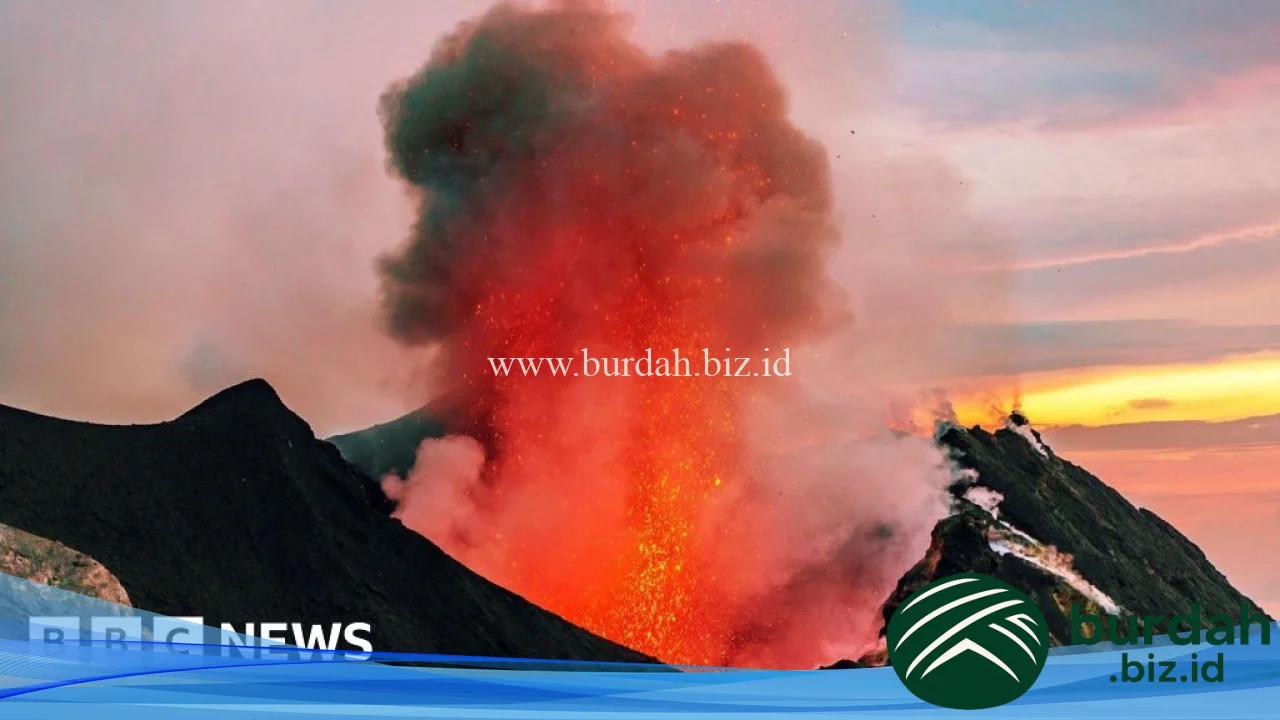
Scientists now propose a startling new trigger for Europe’s deadliest pandemic, the Black Death. A massive volcanic eruption around the year 1345 may have initiated a catastrophic chain reaction, creating the perfect conditions for the plague to invade the continent and kill millions.
The Black Death was devastating. It swept across Europe between 1348 and 1349, killing up to half the population. The bacterium responsible, Yersinia pestis, was known to be spread by fleas on wild rodents, but the exact sequence of events that brought it to Europe’s shores has long been a subject of intense scholarly debate. Now, new research fills in a critical piece of that historical puzzle.
A Climate Shock and Its Deadly Consequences
A team of researchers from the University of Cambridge and the Leibniz Institute for the History and Culture of Eastern Europe (GWZO) in Leipzig investigated the climatic conditions preceding the pandemic. Their findings, published in the journal Communications Earth & Environment, point to a single, powerful geological event. Clues preserved in tree rings and ice cores suggest a major volcanic eruption occurred around 1345.
This eruption was not just a localized event. It threw enormous quantities of ash and gases into the atmosphere, which blocked out sunlight and caused a sharp, multi-year drop in global temperatures. This sudden climate shock led directly to poor harvests and widespread crop failure across the Mediterranean region, putting immense pressure on the food supply of Europe’s populous city-states.
The Perfect Storm of Famine and Trade
Faced with mass starvation, powerful Italian city-states activated their sophisticated, long-distance trade networks to import grain. They turned to producers around the Black Sea, a region where the plague, which is thought to have originated in Central Asia, was present in rodent populations. This decision, born of desperation, proved to be fatal. The grain shipments also carried stowaways: rats and their plague-carrying fleas.
The system designed to save them ultimately doomed them. Dr. Martin Bauch, a historian from GWZO, described the situation as a “perfect storm” where climatic events collided with a “complicated system of food security.”
“For more than a century, these powerful Italian city states had established long-distance trade routes across the Mediterranean and the Black Sea, allowing them to activate a highly efficient system to prevent starvation,” he said. “But ultimately, these would inadvertently lead to a far bigger catastrophe.”
The chain of events created a clear, tragic pathway for the disease:
- A volcanic eruption in 1345 causes a severe climate shock.
- Consecutive years of cold weather lead to widespread crop failures in Europe.
- Italian city-states import grain from the Black Sea region to avert famine.
- Grain ships unwittingly transport plague-infected rodents and fleas to European ports.
- The Black Death begins its relentless spread across the continent.
Lessons for a Modern, Interconnected World
The study offers more than just a new theory on a medieval catastrophe. It serves as a stark reminder of how interconnected our world is and how climate, food security, and disease are deeply linked. The “perfect storm” of the 14th century highlights vulnerabilities that still exist today, perhaps on an even greater scale.
Experts warn that as the planet warms, the risk of zoonotic diseases—those that jump from animals to humans—is likely to rise. This historical analysis provides a crucial case study in how a sudden environmental shift can create the conditions for a pandemic to emerge and spread rapidly through global trade routes.
Dr. Ulf Büntgen of the University of Cambridge emphasized the modern relevance of their findings.
“Although the coincidence of factors that contributed to the Black Death seems rare, the probability of zoonotic diseases emerging under climate change and translating into pandemics is likely to increase in a globalised world,” said Dr. Büntgen. “This is especially relevant given our recent experiences with Covid-19.”
By understanding the complex factors that contributed to the Black Death, from a distant volcano to a simple grain ship, we gain a clearer perspective on the challenges facing our own globalized society. It is proof that events happening halfway around the world can have profound and unexpected consequences for everyone.