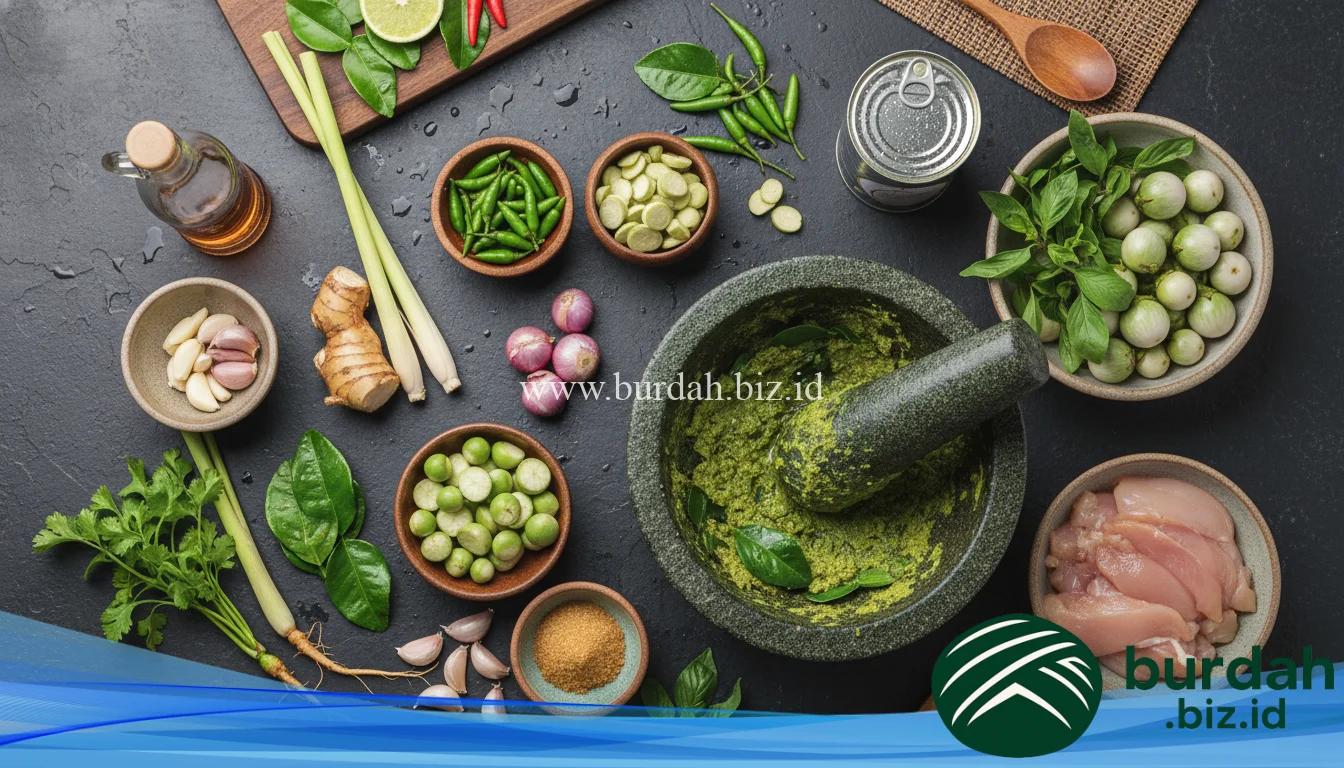
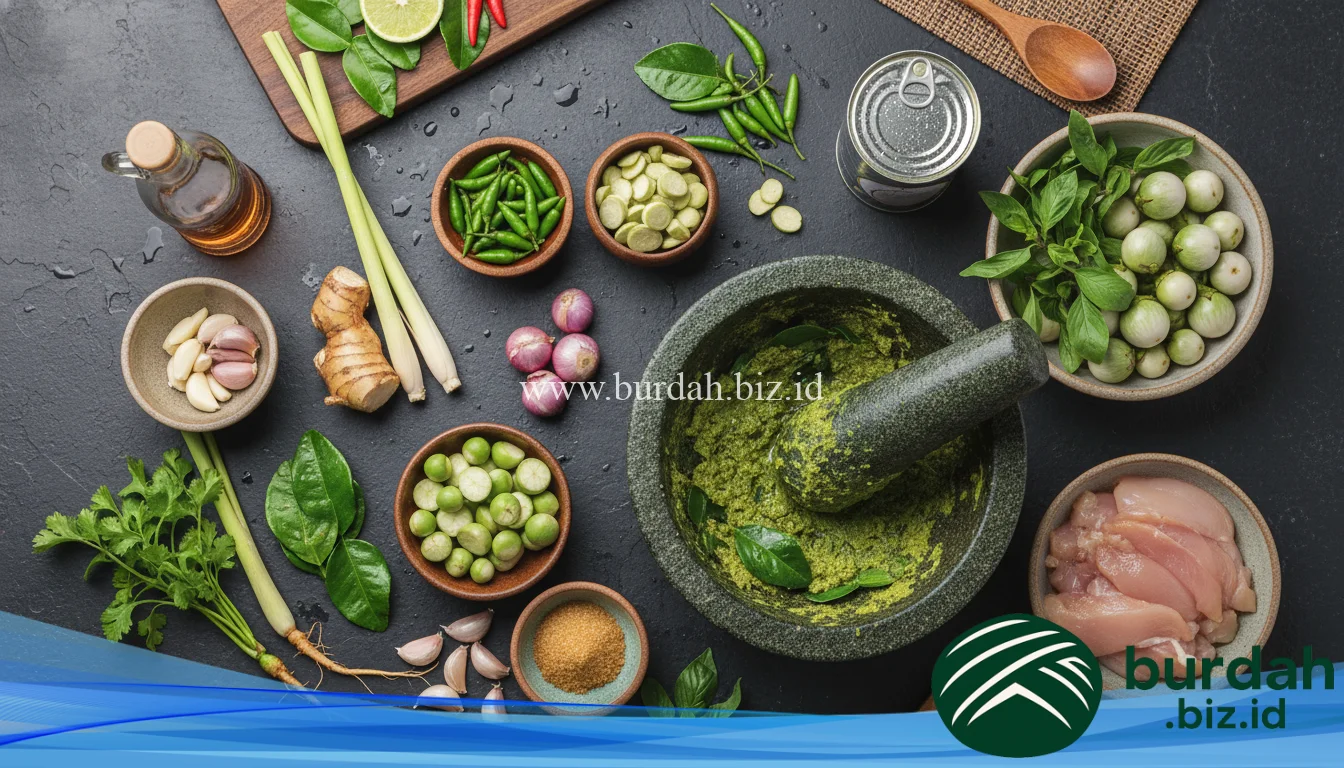
The scent hits you first. A fragrant cloud of lemongrass, galangal, and makrut lime that promises something special. Then you see it—a luscious, perfectly green sauce clinging to tender pieces of chicken and crisp-tender bamboo shoots. This isn’t just another weeknight meal. This is the canonical method for classic Thai green curry, a dish that so many get wrong but is surprisingly simple to get right. Let’s be real, most restaurant versions are either too sweet or watery. Forget that. We are aiming for perfection, a balance of spicy, savory, and creamy that coats your tongue and warms you from the inside out. This is the essence of Green Curry Craft.
There’s a secret to achieving that rich, unbroken sauce, and it has nothing to do with complicated techniques. It’s about patience. It’s about understanding the ingredients. It’s about building flavor step by step.
| Prep Time | 15 minutes |
| Cook Time | 20 minutes |
| Total Time | 35 minutes |
| Servings | 4 servings |
| Estimated Calories | ~450 kcal per serving |
Why You’ll Love This Recipe
- Authentic Flavor Profile: We are not cutting corners. This recipe uses traditional ingredients to create a taste that’s as close to Bangkok street food as you can get in your own kitchen.
- Incredibly Fast: Once your ingredients are prepped, the entire cooking process takes less than 20 minutes. It’s faster than takeout. Seriously.
- The Unsplit Sauce Secret: I’ll show you the single most important technique to keep your coconut milk creamy and luscious, never oily or separated.
- Completely Customizable: Swap the chicken for shrimp or tofu. Add your favorite vegetables. You control the heat. This is your foundation for perfect Green Curry Craft.
Ingredients Notes
The quality of your ingredients directly impacts the final dish. There’s no hiding here. Let’s get it right.
- Green Curry Paste: Honestly, making paste from scratch is a huge task. For consistency and flavor, I recommend Mae Ploy or Aroy-D brand green curry paste. They have the right balance and heat. Avoid powders at all costs.
- Coconut Milk: You need full-fat, unsweetened coconut milk. The kind in a can. Chaokoh is a reliable brand. Do not use “light” coconut milk or the stuff in a carton; your curry will be thin and disappointing.
- Chicken: Boneless, skinless chicken thighs, cut into bite-sized pieces, are my top choice. They stay juicy and tender. Chicken breast works too, but be careful not to overcook it.
- Fish Sauce: This is the soul of Thai cooking’s savory flavor. Red Boat or Three Crabs are excellent brands. It provides the essential salty, umami depth.
- Palm Sugar: It has a caramel-like, less cloying sweetness than white sugar. Find it in a tub or as a hard disk at an Asian market. If you must substitute, use brown sugar.
- Makrut Lime Leaves: These add an irreplaceable citrusy, floral aroma. Fresh or frozen is best. Tear them by hand just before using to release their oils.
- Thai Basil: This is not the same as Italian basil. Thai basil has a distinct anise or licorice flavor that is crucial to the dish. Stir it in at the very end.
- Vegetables: I’m using canned bamboo shoots for tradition and Thai eggplants because their texture is perfect. Feel free to add bell peppers or green beans.
Green Curry Craft 1
Step-by-Step Instructions
Follow these phases closely. The timing and temperature control are what separate a good curry from a great one.
Phase 1: Blooming the Paste
- Open your can of coconut milk without shaking it. Carefully scoop out the thick, solid cream from the top into a cold saucepan or wok. You should get about 1/2 cup. Reserve the remaining thin milk.
- Turn the heat to medium. Let the thick cream heat up until it starts to bubble gently. You will see the oil begin to separate and shimmer on the surface. This is called “breaking” the cream, and it’s exactly what we want.
- Add 2-3 tablespoons of green curry paste to the simmering cream. Use a spatula to stir and fry the paste in the coconut oil for about 2 minutes. It should become intensely fragrant. Your kitchen will smell amazing. This step is critical for developing deep flavor.
Phase 2: Building the Curry
- Add the bite-sized chicken pieces to the pan. Stir to coat them completely in the fragrant paste. Cook for 3-4 minutes, until the chicken is no longer pink on the outside.
- Pour in the reserved thin coconut milk from the can. Stir everything together. Add the torn makrut lime leaves and sliced Thai eggplants now.
- Bring the curry to a gentle simmer. Do not let it boil aggressively. Reduce the heat to low and let it cook for 10-12 minutes, or until the chicken is cooked through and the eggplant is tender.
- Add the bamboo shoots (and any other quick-cooking vegetables like bell peppers) and cook for another 2 minutes.
Phase 3: Seasoning and Finishing
- Turn off the heat. This is important. Seasoning is always done off the heat to get a true taste.
- Stir in 1 tablespoon of fish sauce and 1 teaspoon of palm sugar. Taste the curry. Does it need more saltiness? Add a splash more fish sauce. More sweetness to balance the heat? Add a little more sugar. Adjust until it tastes perfect to you.
- Finally, stir in a large handful of fresh Thai basil leaves and a few slices of red chili for color and a final kick of heat. The residual heat will wilt the basil perfectly.
- Serve immediately over hot jasmine rice.
Green Curry Craft 2
Chef’s Tips for Success
The single most important rule of making this curry is to NEVER let it reach a rolling boil after you’ve added the thin coconut milk. A vigorous boil will cause the emulsion to break, resulting in a greasy, separated sauce. A gentle, lazy simmer is all you need to cook the ingredients through while keeping the sauce velvety smooth.
Variations & Substitutions
- Make it Vegan: Use firm tofu (pressed and cubed) or chickpeas instead of chicken. Sauté the tofu first for better texture. Substitute the fish sauce with a high-quality soy sauce or vegan fish sauce and use vegetable broth if you need to thin the curry. Add mushrooms and broccoli for extra substance.
- Seafood Green Curry: Use large shrimp or mixed seafood. Add them in the last 3-4 minutes of cooking, as they cook very quickly.
- Adjust the Heat: The curry paste carries most of the heat. For a milder curry, use 1.5-2 tablespoons of paste. For a spicier version, use 3-4 tablespoons and add fresh sliced Thai bird’s eye chilis along with the basil.
Storage & Reheating
Thai green curry is one of those dishes that tastes even better the next day. The flavors have more time to meld together.
Store any leftovers in an airtight container in the refrigerator for up to 3-4 days. To reheat, gently warm it in a saucepan over low heat until hot. Avoid microwaving if possible, as it can make the sauce separate and overcook the protein.
FAQ
- 1. Why did my curry sauce split and look oily?
- You almost certainly let it boil too hard. Once the full liquid is in, the curry should only be at a gentle simmer. High heat breaks the coconut milk emulsion. The initial “breaking” of the cream is intentional, but a full boil of the final sauce is the enemy of creaminess.
- 2. Can I use light coconut milk to make it healthier?
- I strongly advise against it. Light coconut milk has a higher water content and lacks the fat necessary to create a rich, creamy sauce. The result will be thin and unsatisfying. The fat is essential for carrying the flavor of the spices. Stick to full-fat for this recipe.
- 3. I can’t find Thai basil. What can I use instead?
- This is a tough one because Thai basil’s anise-like flavor is so unique. In a real pinch, you can use regular Italian basil, but be aware that the final flavor will be different. It will still be delicious, just not authentically Thai. Do not substitute with dried basil.