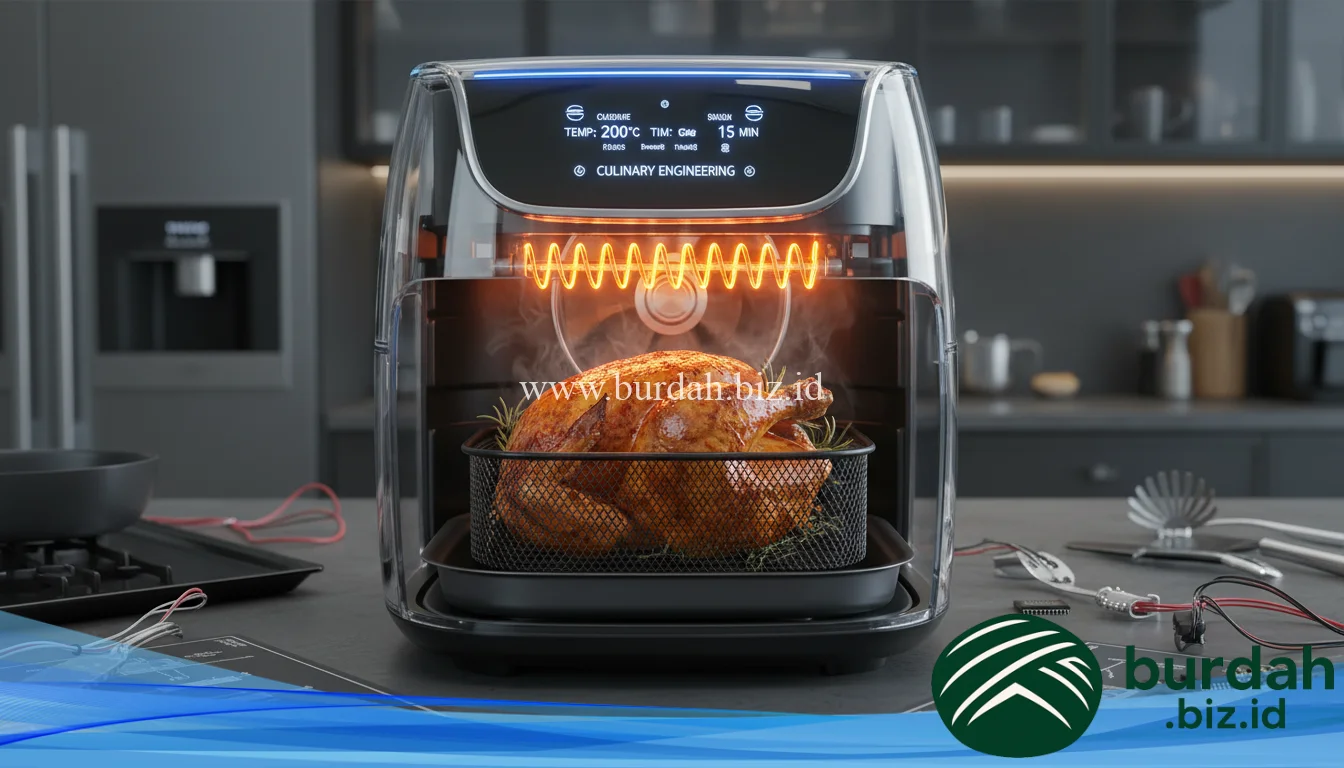
That impossible crunch. You know the one. It’s the sound of perfectly crisp-skinned chicken, of a french fry that shatters just so between your teeth. For years, that texture was the exclusive property of deep fryers and a quart of hot oil. Not anymore. The countertop marvel that is the air fryer has completely changed how we cook, delivering that texture with a fraction of the fat. But it’s not magic. It’s science. Let’s be real, it’s a brilliant piece of kitchen tech, and understanding the core principles of Air Fryer Engineering is the key to going from good results to absolutely incredible ones.
This isn’t just about pressing a button. This is about knowing *why* it works, so you can make it work better for you.
| Core Technology | Rapid Air Technology (High-Speed Hot Air Convection) |
| Key Components | Heating Element, High-Powered Fan, Perforated Basket |
| Optimal Temperature Range | 350-400°F (175-200°C) |
| Primary Cooking Effect | Maillard Reaction & Dehydration |
| Energy Efficiency | High (Faster pre-heat and cook times vs. conventional oven) |
Why Understanding Air Fryer Engineering Matters
Thinking like an engineer, even for a moment, makes you a better cook. It just does. Knowing what’s happening inside that little machine gives you control. Here’s why this knowledge is your secret weapon:
- No More Soggy Fries: When you understand that airflow is everything, you’ll stop overcrowding the basket. This simple shift in thinking guarantees crispier results every single time. It’s a fundamental law of its operation.
- Perfect Browning, Not Burning: The heating element is directly above the food. Knowing this helps you understand why some foods need a shake or a flip halfway through to prevent the tops from cooking too fast. You’re managing direct, radiant heat.
- Save Time and Energy: An air fryer is a compact, insulated space. It heats up incredibly fast compared to your massive conventional oven. Understanding this efficiency encourages you to use it for quick weeknight meals, saving both time and electricity.
- You Can Troubleshoot: When something goes wrong—food is dry, or maybe it’s unevenly cooked—you won’t just be guessing. You’ll know to check for airflow obstruction or consider the food’s position relative to the fan and heating element.
Air Fryer Engineering 1
Deconstructing the Machine: Core Components
An air fryer seems complex, but at its heart, it’s a beautifully simple system. Three main parts do all the heavy lifting. Think of them as your ingredients for creating crispiness.
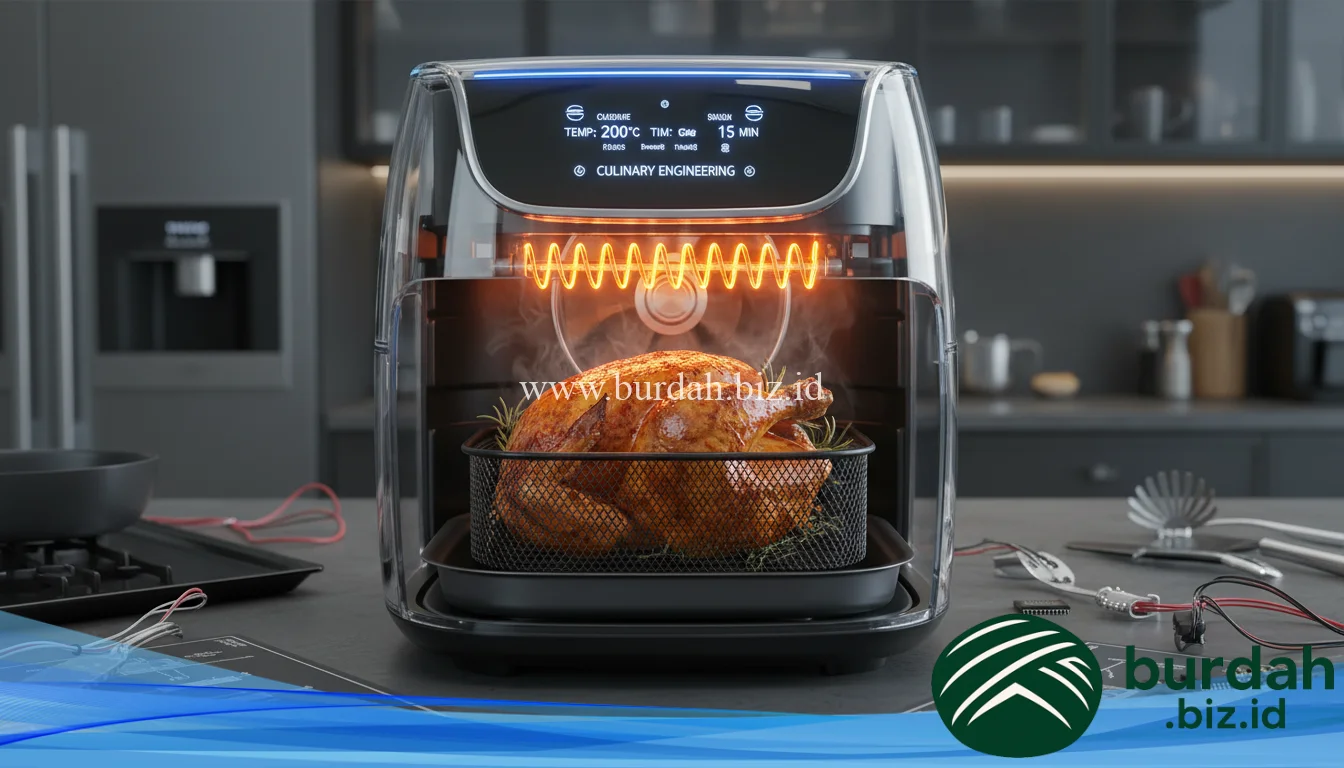
- The Heating Element: Usually a coiled element located in the top of the unit, just like the broiler in your oven. This provides the intense, radiant heat necessary to kickstart the browning process. It’s the source of all the power.
- The Fan: This is the star of the show. Positioned directly below the heating element, this powerful fan blasts the hot air downwards and circulates it all around the food at high speed. This is the “convection” part of the equation, but on a much more intense level than a standard oven.
- The Basket: The design of the basket is critical. It’s almost always perforated or has a mesh bottom. Why? To allow that superheated air to flow underneath and all around the food, cooking it from every single angle simultaneously. This is what prevents a soggy bottom.
The Physics of the Perfect ‘Fry’: A Step-by-Step Breakdown
So, what actually happens when you slide that basket in and press ‘start’? It’s a rapid, three-phase process that transforms food in minutes.
Phase 1: The Initial Heat Blast
- You place your food, let’s say seasoned chicken wings, into the basket and set the temperature to 400°F (200°C).
- The heating element immediately glows, generating intense heat. This isn’t a slow ramp-up like a big oven. It’s fast.
- This initial blast of radiant heat begins to rapidly dry the surface of the food. Water is the enemy of crispiness, and this first step is all about getting rid of it.
Phase 2: Creating the Convection Vortex
- Simultaneously, the fan kicks into high gear. It pulls air up, forces it across the super-hot heating element, and then propels it down at high velocity.
- The shape of the cooking chamber and the perforated basket forces this air to swirl around in a vortex. It’s a tiny, controlled hurricane of hot air.
- This moving air dramatically speeds up heat transfer. It’s the difference between standing in a 70-degree room and standing in a 70-degree room with a fan blowing on you. The moving air makes the heat far more effective.
Phase 3: Achieving the Maillard Reaction
- With the surface moisture gone and the temperature high, the magic happens. The Maillard reaction—a chemical reaction between amino acids and reducing sugars—begins.
- This is not burning. This is the scientific process that gives browned food its distinctive, delicious flavor. It creates the golden-brown color on bread crust, the sear on a steak, and the beautiful crisp on your air-fried wings.
- Because the air is hitting the food from all sides, this reaction happens all over the surface, creating an even, crunchy crust that a conventional oven struggles to replicate.
Air Fryer Engineering 2
A Chef’s Guide to Hacking Your Air Fryer
Now that you know the science, you can manipulate it. You can bend the machine to your will.
The single most important rule of air fryer engineering is maximizing surface area and airflow. Do not, under any circumstances, overcrowd the basket. Food should be in a single layer with space between each piece. If you pile it up, you block the airflow, trap steam, and the result is soggy, steamed food. It completely defeats the purpose of the machine.
Design Differences: Basket vs. Oven Styles
Not all air fryers are created equal. The classic “basket” or “drawer” style is the most common, but toaster-oven-style air fryers have become popular. Honestly, they operate on the same principles, but the design affects the outcome.
The basket style, with its smaller, more confined space, often creates a more intense vortex of air. This makes it slightly better for achieving that super-crisp, “deep-fried” texture on things like fries and wings. The oven style offers more versatility and capacity, allowing for multiple racks, but the airflow can be less concentrated, sometimes leading to slightly less dramatic crisping.
Common Pitfalls & Troubleshooting
When your food doesn’t turn out right, it’s usually a simple physics problem. Let’s diagnose a few.
- The Problem: Food is dry and tough.
The Cause: Too much time, too little fat. The intense, dry heat can dehydrate food quickly. A light coating of oil (I prefer an avocado oil spray) protects the food and helps conduct heat for better browning. - The Problem: Uneven cooking.
The Cause: Lack of movement. The heat source is at the top. Remember to shake the basket or flip the food halfway through the cooking time to ensure all sides get exposed to that direct heat. - The Problem: White smoke is coming from the unit.
The Cause: Fat rendering and hitting the hot surface below. This is common with high-fat foods like bacon or burgers. Placing a piece of bread in the bottom of the drawer (under the basket) can help absorb the grease and reduce smoke.
Air Fryer Engineering 3
Frequently Asked Questions About Air Fryer Mechanics
Is an air fryer really just a small convection oven?
Yes and no. It’s a bit of a marketing spin. Both use a fan to circulate hot air. However, the fan in an air fryer is typically larger and more powerful, and the cooking chamber is much smaller and more strategically shaped. This combination creates a faster, more intense airflow, leading to better crisping. So, while it’s technically a type of convection oven, it’s a highly specialized, high-performance version.
Does the shape of the basket actually matter?
Absolutely. The engineering behind the basket is crucial. The perforations, the raised bottom, and even patented designs like the “starfish” shape in some Philips models are all designed to optimize that vortex of hot air, ensuring it circulates evenly around the food for the best possible results.
Why can’t I use wet batters in my air fryer?
The science doesn’t support it. In a deep fryer, the hot oil instantly sets the outside of a wet batter, creating a crust. An air fryer uses hot air. There is nothing to “set” the liquid batter. It will simply drip through the basket perforations before it has a chance to cook, creating a huge mess and a disappointing result. For a coating, you need a “dredge” technique: flour, then egg, then a dry coating like breadcrumbs or panko.