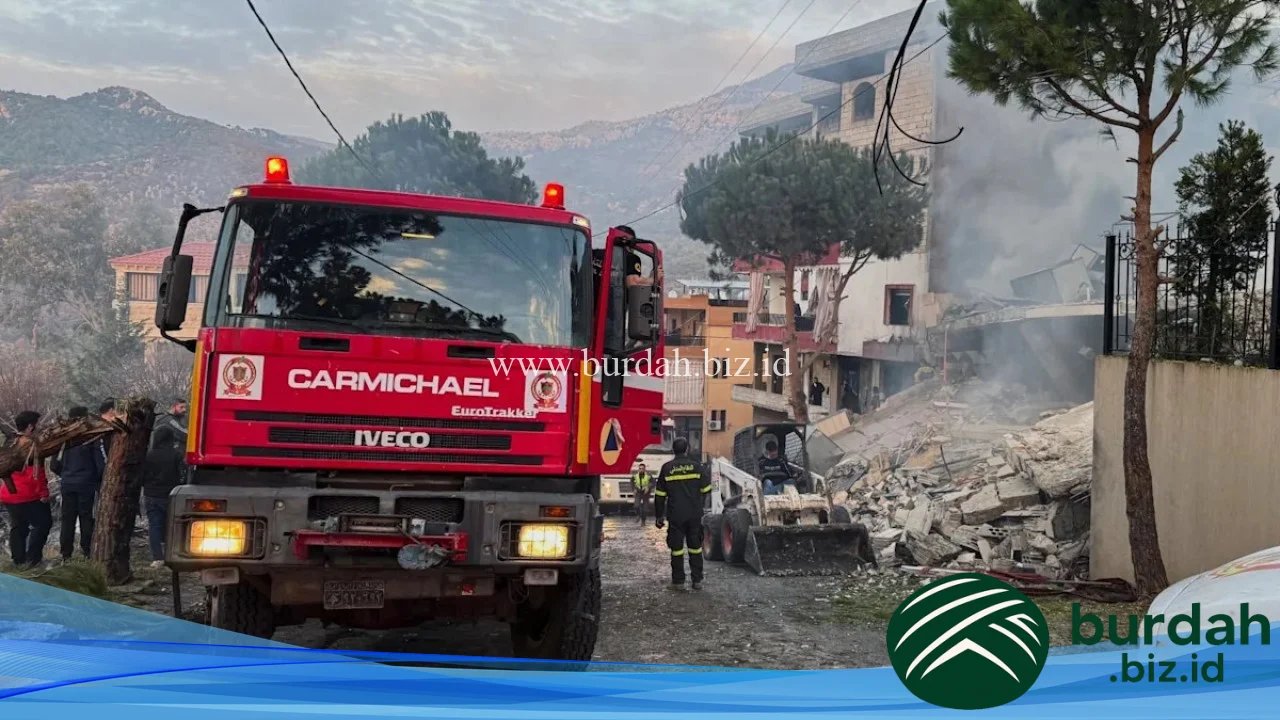
The Israeli military launched a new round of airstrikes in southern Lebanon. This action occurred less than a day after Israel and Lebanon engaged in their first direct talks in decades, a diplomatic effort now overshadowed by renewed hostility. The strikes targeted several towns, forcing residents to evacuate areas the Israeli military claimed housed weapons warehouses for the Iranian-backed group Hezbollah.
There were no immediate reports of casualties. Residents in the towns of Mjadel, Baraachit, Jbaa, and Mahrouna received warnings to leave specific locations. An Israeli military spokesman framed the operation as a response to a ceasefire violation, stating that the targeted sites posed a threat to Israel. He warned that the military would continue to operate “to remove any threat” to the country’s security, underscoring a persistent state of conflict despite a ceasefire agreement from November 2024.
A Fragile Dialogue Met with Fire
The timing of the airstrikes is particularly significant. They came just under 24 hours after civilian envoys from both nations met at the Lebanese border town of Naqoura. The historic meeting, hosted at the headquarters of the UN peacekeeping mission, Unifil, was intended to be a step towards de-escalation. It marked the first time civilians were included in the ceasefire monitoring committee, which had previously consisted only of military officers from the US, France, Lebanon, Israel, and Unifil.
The Israeli perspective on the talks was optimistic. Prime Minister Benjamin Netanyahu’s office released a statement describing the meeting as having taken place in a “good atmosphere.” The statement noted an agreement “that ideas would be formulated to advance possible economic cooperation between Israel and Lebanon.” However, the same statement made Israel’s position clear on a critical issue. Israeli envoys “clarified that the disarmament of Hezbollah is obligatory, regardless of the advancement of economic co-operation.”
Divergent Goals at the Negotiating Table
Lebanon’s leadership presented a much more reserved view of the diplomatic engagement. Lebanese Prime Minister Nawaf Salam emphasized that the nations remained “far” from any kind of diplomatic normalization. He clarified the talks were narrowly focused on immediate security concerns, not a comprehensive peace treaty.
“We are not yet at peace talks,” Salam told reporters, defining the dialogue’s purpose as “defusing tension.”
Beirut’s immediate priorities are starkly different from Israel’s focus on economic potential. Lebanon is pushing for a complete cessation of hostilities and a full withdrawal of Israeli forces from its territory. Additionally, the release of Lebanese detainees held by Israel remains a key demand. In a notable concession, Salam added that his government was open to the deployment of French and US troops to help oversee and verify any efforts to disarm Hezbollah, suggesting a potential path for third-party involvement.
- Lebanon’s Stated Priorities:
- Complete cessation of all hostilities.
- Full withdrawal of Israeli troops from Lebanese territory.
- The release of Lebanese detainees currently held by Israel.
The Unraveling Ceasefire Agreement
These events unfold against the backdrop of a frequently violated ceasefire. The deal, brokered by the United States and France, followed 13 months of intense conflict and was supposed to establish a new security situation in southern Lebanon. The agreement’s first phase stipulated a withdrawal of Israeli troops from the south. In exchange, Hezbollah was to remove its fighters and weapons from a buffer zone south of the Litani river, approximately 30 kilometers from the Israeli border.
This plan has met strong opposition from Hezbollah and its political allies, and its implementation has stalled. Israel has not fully withdrawn, maintaining positions at several strategic border sites. In recent weeks, Israeli officials have escalated airstrikes. They attribute this escalation to what they see as Hezbollah’s concerted attempts to rebuild its military infrastructure and a failure by the Lebanese government to disarm the group effectively. The latest diplomatic and military maneuvers coincide with a visit from a UN Security Council delegation, which is in Lebanon specifically to review the troubled ceasefire’s implementation.