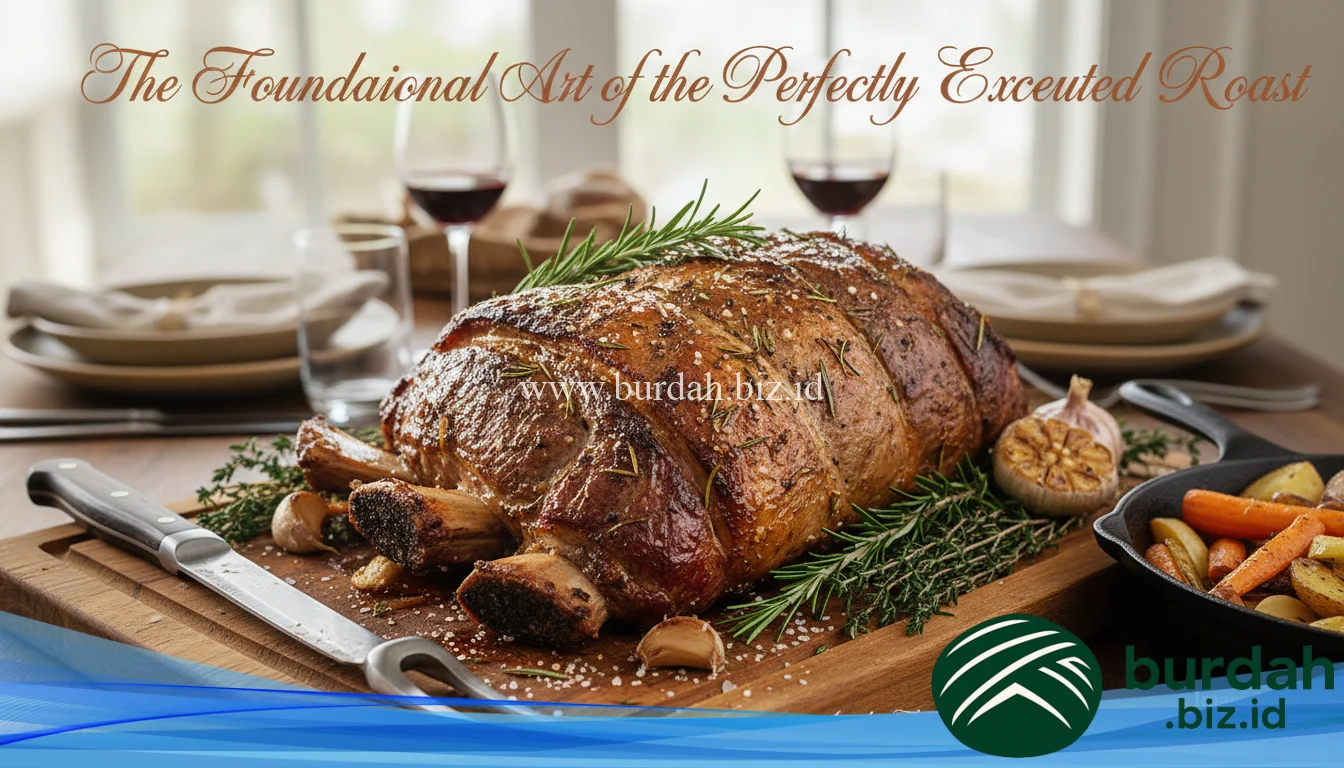
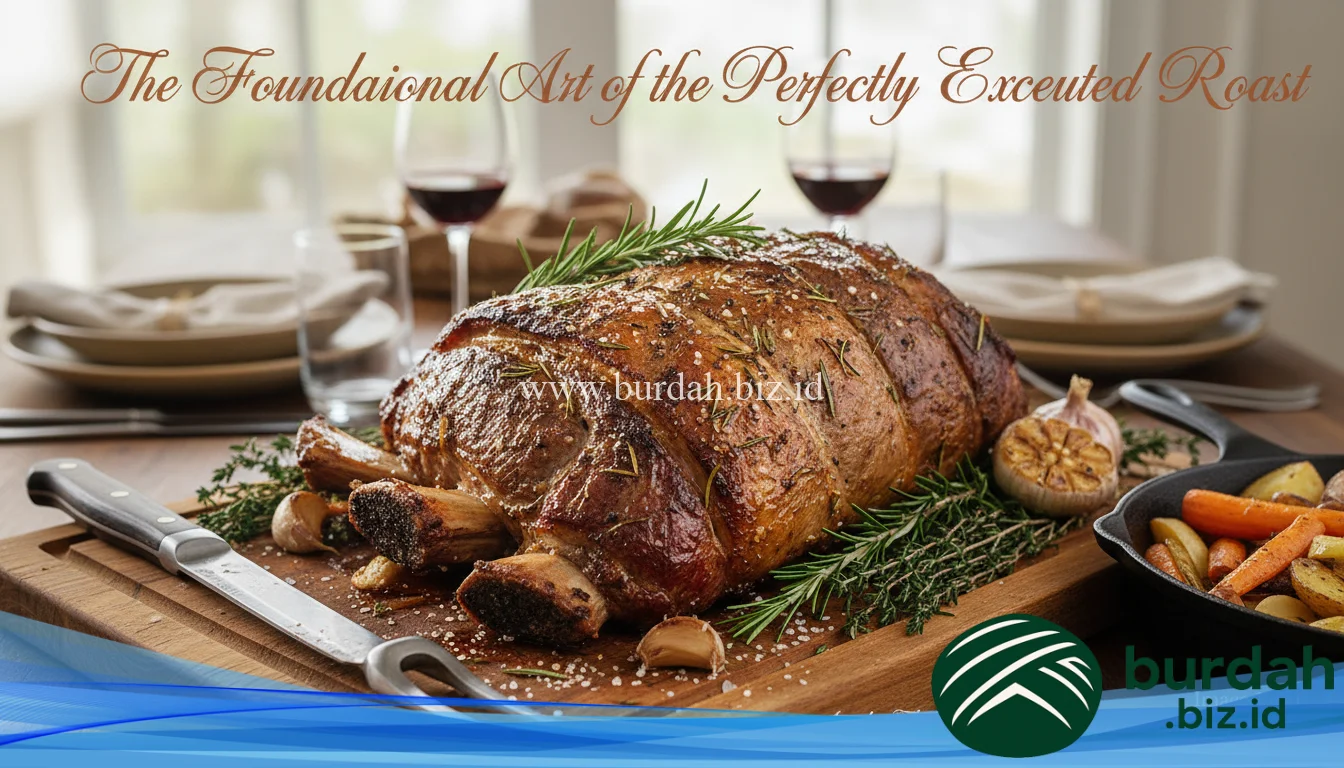
The sound is unmistakable. A deep, aggressive sizzle as cold, seasoned beef hits a screaming hot pan. That’s the first step. The aroma that follows—rich, savory, and complex—is the promise of what’s to come. This isn’t just about cooking a large piece of meat; it’s about creating a centerpiece. A meal that gathers people. We’re talking about a perfectly executed roast, with a dark, salty crust giving way to a tender, juicy interior that practically melts. This is the foundational art of the perfectly executed roast, a skill that transforms a home cook into a kitchen hero.
Honestly, mastering this technique is less about a complicated recipe and more about understanding a few key principles. It’s about patience and control. It’s about building flavor at every single stage. This is true Roast Craftsmanship.
| Prep Time | 20 minutes |
| Cook Time | 1 hour 30 minutes |
| Resting Time | 20 minutes |
| Total Time | 2 hours 10 minutes |
| Servings | 6-8 servings |
| Estimated Calories | ~450 kcal per serving (beef only) |
Why You’ll Love This Recipe
- The Crust is Everything. We use a high-heat sear to create an incredible, deeply browned crust packed with flavor before the roast even sees the inside of an oven. It’s a non-negotiable step.
- Edge-to-Edge Perfection. By searing first and then roasting at a moderate temperature, we avoid that dreaded gray, overcooked ring of meat just beneath the surface. You get a beautiful, rosy pink from one edge to the other.
- A Foolproof Pan Sauce. No sad, watery gravy here. We use the fond—those glorious browned bits left in the pan—to build a rich, glossy sauce that elevates the entire dish.
- Pure Simplicity. The ingredient list is short. The technique is the star. This recipe proves that you don’t need a dozen spices to achieve profound flavor.
Roast Craftsmanship 1
Ingredients Notes
The quality of your ingredients directly impacts the final result. There’s nowhere to hide in a simple roast, so choose wisely. Let’s be real, the beef is the main event.
- Beef Roast: A 3-4 pound boneless beef chuck roast or top round is perfect. Look for one with good marbling (the little white flecks of fat). This fat will render during cooking, keeping the meat incredibly moist and flavorful. Ask your butcher for a well-shaped, tied roast if possible.
- High-Smoke-Point Oil: You need an oil that can handle high heat for the initial sear. Avocado oil is my top choice. Grapeseed or even canola oil work in a pinch. Do not use olive oil; it will burn and turn bitter.
- Coarse Salt: Use Kosher salt or coarse sea salt. The large crystals adhere better to the meat and create a more even seasoning than fine table salt.
- Black Pepper: Freshly cracked Tellicherry peppercorns provide a pungent, aromatic heat that complements the beef beautifully. Pre-ground pepper has lost most of its potency.
- Aromatics: We’re keeping it classic. A few large shallots and a whole head of garlic, cut in half crosswise, are all you need. They will sweeten and mellow in the pan as the beef roasts.
- Beef Broth: For the pan sauce, use a high-quality, low-sodium beef broth or stock. This allows you to control the final saltiness of your sauce.
- Unsalted Butter: Just a knob of cold, unsalted butter swirled into the sauce at the very end will give it a beautiful sheen and a rich, velvety texture.
–
Step-by-Step Instructions
Follow these steps precisely. The temperature and timing are critical for achieving that perfect medium-rare result. Get your meat thermometer ready.
Phase 1: Preparation and Searing
- Take the beef out of the refrigerator at least 1 hour before you plan to cook. This is crucial for even cooking. Pat it completely dry with paper towels. Moisture is the enemy of a good sear.
- Season the roast aggressively on all sides with the coarse salt and freshly cracked black pepper. Don’t be shy. A lot of this will fall off in the pan. Press the seasoning into the meat.
- Preheat your oven to 350°F (175°C).
- Place a large, heavy-bottomed skillet (cast iron is ideal) over high heat. Add the avocado oil. When the oil begins to shimmer and you see a tiny wisp of smoke, it’s ready.
- Carefully place the seasoned roast in the hot pan. You should hear a loud sizzle. Sear for 3-4 minutes per side, until a deep, dark brown crust forms. Use tongs to sear the ends as well. Do not move the meat around while it’s searing.
Roast Craftsmanship 2
Phase 2: The Art of Roasting
- Once seared, transfer the roast to a roasting pan or leave it in your oven-safe skillet. Scatter the shallots and the halved garlic head around the meat.
- Place the pan in the preheated oven. Roast for approximately 15-20 minutes per pound for medium-rare.
- Start checking the internal temperature with a meat thermometer after about 1 hour. For medium-rare, you want to pull the roast out of the oven when the thermometer reads 125-130°F (52-54°C) in the thickest part. The temperature will continue to rise as it rests.
Phase 3: Rest and Make the Pan Sauce
- Transfer the cooked roast to a cutting board and tent it loosely with foil. Let it rest for a minimum of 15-20 minutes. This allows the juices to redistribute throughout the meat, ensuring a tender, juicy slice. Skipping this step will ruin your hard work.
- While the roast rests, make the sauce. Place the roasting pan on the stovetop over medium-high heat. Add the beef broth to the pan, scraping up all the browned bits (the fond) from the bottom with a wooden spoon. This is where the flavor lives.
- Bring the liquid to a boil, then reduce the heat and let it simmer until it has reduced by about half and thickened slightly, about 5-7 minutes.
- Turn off the heat and whisk in the cold butter until it’s melted and the sauce is glossy. Season with salt and pepper to taste. Strain the sauce through a fine-mesh sieve if you prefer it perfectly smooth.
- Slice the roast against the grain and serve immediately with the warm pan sauce.
Chef’s Tips for Success
A reliable instant-read digital thermometer is the single most important tool for excellent Roast Craftsmanship. It is the only way to know for sure when your roast is done. Cooking by time alone is just guessing, and it’s the fastest way to an overcooked, disappointing result. Pulling the meat at the right temperature is the secret.
Roast Craftsmanship 3
Variations & Substitutions
- Herb-Crusted Roast: In a small bowl, mix chopped fresh rosemary, thyme, and a bit of minced garlic with a tablespoon of oil. Rub this paste all over the beef before searing for an incredible aromatic crust.
- Root Vegetables: Add 1-inch chunks of carrots, parsnips, and potatoes to the pan around the roast for the last 45 minutes of cooking. They’ll cook in the beef drippings and become unbelievably delicious.
- Red Wine Pan Sauce: After searing the beef and removing it from the pan, add the shallots to the pan and sauté for a minute. Deglaze with 1/2 cup of a dry red wine like Cabernet Sauvignon, scraping the bottom. Reduce the wine by half before adding the beef broth and continuing the recipe as written.
Storage & Reheating
Leftover roast is a wonderful thing. Store any extra sliced beef in an airtight container in the refrigerator for up to 3-4 days. You can also freeze it for up to 2 months.
To reheat, it’s best to avoid the microwave, which can make the meat rubbery. Gently warm the slices in a covered skillet with a splash of beef broth over low heat until just warmed through. This preserves its texture and moisture.
Frequently Asked Questions
What is the best budget-friendly cut for a roast?
Honestly, a chuck roast is your best friend here. It’s affordable, widely available, and has fantastic marbling. When cooked properly with this sear-then-roast method, it becomes incredibly tender and flavorful.
Why did my roast turn out tough?
There are usually three culprits. First, you might have overcooked it. Even five degrees past medium-rare can make a huge difference in a lean cut. Second, you didn’t let it rest long enough. Slicing too soon causes all the juices to run out, leaving the meat dry. Third, you sliced it *with* the grain instead of against it. Look for the direction the muscle fibers are running and slice perpendicular to them.
Can I make this without a cast-iron skillet?
Yes, you can. A heavy-bottomed stainless steel skillet will also work well for searing. The key is using a pan that retains heat evenly. Avoid non-stick pans, as they typically can’t get hot enough for a proper sear and you won’t develop the same quality of fond needed for a great pan sauce.