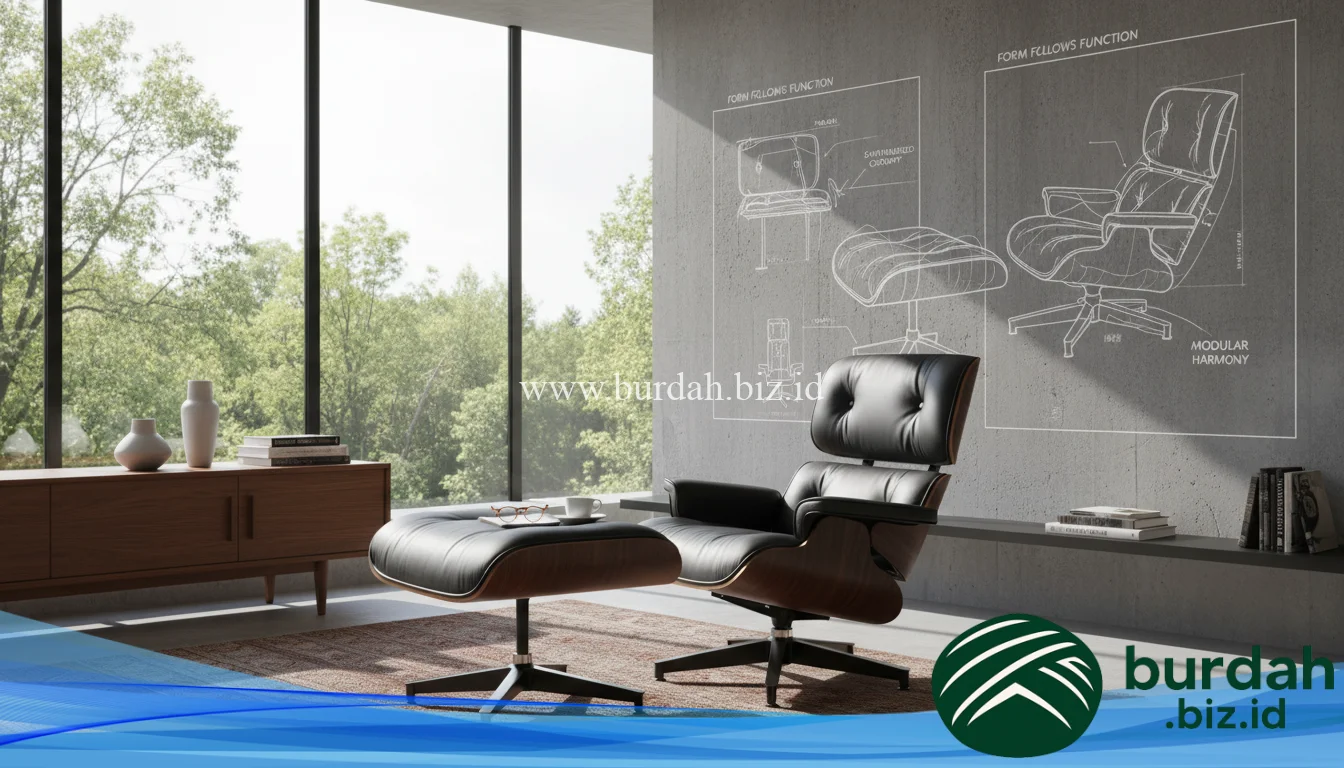
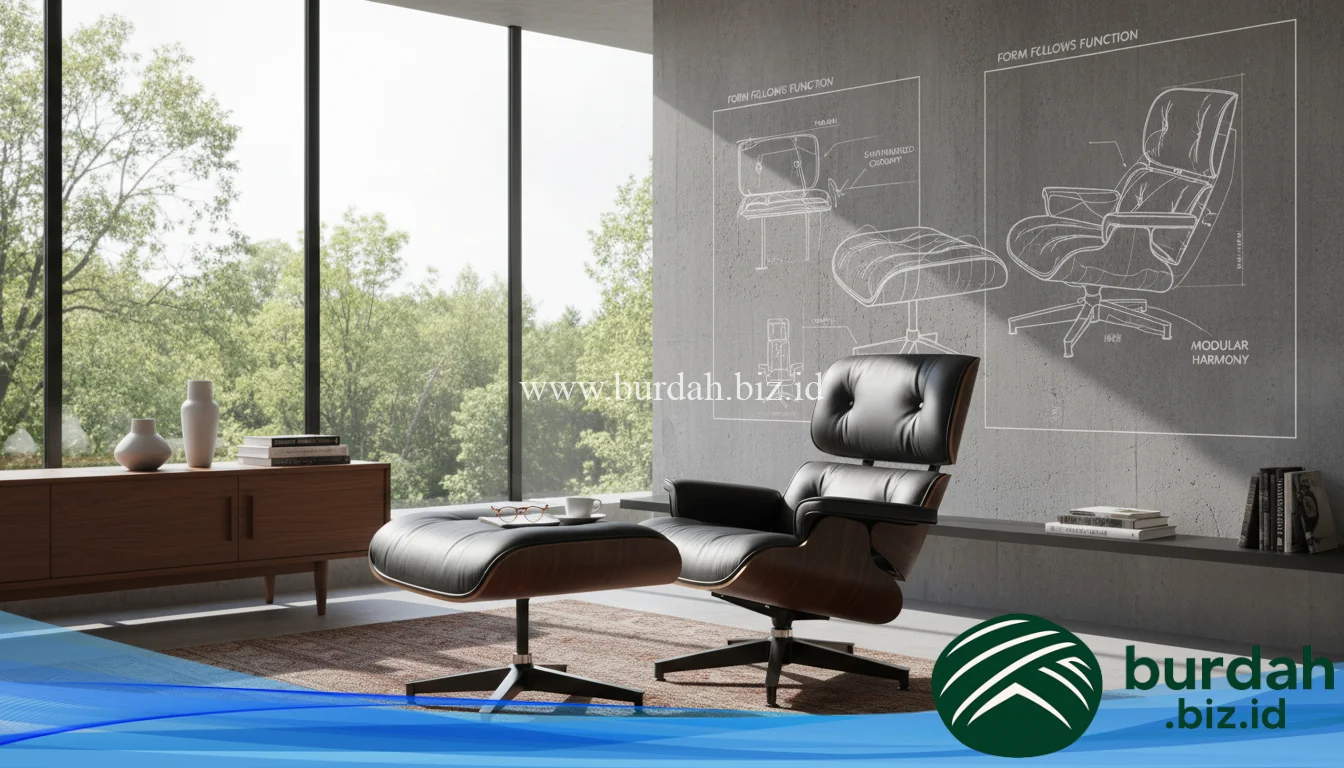
Most people see a chair. They see supple leather, rich rosewood, and a shape that has become a permanent fixture in the lexicon of desirable objects. But to see the Eames Lounge Chair and Ottoman as just a chair is to miss the point entirely. It’s like looking at a suspension bridge and only seeing a road. You miss the tension, the balance, the invisible forces at play that create a feeling of effortless grace. This isn’t just furniture; it’s a machine for living, a piece of sculpture you can inhabit, and perhaps the most profound example of Eames Structural Art ever realized for the domestic environment. It’s a solution to a problem Charles and Ray Eames posed themselves: how to create a modern refuge, a piece that offered the comfort and warmth of a well-worn baseball glove, but built with the precision of an airplane wing.
Let’s be real. The chair is an icon. It’s a status symbol. But its status is built on something far more substantial than marketing or aesthetics. Its longevity and its power come from its bones. It comes from the way every single component, every curve, every connection, serves a deliberate structural purpose. The poetry isn’t in the decoration, because there is none. The poetry is in the engineering itself, made visible and beautiful.
The Philosophy Behind the Form
Charles and Ray Eames were driven by a powerful idea. “The best for the most for the least.” They were pioneers of democratic design, using industrial materials and mass-production techniques to create high-quality, affordable furniture for the average person. Think of their molded plastic chairs, ubiquitous in schools and offices. They were brilliant, simple, and accessible. The Eames Lounge Chair (officially model 670) and its companion, the Ottoman (671), represented a significant departure from this ethos. This was their first foray into the high-end market, a piece designed with no cost constraints. It was an indulgence.
Their stated goal was to create a modern lounge chair that offered a “special refuge from the strains of modern living.” The inspiration was the familiar, comfortable look of a heavily used first baseman’s mitt. This is a crucial starting point. They weren’t trying to design something stark or minimalist in the European tradition. They wanted warmth. They wanted American comfort, a sense of familiarity and welcome. The challenge was how to achieve this feeling of softness and receptiveness using the hard, industrial materials they were known for, like molded plywood and cast aluminum. The solution they found is a masterclass in balancing opposing forces—the hard with the soft, the industrial with the natural, the engineered with the organic.
Deconstructing the Three Plywood Shells
The heart of the Eames Lounge Chair is its skeleton. This skeleton is composed of three distinct molded plywood shells for the headrest, the backrest, and the seat. This is the first piece of structural genius. Many designers might have attempted to create a single, continuous shell. A singular form. But the Eameses understood the human body isn’t a single, rigid block. It needs to articulate. It needs support in different places, at different angles. By breaking the chair into three parts, they allowed each section to be molded into the perfect ergonomic shape for the part of the body it was meant to support.
These shells were the culmination of over a decade of experimentation. During World War II, Charles Eames and his team developed techniques for molding plywood into complex curves to create leg splints and aircraft parts for the U.S. Navy. They perfected this process with a homemade machine they affectionately called the “Kazam! Machine.” This device used heat and a pressurized membrane to press thin layers of wood veneer, slathered in resin glue, against a mold. The result was a material that was incredibly strong, lightweight, and could be shaped into organic forms previously impossible with solid wood. For the Lounge Chair, they used five thin layers of plywood, finished with a final veneer of Brazilian rosewood, a material chosen for its dramatic, beautiful grain. The shells are not just platforms for cushions. They are the primary structure, curved and engineered to cradle the body perfectly.
Eames Structural Art in the Connections
If the plywood shells are the bones, the connections are the ligaments and tendons. This is where the unseen engineering truly shines, and it’s a core tenet of Eames Structural Art. The three shells are not rigidly bolted together. That would create a stiff, unforgiving chair. Instead, the backrest and headrest are connected to the main seat shell via a set of die-cast aluminum spines. And here’s the magic. The connection between the wood shells and the aluminum spines is made using neoprene rubber shock mounts. These are thick, resilient pucks of rubber fused to metal plates, which are then glued into recesses in the plywood.
This was a revolutionary idea. The shock mounts act as a flexible joint, allowing the backrest to flex and give slightly when you sit down or shift your weight. It’s a subtle movement, almost imperceptible, but it makes all the difference. It turns the chair from a static object into a responsive system that moves with you. This creates a level of comfort that a rigid frame could never achieve. The chair absorbs the shock of sitting down. It adjusts to your micromovements. This is what separates it from so many imitators. They might get the look right, but they miss this crucial, invisible detail of the structural system. The aluminum base itself is a piece of art—a five-legged star for the chair and a four-legged one for the ottoman. It provides a stable, elegant foundation that swivels, adding another layer of dynamic function without cluttering the design. The visual lightness of the base belies its immense strength and stability.
The Upholstery as an Integral Component
The cushions on the Eames Lounge Chair are not an afterthought. They aren’t just pillows thrown onto a wooden frame. They are an integral, engineered part of the overall structure and comfort system. Charles and Ray Eames designed the cushions to be individual units, each one wrapped in high-quality leather. Each cushion is identical and interchangeable, a nod to their mass-production mindset. This modularity was brilliant. It meant that if one cushion became damaged, it could be easily replaced without having to reupholster the entire chair.
Look closer at how they are attached. The leather cushions are zipped onto stiff backing panels, which are then discreetly clipped into the plywood shells. This system keeps the cushions perfectly in place, preventing them from sliding or bunching up. It maintains the chair’s clean, tailored lines. The filling itself was also carefully considered. A blend of urethane foam and down feathers provides a perfect mix of firm support and plush softness. The choice of leather was also deliberate. They chose a material that would age gracefully, developing a rich patina over time, much like the first baseman’s mitt that inspired it. The chair is designed to get better with use, to record the history of its life in the gentle creases and softening of its leather.
The Ergonomics of Engineered Relaxation
Every dimension of the Eames Lounge Chair is the result of careful, human-centered design. It is a machine calibrated for rest. The most important ergonomic decision was to set the seat and back at a permanent, fixed tilt of 15 degrees. Why this specific angle? After extensive research, the Eameses determined that this was the optimal posture for taking the weight and stress off the lower vertebrae of the spine. When you sit in the chair, you are not sitting upright. You are in a state of semi-recline, a position that encourages your muscles to relax fully.
The seat is low to the ground, which further enhances the sense of security and grounding. The armrests are wide and positioned at a comfortable height, providing support without being obtrusive. They are not separate pieces tacked on; they are an elegant continuation of the backrest’s structure. The swivel mechanism of the base allows for a 360-degree range of motion, letting the user turn to engage in a conversation or reach for a book without straining. And then there is the ottoman. It is not an optional accessory; it is the second half of the ergonomic equation. It is designed to be the exact right height to elevate the legs, promoting healthy circulation and completing the posture of total relaxation that the chair is designed to induce.
Material Honesty and Visual Logic
A core principle for Charles and Ray Eames was the idea of “material honesty.” This meant never disguising one material as another and allowing the nature of each material to be expressed. The Eames Lounge Chair is a perfect exhibition of this principle. The wood looks like wood; you can see the grain and the layers of the plywood on the edges. The aluminum is clearly cast aluminum, either polished or powder-coated. The leather is unabashedly leather. There are no tricks. There is no superfluous decoration.
This approach creates a powerful sense of visual logic. You can look at the chair and understand how it is put together. You see the visible bolts that connect the armrests. You see the aluminum braces that support the back. Nothing is hidden away unnecessarily. This transparency is a form of beauty in itself. It invites you to appreciate the craftsmanship and the engineering. It communicates a sense of integrity and quality. The chair’s beauty is not skin-deep; it is a direct result of its intelligent and honest construction. This is the essence of the structural poetry—the structure itself is the aesthetic.
The Ottoman: A Structural Counterpoint
One cannot fully appreciate the chair without its ottoman. The Ottoman 671 is not just a footrest; it is a carefully designed structural and aesthetic companion. Its construction is a direct echo of the chair, featuring a single, large molded plywood shell and an identical leather cushion. It completes the visual language started by the chair. But its structural role is just as important. While the chair has a five-point, swiveling base to provide dynamic movement, the ottoman has a fixed, four-point base.
This is a deliberate and brilliant choice. The static, unmoving nature of the ottoman provides a stable anchor for your feet. It grounds the entire experience. If the ottoman also swiveled, the user might feel a sense of instability. By making it fixed, the Eameses created a system of balance: the dynamic, rotating chair and the stable, reassuring ottoman. Together, they form a complete ecosystem for relaxation. The gentle concave curve of the ottoman’s surface is also not accidental; it is shaped to comfortably support the user’s legs, preventing them from rolling off. It is a simple object, but like every part of this ensemble, its simplicity hides a deep level of thoughtful design.
A Legacy of Structural Artistry
Why has this chair endured for over half a century? Fashions come and go. Trends fade. Yet the Eames Lounge Chair remains a constant, produced continuously since 1956 by Herman Miller in the Americas and Vitra in Europe. Its enduring appeal is proof that good design is timeless. It has become a cultural shorthand for sophistication, intellect, and good taste, appearing in countless films, television shows, and advertisements. But its place in the design pantheon is secured by something deeper than its celebrity status.
The chair survives because its design is fundamentally sound. The Eames Structural Art that underpins it is robust, comfortable, and beautiful. It was designed for longevity. The use of separate, replaceable components means the chair can be repaired and maintained for generations. You can replace the shock mounts, get new cushions, or refinish the wood. This is the antithesis of today’s throwaway culture. It was built to last, to be a part of a family’s life, to gather memories and history in its very materials. Its value, both monetary and sentimental, often increases over time. It is an investment in comfort and beauty that pays dividends for a lifetime.
The Unseen Genius of the Details
The greatness of the Eames Lounge Chair is also found in its smallest details. Think about the glides on the feet of the base. They are self-leveling, designed to adjust to uneven floors and ensure the chair remains stable and does not wobble. This is a small thing, but it shows a profound consideration for the user’s real-world experience. The armrests, as mentioned, are not just slapped on. Their specific curve provides a perfect resting place for the arms, and their structural integration into the back shell adds rigidity and strength to the overall frame.
There is also the beautiful tension between industrial production and hand craftsmanship. The plywood shells and aluminum components were designed for efficient mass production. This was the Eameses’ bread and butter. Yet, the final assembly of the chair involves a significant amount of hand-finishing. The leather is carefully cut and sewn by hand. The components are assembled with meticulous attention to detail. This combination of machine precision and human touch gives the chair a quality and soul that a fully automated process could never replicate. It is the best of both worlds, a perfect synthesis of art and industry.
Ultimately, the Eames Lounge Chair is more than the sum of its parts. It is a complete thought. It is a thesis on the nature of comfort, a dialogue between hard and soft materials, and a monument to the idea that the most beautiful things are often the most intelligently constructed. To sit in one is to experience this firsthand. You feel the gentle flex of the back, the secure embrace of the curved shells, the perfect support of the ottoman. You are not just sitting on a chair; you are occupying a piece of history, a work of art, and a perfectly resolved piece of engineering. The structure is not hidden; it is celebrated. And in that celebration, it becomes poetry.