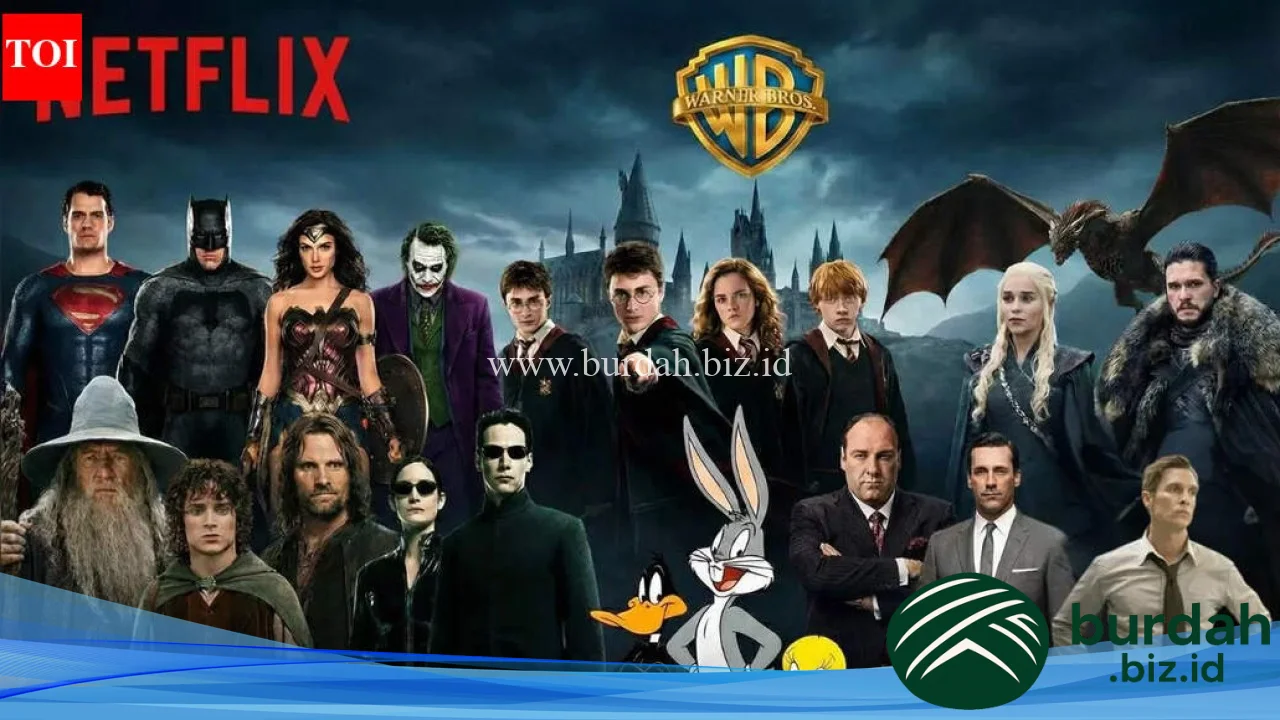
A seismic shift could be on the horizon for the streaming industry. Whispers in Hollywood and on Wall Street are growing louder about a potential, deeper collaboration between streaming titan Netflix and media giant Warner Bros. Discovery. This isn’t just another licensing agreement. A significant partnership between these two powerhouses would fundamentally alter the entertainment business, marking a definitive end to the so-called “streaming wars” and ushering in a new era of strategic alliances.
The Great Unbundling
The old model is breaking. For years, the strategy was simple: build a wall around your content. Disney pulled its movies from Netflix to fuel Disney+. Warner Bros. took back shows like Friends to anchor its own service, now called Max. Exclusivity was the weapon of choice in a battle for subscribers. That strategy, however, has proven incredibly expensive and, for some, unsustainable. Warner Bros. Discovery, saddled with substantial debt following its merger, has been a leader in dismantling this very model.
Under CEO David Zaslav, the company has begun licensing some of its most prized assets—including HBO series like Insecure and Band of Brothers—to its chief rival, Netflix. It was a shocking move. It was also a smart one. The deals provided a quick and significant infusion of cash, proving that valuable intellectual property could be monetized in multiple ways beyond a single, exclusive service. This has opened the door to a much larger conversation.
What a Real Deal Could Involve
A more formal, expanded partnership between Netflix and Warner Bros. Discovery could take several forms, each with its own set of profound implications for viewers and competitors. The industry is watching closely. The possibilities are fascinating.
- Mass-Scale Licensing: Imagine a world where a significant portion of the HBO library, DC films, and classic Warner Bros. movies are available on Netflix globally. This would be a massive content injection for Netflix and a steady, high-margin revenue stream for WBD.
- Co-Production Agreements: The two companies could jointly fund and create new shows or films, sharing the immense costs and risks of high-budget productions. This could apply to new projects within established universes like the DC world or Harry Potter’s Wizarding World.
- Service Bundling: In a direct challenge to bundles offered by companies like Disney (Disney+, Hulu, ESPN+), Netflix and WBD could offer a discounted package that includes both Netflix and Max subscriptions, creating a nearly unbeatable content offering.
- International Distribution: Netflix could become the exclusive international streaming home for Max Originals, leveraging its massive global footprint where Max has yet to launch, providing WBD with worldwide reach without the marketing and infrastructure costs.
A Win-Win Financial Scenario
The logic behind a deeper partnership is compelling for both sides. For Warner Bros. Discovery, the primary motivation is financial. The company needs to service its debt and prove to investors it has a path to consistent profitability. Licensing its vast library is far more profitable than keeping it locked away for a subscriber base that is growing more slowly than anticipated. It turns dormant assets into active, cash-generating machines.
For Netflix, the benefits are just as clear. The company spends billions of dollars on original content every year with mixed results. Gaining access to Warner’s proven, beloved, and culturally significant library would be a monumental boost. It would strengthen its value proposition, reduce subscriber churn, and give it an unparalleled arsenal of content to fight off competitors like Disney+ and Amazon Prime Video. It allows Netflix to spend less on risky new productions while offering subscribers more of what they already know and love.
Reshaping the Entire Sector
Such a deal would send shockwaves through the industry. It would force every other major studio and streaming service to re-evaluate its strategy. Disney, which has been the strongest proponent of the walled-garden approach, might have to consider licensing some of its own content to competitors to keep pace. Amazon and Apple, with their deep pockets, would have to decide whether to double down on their own original content or seek similar large-scale partnerships.
The era of every studio having its own must-have streaming service appears to be ending. The immense cost of creating a constant firehose of new content is pushing the industry toward a new phase. This next chapter will likely be defined not by wars, but by strategic cooperation, content sharing, and a rebundling of services. A Netflix and Warner Bros. deal would not just be the biggest story of the year; it would be the blueprint for the future of entertainment.