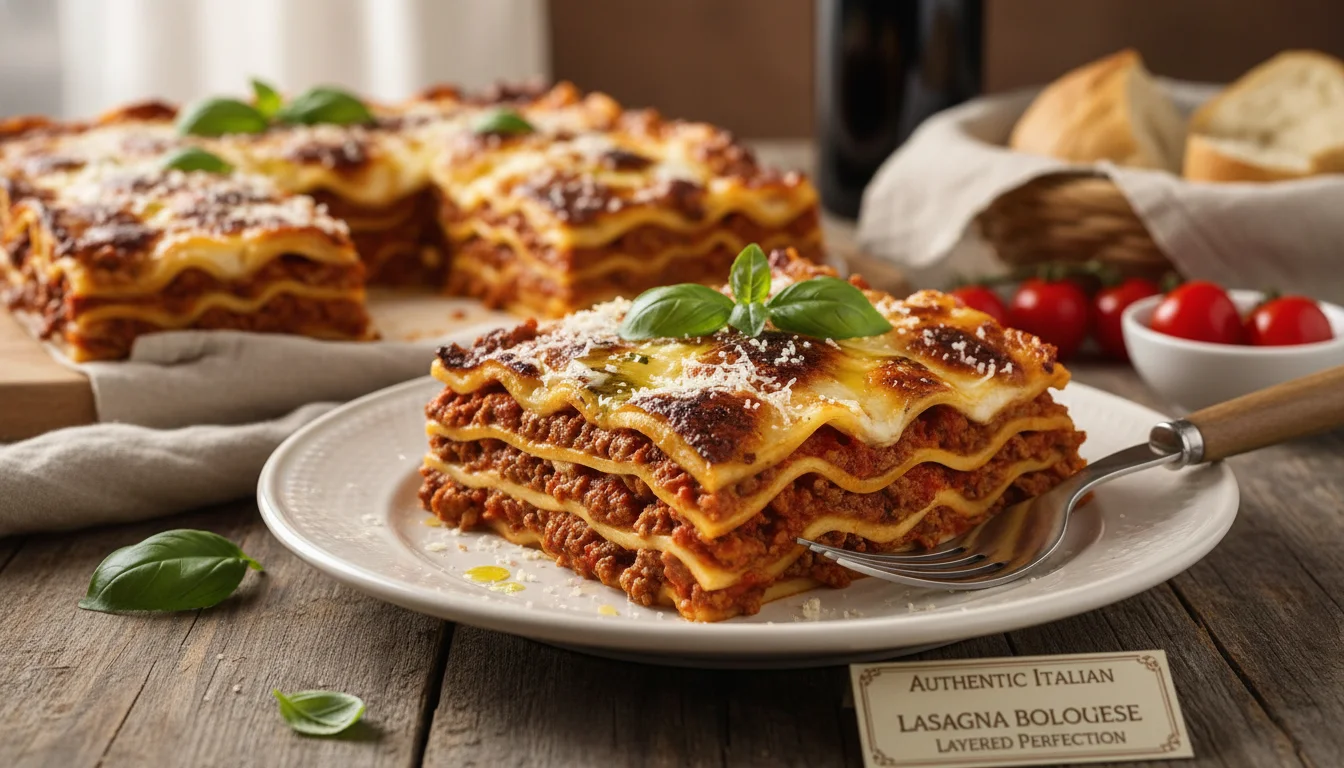
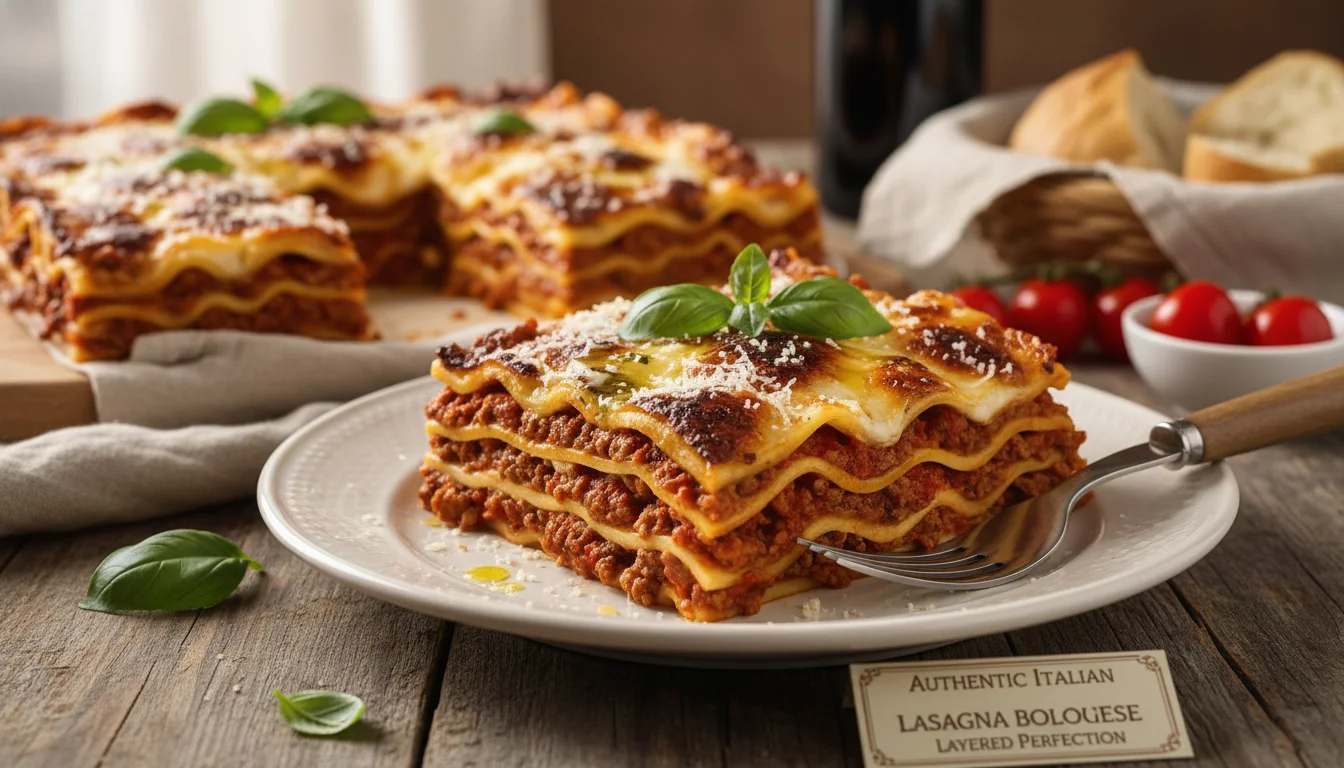
Authentic Lasagna Bolognese.
Imagine this: a rich, slow-simmered meat sauce, creamy béchamel, tender pasta sheets, and a bubbling blanket of Parmesan cheese, all baked to golden perfection. That’s not just lasagna; that’s Authentic Italian Lasagna Bolognese, a dish that speaks of family gatherings, comforting aromas, and pure culinary bliss. Forget those quick weeknight versions. This recipe is about tradition, patience, and building layers of incredible flavor that will have everyone asking for seconds. It’s the kind of meal that makes a house feel like a home. My Nonna taught me this version years ago, and honestly, it’s never failed to impress.
| Prep Time: | 45 minutes |
| Cook Time: | 3 hours (sauce) + 40 minutes (assembly & baking) |
| Total Time: | Approximately 3 hours 45 minutes |
| Servings/Yield: | 8-10 generous portions |
| Estimated Calories: | Approx. 650-750 per serving (varies) |
Why This Authentic Lasagna Bolognese is Your New Go-To
- Deep, Unbeatable Flavor: The secret is the slow simmer of the ragù – it’s where magic happens.
- Perfectly Balanced Texture: Tender pasta, rich sauce, creamy béchamel. Every bite is a dream.
- Impress Your Guests: This is a showstopper dish that tastes like it came straight from an Italian trattoria.
- Freezer-Friendly: Make it ahead and have a taste of Italy ready whenever you crave it.
Ingredients: The Heart of Your Bolognese
Using quality ingredients makes a world of difference. Don’t skimp here; your taste buds will thank you.
- For the Ragù Bolognese:
- 2 tablespoons extra virgin olive oil
- 1 large yellow onion, finely diced
- 2 carrots, finely diced
- 2 celery stalks, finely diced
- 4 cloves garlic, minced
- 1 pound ground beef (80/20 lean-to-fat ratio is ideal for flavor)
- 1/2 pound ground pork (adds richness and depth)
- 1/2 cup dry red wine (like Chianti or Sangiovese)
- 1 (28-ounce) can San Marzano tomatoes, crushed (their sweetness is unmatched)
- 1 cup whole milk (helps tenderize the meat and mellows acidity)
- 1/4 cup tomato paste
- 1 bay leaf
- Salt and freshly ground black pepper, to taste
- A pinch of nutmeg (a traditional touch)
- For the Béchamel Sauce:
- 1/2 cup unsalted butter
- 1/2 cup all-purpose flour
- 4 cups whole milk, warmed
- 1/4 teaspoon nutmeg
- Salt and white pepper, to taste
- For Assembly:
- 1 pound lasagna noodles (no-boil or regular, prepared according to package directions)
- 2 cups freshly grated Parmesan cheese, divided
- 1 cup shredded mozzarella cheese (optional, for extra meltiness)
Authentic Lasagna Bolognese 1
Crafting Your Authentic Lasagna Bolognese: Step-by-Step
Part 1: The Soul of the Dish – The Ragù Bolognese
This is where patience pays off. A slow-cooked ragù is essential.
- Heat the olive oil in a large, heavy-bottomed pot or Dutch oven over medium heat. Add the diced onion, carrots, and celery (this is your soffritto). Cook, stirring occasionally, until softened and slightly golden, about 10-12 minutes.
- Stir in the minced garlic and cook for another minute until fragrant.
- Add the ground beef and pork to the pot. Break up the meat with a spoon and cook until browned. Drain off any excess fat.
- Pour in the red wine. Let it bubble and reduce for 2-3 minutes, scraping up any browned bits from the bottom of the pot.
- Stir in the crushed San Marzano tomatoes, whole milk, and tomato paste. Add the bay leaf, a generous pinch of salt, pepper, and nutmeg.
- Bring the sauce to a gentle simmer. Reduce the heat to low, cover partially, and let it cook for at least 2 hours, or up to 3 hours. Stir occasionally, ensuring it doesn’t stick. The longer it simmers, the deeper the flavor.
- Remove the bay leaf. Taste and adjust seasoning with salt and pepper. The sauce should be thick and rich.
Part 2: The Creamy Dream – Béchamel Sauce
A smooth, luscious béchamel is the perfect counterpoint to the rich ragù.
- Melt the butter in a medium saucepan over medium heat.
- Whisk in the flour and cook for 1-2 minutes, stirring constantly, to form a smooth paste (a roux). Don’t let it brown too much.
- Gradually whisk in the warmed milk, a little at a time, ensuring each addition is fully incorporated before adding more. Keep whisking to prevent lumps.
- Bring the sauce to a gentle simmer, continuing to stir. Cook for 5-8 minutes, or until thickened to a consistency that coats the back of a spoon.
- Season with salt, white pepper, and a pinch of nutmeg. Remove from heat.
Authentic Lasagna Bolognese 2
Part 3: Assembling Your Masterpiece
This is where all your hard work comes together. Precision ensures perfect layers.
- Preheat your oven to 375°F (190°C).
- If using regular lasagna noodles, cook them according to package directions until al dente. Drain and lay them flat on parchment paper to prevent sticking.
- Spread a thin layer of the ragù sauce on the bottom of a 9×13 inch baking dish. This prevents the bottom noodles from sticking and drying out.
- Arrange a layer of lasagna noodles over the sauce.
- Spoon about one-third of the ragù sauce over the noodles.
- Drizzle about one-third of the béchamel sauce over the ragù.
- Sprinkle with about one-third of the grated Parmesan cheese.
- Repeat the layers: noodles, ragù, béchamel, Parmesan. You should have 3-4 layers depending on your dish.
- For the top layer, finish with noodles, the remaining béchamel, and the remaining Parmesan cheese. If using mozzarella, sprinkle it over the top.
Part 4: Baking to Golden Perfection
The final bake transforms these layers into something truly special.
- Cover the baking dish tightly with aluminum foil.
- Bake for 25 minutes.
- Remove the foil and bake for another 15-20 minutes, or until the top is golden brown and bubbly.
- Let the lasagna rest for at least 10-15 minutes before slicing and serving. This is crucial for the layers to set properly.
Seriously, don’t rush the resting period. It’s tempting to dive in immediately, but letting it sit allows the lasagna to firm up, making it much easier to cut clean slices and ensuring every layer holds its integrity. Trust me on this one.
Chef’s Tips for Unforgettable Lasagna
- The Soffritto is Key: Don’t rush cooking the onion, carrot, and celery. They form the aromatic base.
- Milk in the Ragù: It sounds odd, but the milk tenderizes the meat and balances the acidity of the tomatoes beautifully.
- Quality Tomatoes: San Marzano tomatoes are worth the investment for their superior flavor and less acidic profile.
- Freshly Grated Parmesan: Pre-shredded cheese often contains anti-caking agents that can affect meltability and flavor.
- Taste and Adjust: Always taste your sauces before assembling. Seasoning is personal, and your palate knows best.
Authentic Lasagna Bolognese 3
Variations and Substitutions
- Vegetarian Lasagna Bolognese: Replace the ground meats with finely chopped mushrooms (cremini and shiitake work well), lentils, and a mix of vegetables like zucchini and eggplant. Cook them down thoroughly before adding tomatoes.
- Gluten-Free: Use gluten-free lasagna noodles. Ensure your flour for the béchamel is a gluten-free blend.
- Spicy Kick: Add a pinch of red pepper flakes to the ragù while it simmers.
- Richer Béchamel: For an even richer sauce, you can add an egg yolk to the béchamel off the heat, whisking it in vigorously.
Storage and Reheating
This lasagna is a meal-prep champion.
- Storage: Once cooled, cover the lasagna tightly with plastic wrap and then foil. It will keep in the refrigerator for 3-4 days.
- Freezing: You can freeze the assembled, unbaked lasagna or leftovers. Wrap it very well in plastic wrap and then foil. It can be frozen for up to 3 months.
- Reheating: For refrigerated lasagna, cover with foil and reheat in a 350°F (175°C) oven for 20-30 minutes, or until heated through. Remove foil for the last 5-10 minutes to crisp the top. For frozen lasagna, thaw it overnight in the refrigerator, then reheat as above. You can also bake it directly from frozen, but it will take longer (around 45-60 minutes covered).
Frequently Asked Questions
Can I use no-boil lasagna noodles?
Absolutely! No-boil noodles work beautifully in this recipe. They absorb liquid from the sauces as they bake, so ensure your ragù and béchamel are not overly thick. They save significant time and effort.
Why is my lasagna watery?
This can happen for a few reasons: not simmering the ragù long enough to reduce properly, using too much liquid in the béchamel, or not letting the lasagna rest after baking. Draining excess fat from the meat is also important.
Authentic Lasagna Bolognese 4
How do I make the béchamel smoother?
The key to a smooth béchamel is whisking constantly and adding the milk gradually. If you do get lumps, you can push the sauce through a fine-mesh sieve before using it.