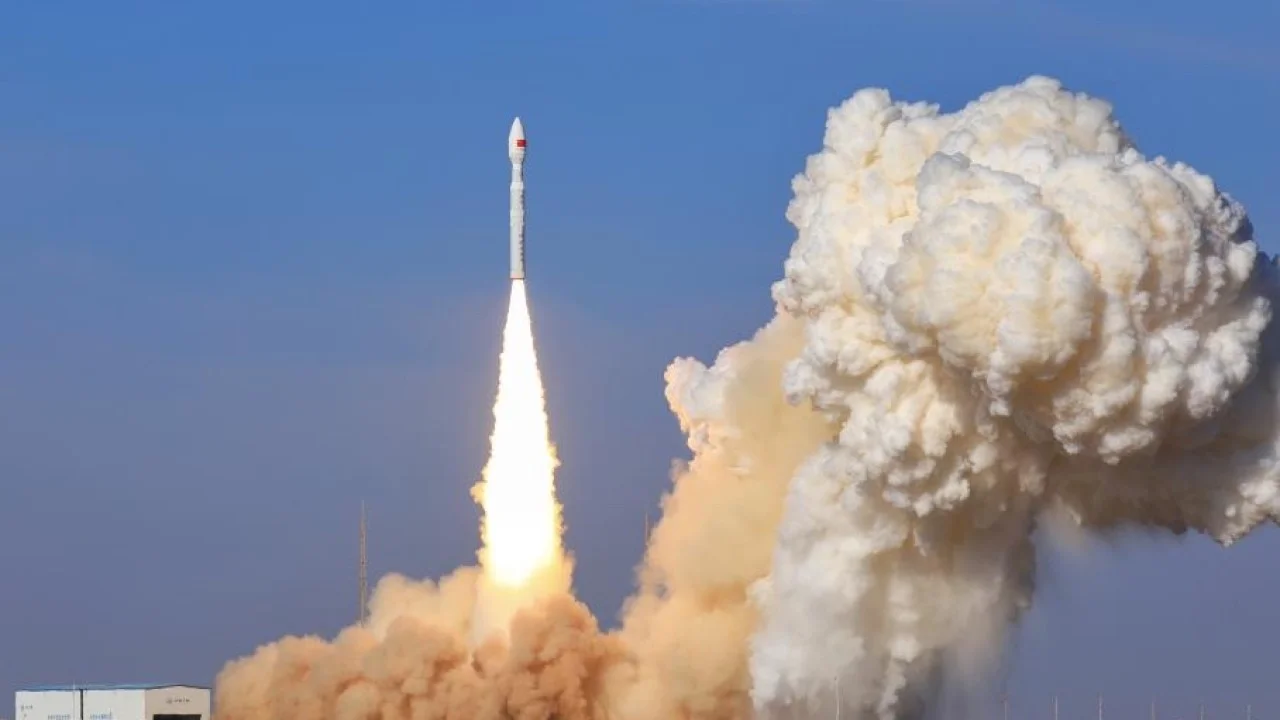
WASHINGTON (WHN) – SpaceX reported a close encounter between one of its Starlink satellites and a Chinese spacecraft launched two days prior, highlighting ongoing challenges in orbital traffic management. The incident, disclosed late December 12, involved a satellite from a Kinetica-1 rocket passing within 200 meters of a Starlink craft.
Michael Nicolls, vice president of Starlink engineering at SpaceX, stated on social media that the launch appeared to lack prior coordination or deconfliction with existing satellites.
CAS Space, the Chinese operator of the Kinetica-1 rocket, acknowledged the report and stated it was investigating. The company indicated its missions select launch windows using ground-based awareness systems to avoid collisions. CAS Space later clarified the close approach occurred nearly 48 hours after payload separation, a point where its launch responsibilities had concluded.
Neither SpaceX nor CAS Space provided specific details about the proximity. Orbital analysis by Jonathan McDowell indicated the Starlink satellite in question passed near one of nine satellites around 1:42 a.m. Eastern on December 12. However, this data lacks the precision to confirm the exact distance.
The Chinese satellite remains unidentified in public databases, cataloged as “Object J” with NORAD ID 67001. The launch carried six satellites for Chinese entities, alongside payloads from Egypt, Nepal, and the United Arab Emirates.
Commercial space situational awareness firms have not publicly corroborated SpaceX’s account. LeoLabs, which tracks low Earth orbit objects, stated on December 13 it could not provide information. COMSPOC reported on December 14 it lacked immediate details. Slingshot Aerospace did not respond to a request for comment.
The event underscores increasing difficulties in coordinating space operations as satellite numbers and debris grow. Nicolls previously urged satellite operators to share ephemeris data on SpaceX’s platform to facilitate conjunction screening.
This incident follows recent indications of improved willingness by China to coordinate satellite maneuvers with Western operators. At an October 2 conference in Sydney, NASA’s space sustainability director, Alvin Drew, reported the China National Space Administration (CNSA) had communicated about a potential conjunction, stating it would maneuver to avoid a collision.
This marked a shift from prior instances where NASA notified China of potential close approaches without receiving a response. Drew described it as the “first time we’re actually getting two-way communication between these two public space operators.”
Others at the conference cited similar evidence of enhanced communication on space safety between Chinese and Western entities, including SpaceX and Eutelsat. Drew suggested this indicated a directive from within China to permit such coordination.
CAS Space stated it would collaborate with the operators of the satellites from its launch to understand the incident. The company called for “re-establishing collaborations between the two New Space ecosystems.”
“We appreciate the responsiveness and look forward to engaging in coordination for future launches,” Nicolls replied. “Establishing data sharing between all satellite operators is critical.”