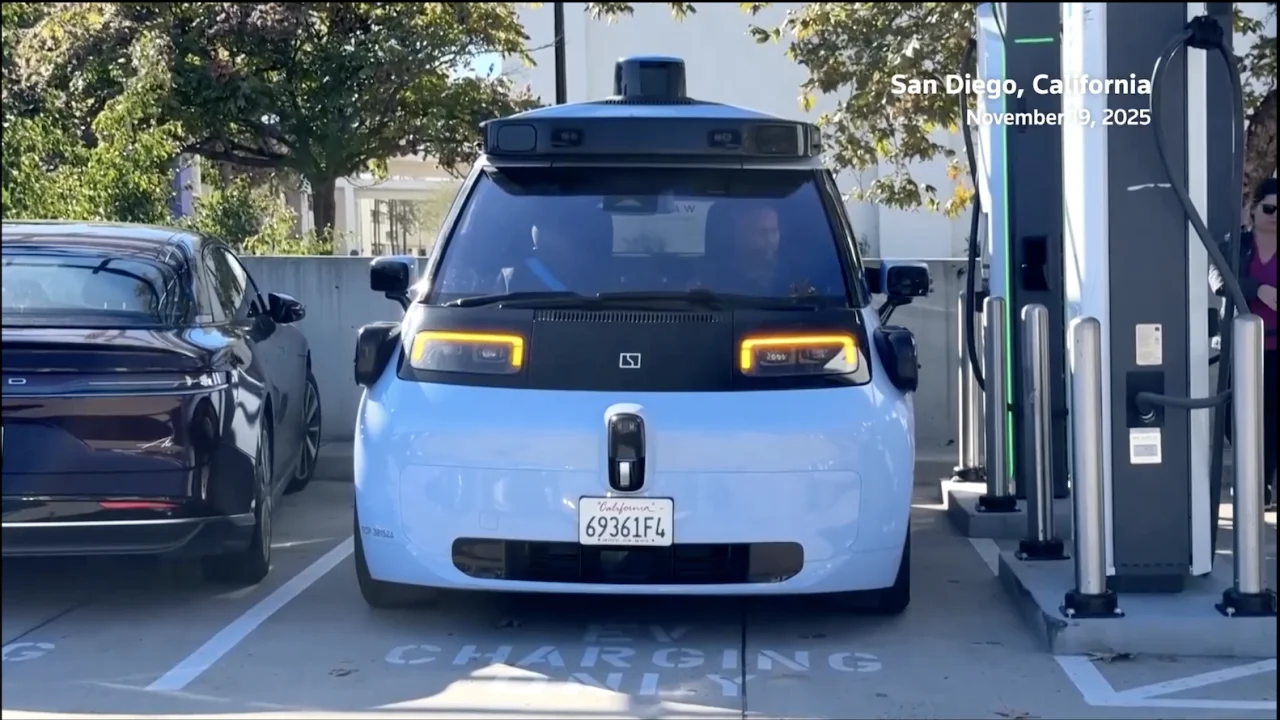
SAN FRANCISCO (WHN) – Waymo, the autonomous vehicle subsidiary of Alphabet, has pushed a significant data update to its public safety dashboard, now encompassing 127 million miles of fully autonomous driving through September 2025. This release, billed as a voluntary act to foster trust, offers a deeper dive into how its “Waymo Driver” performs against human driving benchmarks across its operational cities: Austin, Los Angeles, Phoenix, and San Francisco. The company asserts its system is demonstrably safer, particularly in preventing injury-causing and serious crashes, as well as incidents leading to airbag deployment.
The raw numbers, presented on Waymo’s “Safety Impact” webpage, aim to quantify this claim. Waymo states its Driver is “better than humans at avoiding crashes that result in injuries — both of any severity and specifically serious ones — as well as those that lead to airbag deployments.” It’s a bold assertion, backed by data collected over what Waymo characterizes as the equivalent of over 150 human driving lifetimes.
Breaking down the data by metro area reveals a nuanced picture. San Francisco, a city known for its complex urban environment and challenging driving conditions, shows particularly striking differences. Waymo’s data suggests a significantly lower rate of injury crashes per million miles driven compared to human drivers in the same city. This isn’t just about avoiding fender-benders; the metrics extend to more severe incidents requiring airbag deployment.
Across all four operational zones, the trends appear consistent. Waymo reports a reduction in injury crashes, both minor and serious, and a decrease in airbag deployments when comparing their autonomous fleet’s performance to human driving statistics. The uniformity of these safety improvements across diverse urban settings is notable, suggesting that the core inference algorithms and perception systems deployed by Waymo are performing reliably, irrespective of the specific city’s traffic patterns or road infrastructure.
The data release itself is a strategic move. By voluntarily sharing these metrics, Waymo aims to preemptively address public and regulatory concerns about the safety of driverless technology. This transparency, while commendable, also serves to build a narrative of proven safety, crucial for scaling operations and gaining wider public acceptance. The company’s decision to include detailed metrics for Austin, a newer market for Waymo, alongside established hubs like San Francisco and Phoenix, signals a commitment to consistent data collection and reporting as its service area expands.
The underlying technology driving these miles involves sophisticated sensor suites (lidar, radar, cameras) feeding data into complex neural networks. These networks perform real-time object detection, prediction, and path planning. The inference pipeline must process vast amounts of data with extremely low latency to ensure safe navigation. Waymo’s claim of improved safety hinges on the ability of these systems to consistently outperform human drivers, who are susceptible to distraction, fatigue, and impaired judgment.
The statistics provided focus on “crashes per million miles.” This is a standard industry benchmark, but it’s important to understand what constitutes a “crash” in Waymo’s reporting. The data differentiates between all injury crashes and specifically serious injury crashes. The reduction in airbag deployments is another key indicator, as airbags are typically triggered in moderate-to-severe frontal or side impacts.
Waymo’s aggregated figures show a substantial difference. For instance, the company reports a rate of 0.36 injury crashes per million miles for its driverless fleet versus 2.38 for human drivers (a 7x improvement), and 0.04 serious injury crashes per million miles versus 0.38 for humans (a 9.5x improvement). Airbag deployments are also reported at a fraction of the human rate. These numbers, if independently verifiable and consistently tracked, represent a significant step in the safety narrative for autonomous vehicles.
However, the data is self-reported. While Waymo has a vested interest in maintaining a strong safety record, the absence of third-party auditing or a standardized reporting framework across all AV companies means these figures should be viewed within that context. The complexity of comparing autonomous vehicle mileage to human driving miles also involves nuances, such as the types of roads and driving conditions encountered.
The company directs interested parties to download the raw data, an invitation for deeper scrutiny. This allows researchers and the public to perform their own analysis, a move that can bolster credibility. The continued updates to the Safety Impact page suggest Waymo’s ongoing dedication to tracking and transparently sharing its operational safety performance.
The next update will likely reveal further mileage accumulation and potentially expand to new operational areas. As Waymo continues to scale its fleet and expand its service footprint, these safety metrics will remain a critical barometer for public trust and regulatory approval.