Climate Change Fuels Two-Thirds of Western Wildfire Emissions
BOSTON (WHN) – Warming temperatures are significantly amplifying wildfire emissions in the western United States, according to a new modeling study. Researchers determined that climate change is responsible for an estimated two-thirds of carbon emissions and nearly half of particulate pollution generated by wildfires in the region between 1997 and 2020.
These findings, published in the peer-reviewed journal Proceedings of the National Academy of Sciences, underscore the growing impact of climate change on air quality and public health in the western U.S.
Larger and more frequent fires are a direct consequence of hotter, drier weather patterns and intensifying droughts, the study authors explained. In some western areas, fires have become up to four times larger and strike three times as often compared to the period before the turn of the century.
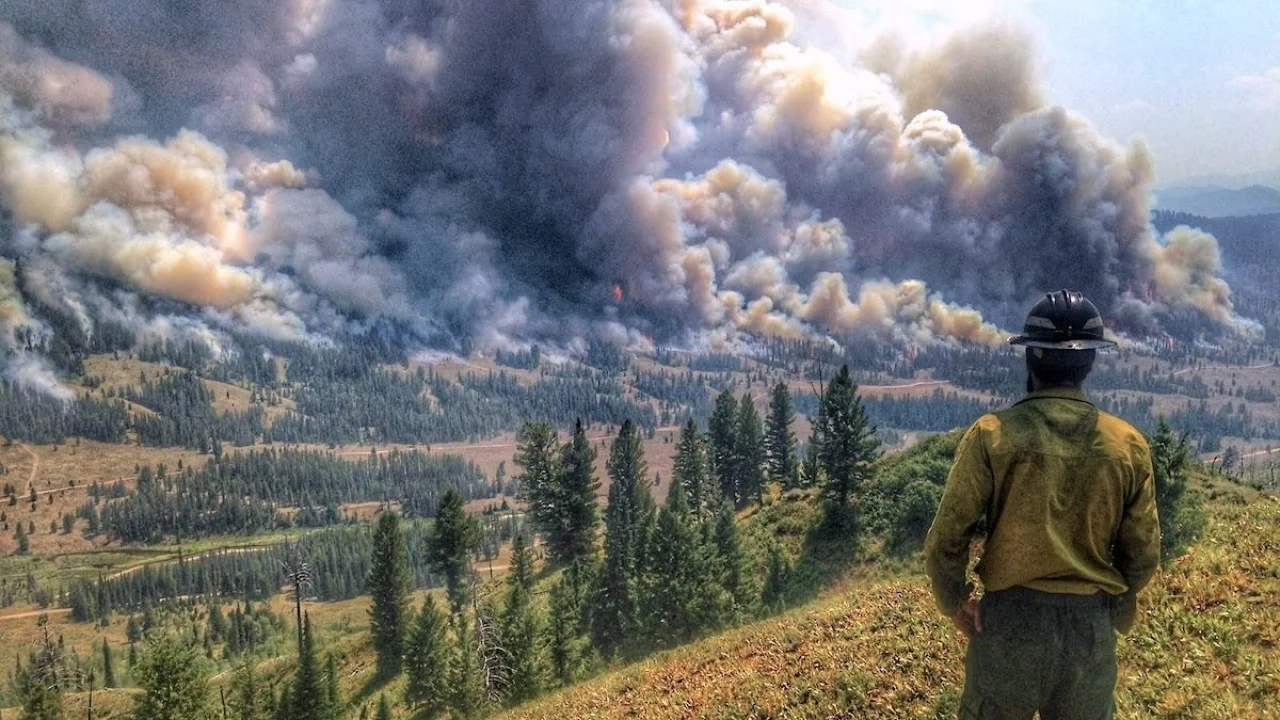
This surge in fire activity produces substantial volumes of smoke. During the particularly severe fire season of summer 2020, wildfires emerged as the primary source of particulate pollution across the western U.S. In California alone that year, wildfire emissions of carbon exceeded those from all state power plants combined.
The modeling approach used by the scientists involved analyzing the quantity of smoke produced by fires in various regions and accounting for the differential effects of warming in those locales. This allowed them to quantify warming’s specific contribution to emissions.
The research indicated that warming’s influence on emissions was more pronounced in remote forests and shrublands. In contrast, wildlands closer to urban centers in California, where human ignition sources are more prevalent, showed a comparatively lesser role for warming in driving fire emissions.
Between 1997 and 2020, the study calculated that warming was responsible for 65 percent of carbon emissions and 49 percent of particulates originating from western wildfires.
Lead author Loretta Mickley, affiliated with Harvard University, stated, “Our hope is that this work will spur efforts to think more deeply about how we manage land and wildfires in the western U.S.”
Particulate matter, often referred to as PM2.5, consists of tiny particles of solid or liquid suspended in the air. When inhaled, these particles can penetrate deep into the lungs and even enter the bloodstream, posing risks to cardiovascular and respiratory health. Exposure can exacerbate conditions like asthma and bronchitis, and has been linked to increased hospital admissions and premature death.
Carbon emissions from wildfires, primarily carbon dioxide, are a greenhouse gas contributing to further climate warming. They also include other harmful pollutants like carbon monoxide and volatile organic compounds, which affect air quality.
The study’s reliance on modeling introduces inherent limitations. While the data provides a robust quantitative assessment, it does not directly measure emissions in real-time. Instead, it uses complex algorithms to attribute portions of observed emissions to specific contributing factors, including warming. The precise attribution percentages are therefore estimates based on the model’s assumptions.
Replication by other research teams using different modeling techniques or observational data would be valuable for confirming these findings. The study’s timeframe, 1997 to 2020, captures a significant period of increasing wildfire activity and warming trends. However, it does not account for the most recent fire seasons.
The implications for public health are substantial. Communities in the western U.S. are increasingly facing prolonged periods of unhealthy air quality due to wildfire smoke. This necessitates improved public health advisories, strategies for smoke mitigation, and long-term planning for healthcare systems to manage the associated health burdens.
Efforts to manage land and mitigate wildfire risk, as suggested by Mickley, may need to increasingly incorporate strategies informed by climate science. This could include prescribed burns, forest thinning, and changes in land use policies, though the effectiveness and ecological impacts of such interventions require careful consideration and ongoing evaluation.
The study provides a quantitative basis for understanding the climate-driven component of wildfire pollution, moving beyond anecdotal observations to a more precise estimation of warming’s role.