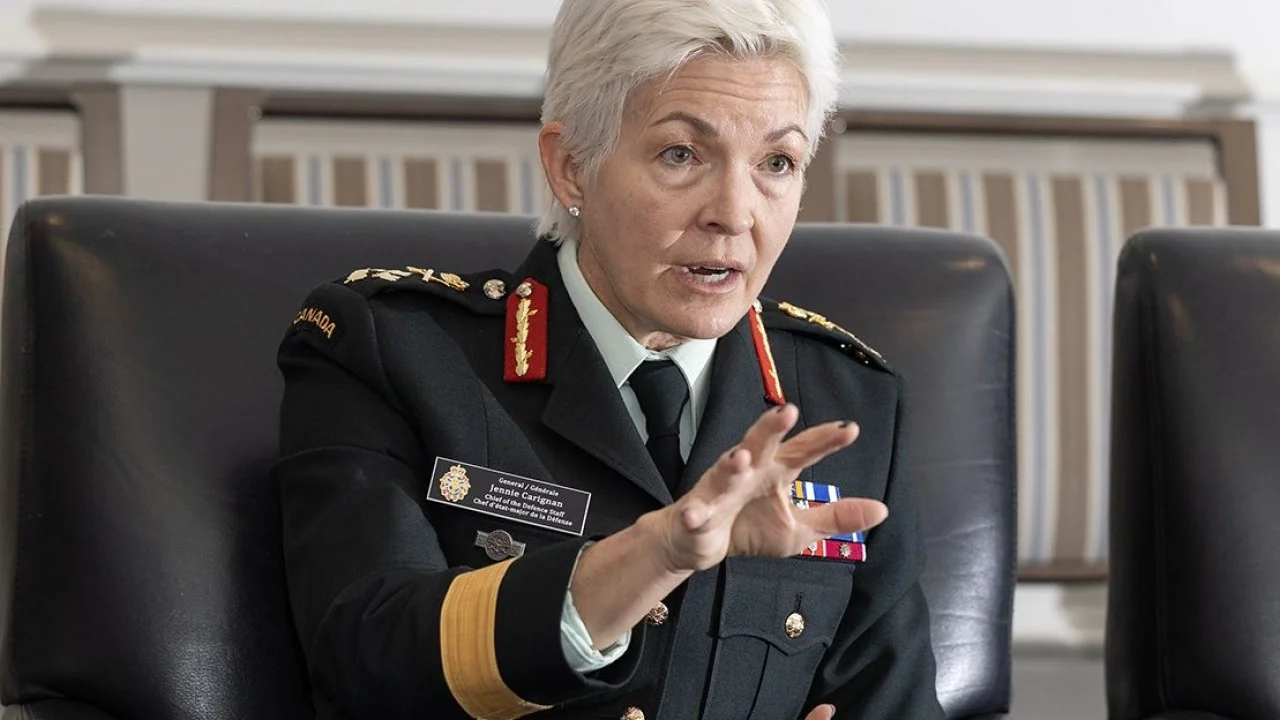
OTTAWA, Canada (WHN) – Canada’s military is prepared for conflict, stating its readiness to operate “as-is” while actively pursuing enhanced capabilities, according to Chief of the Defence Staff General Jennie Carignan. Carignan, who assumed the top military post in July 2024, discussed the evolving global security landscape and the Canadian Armed Forces’ (CAF) strategic direction in an interview with the National Post.
The CAF is shifting its focus from post-Cold War expeditionary operations to addressing a near-peer conflict environment. This necessitates a reacquisition of capabilities previously divested, such as layered air defence systems. The military divested these systems in 2000, deeming them unnecessary for counter-insurgency operations like those in Afghanistan, where air supremacy was a given. The current operational context, however, demands a robust air defence posture.
“The air is contested,” Gen. Carignan stated. “We absolutely need those air-defence systems.” The technology has advanced significantly over the past two decades, requiring layered systems for comprehensive defence.
Canada is also actively contributing to Ukraine’s defence efforts. The CAF is examining scalable options to support Ukraine, with the potential to deploy up to 600 members. Discussions are ongoing with international partners to define specific roles and contributions within various contexts. Canada’s commitment to its posture in Latvia remains firm.
Recruitment is a key focus, with efforts to modernize processes and digitize operations yielding positive results. Last year, the CAF recruited 6,600 personnel, exceeding its target of 6,400. The goal is to reach full strength of 71,500. This year’s recruiting target has been raised to 7,600, with 65 percent of that target already achieved.
The military is building new infrastructure, including quarters and training facilities, to accommodate increased personnel numbers and modernize its training systems. This includes developing modular training to expedite qualification levels.
Gen. Carignan highlighted the potential for public servants with crisis management experience to contribute to community resilience efforts. This would involve coordinating teams, liaising with local authorities, and leveraging existing networks during emergencies like floods or forest fires.
Organizational culture is paramount for high-performing teams, particularly in challenging environments. Gen. Carignan emphasized the importance of trust among team members and valuing diversity, stating, “Conformity, as part of team dynamics, can be absolutely deadly.” A diverse pool of individuals, she noted, facilitates complex problem-solving but requires a specific leadership style to foster collaboration.
Canada’s geography no longer offers the same level of protection as in the past. The government is investing in new capabilities, including long-range precision strikes and integrated air missile defence systems. The development of Unmanned Aircraft Systems (UAS) and counter-UAS technology also requires increased expertise.
The United States remains a priority partner, with close collaboration through NORAD addressing borderless threats like missile defence. Canada is also involved in planning for future security in Gaza, embedding personnel within the Civil Military Coordination Center and working with the Palestinian Authority on security matters.
Canada is developing its own defence plan to protect critical infrastructure, in parallel with understanding U.S. initiatives like the “Golden Dome” project. This includes deploying over-the-horizon radar systems to monitor approaches to Canada and the Arctic.
Significant investments are planned over the next few years, including a commitment to increase defence spending to 3.5 percent of GDP. This funding will support Canadian sovereignty, strategic reserves, and NATO commitments, particularly on the eastern front. Investment in the Indo-Pacific region aims to ensure open lines of communication for trade and navigation, with a persistent naval presence conducting maritime security operations.
In the summer of 2024, Gen. Carignan prioritized planning for anticipated investments. The $9 billion injection in June allowed for immediate implementation of critical needs, including spare parts, fuel, ammunition, infrastructure, and medical services. Investments are also directed towards strengthening the defence industrial base and supporting Ukraine.